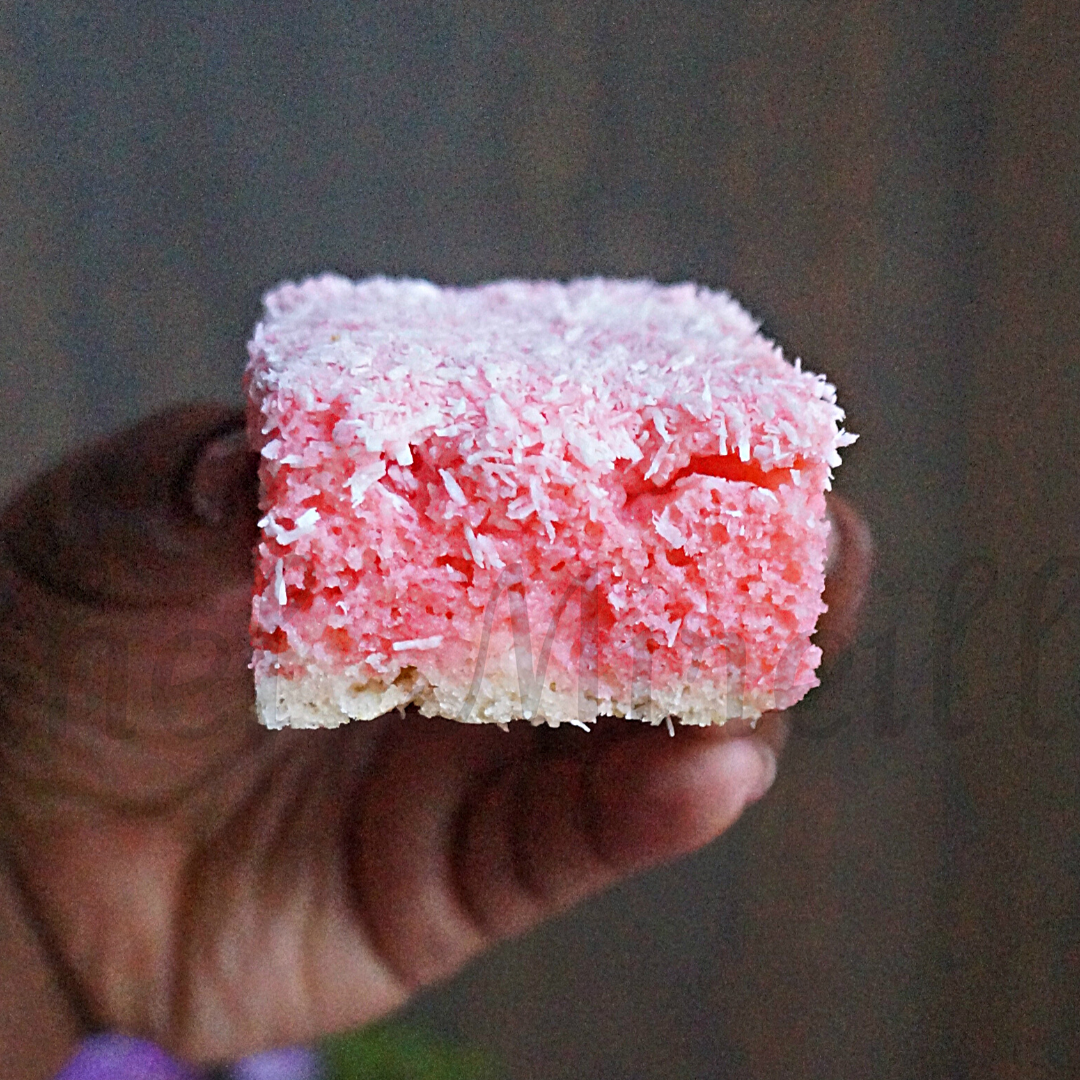
Light sponge cake cubes dipped in chocolate icing and rolled in desiccated coconut, sometimes split and filled with jam and cream.
Instructions
-
1
Beat eggs and sugar with an electric mixer for eight minutes until thick, pale, and tripled in volume. The mixture should hold a ribbon trail.
-
2
Sift flour and cornflour together and gently fold into the egg mixture. Fold in melted butter. Pour into a greased and lined square tin.
-
3
Bake at 180C for twenty-five minutes until golden and springy. Cool completely, then refrigerate overnight for easier cutting and dipping.
-
4
Make chocolate icing by sifting icing sugar and cocoa into a bowl. Add melted butter and milk, stirring until smooth and pourable.
-
5
Cut sponge into even squares. Using two forks, dip each square in chocolate icing, turning to coat all sides, then roll in coconut.
-
6
Place on a wire rack to set. For filled lamingtons, split each square, spread with jam and whipped cream, then sandwich together.
Did You Know?
Lamingtons are so popular in New Zealand and Australia that both countries hold annual lamington drives to raise funds for schools and charities.
The Story Behind Lamingtons
While Australia and New Zealand both claim the lamington, it has become deeply embedded in Kiwi culture since the early 1900s. Named after Lord Lamington, a governor of Queensland, the cake crossed the Tasman and became a fixture of New Zealand afternoon tea, school fairs, and CWI meetings. The simple combination of sponge, chocolate, and coconut has proven remarkably enduring, resisting all attempts at modernisation.
More New Zealander Dishes
 Easy
📜 Story
Easy
📜 Story
Afghan Biscuit
Chocolate Cornflake Biscuit
Afternoon tea, bake sales Easy
📜 Story
Easy
📜 Story
Bluff Oysters
Raw Bluff Oysters on the Half Shell
Seasonal, March to August Easy
📜 Story
Easy
📜 Story
Boil-Up
Maori Pork-Free Meat and Vegetable Stew
Winter dinner, family gatherings Medium
📜 Story
Medium
📜 Story
Crayfish
Grilled New Zealand Crayfish
Special occasions, summer dining
Comments (0)
Log in to leave a comment.
No comments yet. Be the first to share your thoughts!