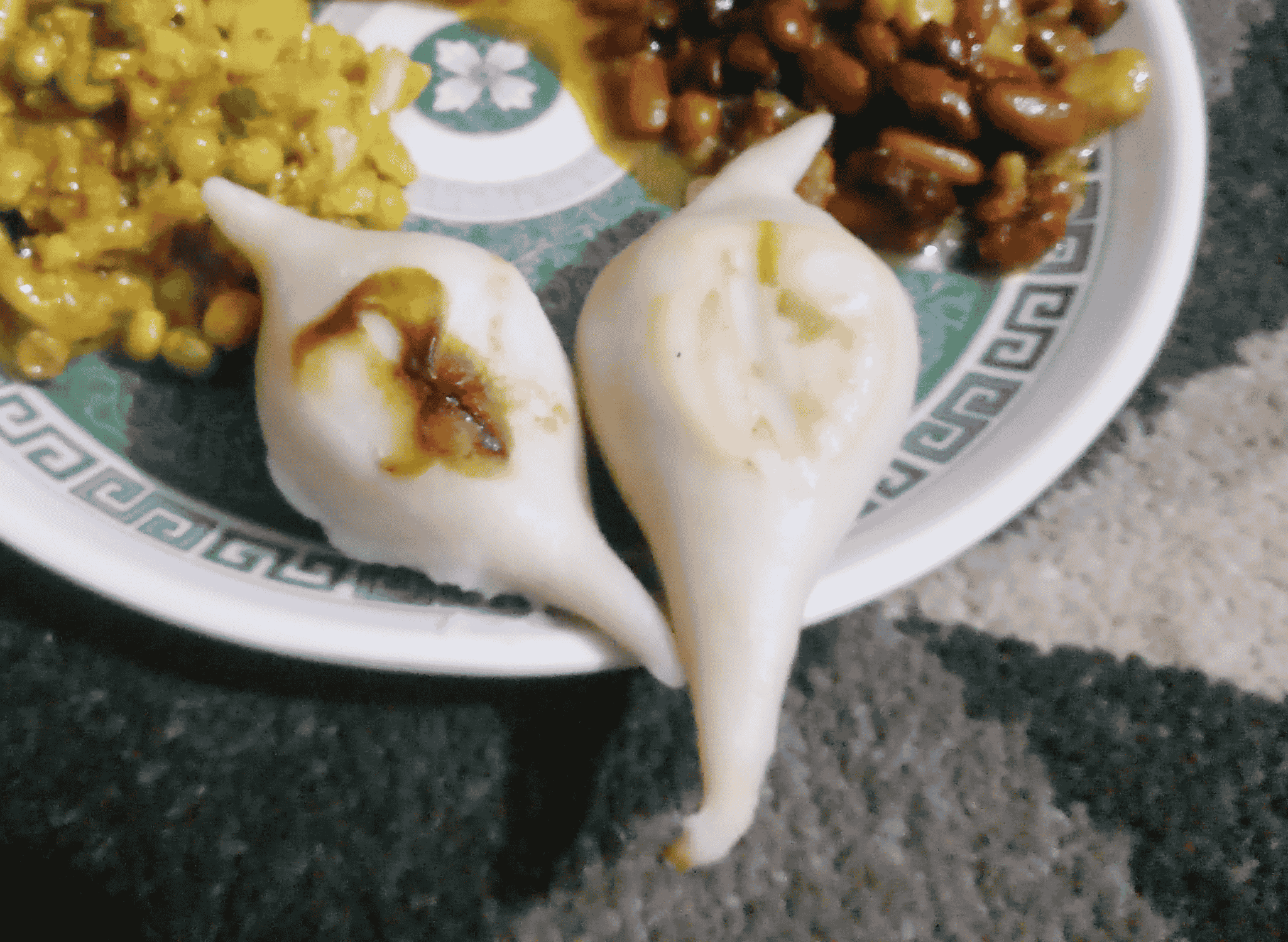
Fig-shaped steamed dumplings made from rice flour dough filled with a sweet mixture of chaku (molasses) and sesame seeds. A sacred Newari delicacy prepared during the Yomari Punhi festival.
Nutrition & Info
Allergen Warnings
Equipment Needed
Instructions
-
1
Knead rice flour with warm water and a pinch of salt to form a smooth pliable dough. Cover and rest for ten minutes.
-
2
Mix grated chaku with toasted sesame seeds and cardamom powder to make the filling.
-
3
Take a small ball of dough and shape it into a cup using your thumb and fingers, creating a hollow fig-like shape with a pointed top.
-
4
Fill the hollow with the chaku-sesame mixture and carefully pinch the top closed, maintaining the fig shape.
-
5
Steam the yomari in a greased steamer for fifteen to twenty minutes until the dough becomes translucent. Serve warm.
Did You Know?
Yomari Punhi is celebrated on the full moon day of December and marks the end of the rice harvest season. The distinctive fig shape of yomari is said to represent the goddess Annapurna.
Chef's Notes
Equipment Tips
- steamer
- mixing bowl
- rolling surface
The Story Behind Yomari
Yomari is deeply embedded in Newari mythology and agricultural tradition. Legend holds that a couple in Panauti first created yomari by filling rice dough with chaku, and the god Kuber was so pleased he blessed them with wealth. The dish became central to the Yomari Punhi festival celebrated in the Kathmandu Valley after the rice harvest. The intricate fig-like shape requires skill passed down through generations, and making yomari is a communal activity where families gather to prepare hundreds for distribution.
More Nepali Dishes
Achar
Nepali Tomato Pickle
Served with every meal Medium
📜 Story
Medium
📜 Story
Aloo Tama
Potato and Bamboo Shoot Curry
Everyday meal, particularly during monsoon season Medium
📜 Story
Medium
📜 Story
Bara
Black Lentil Fritter
Festivals, morning breakfast, or as a snack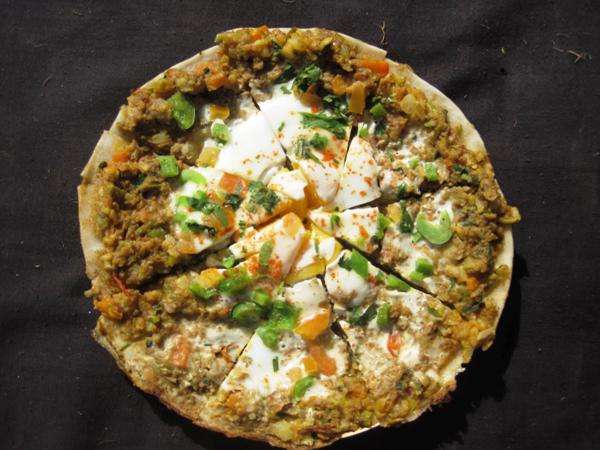 Medium
📜 Story
Medium
📜 Story
Chatamari
Newari Rice Crepe
Festivals and celebrations, particularly during Indra Jatra
Comments (0)
Log in to leave a comment.
No comments yet. Be the first to share your thoughts!