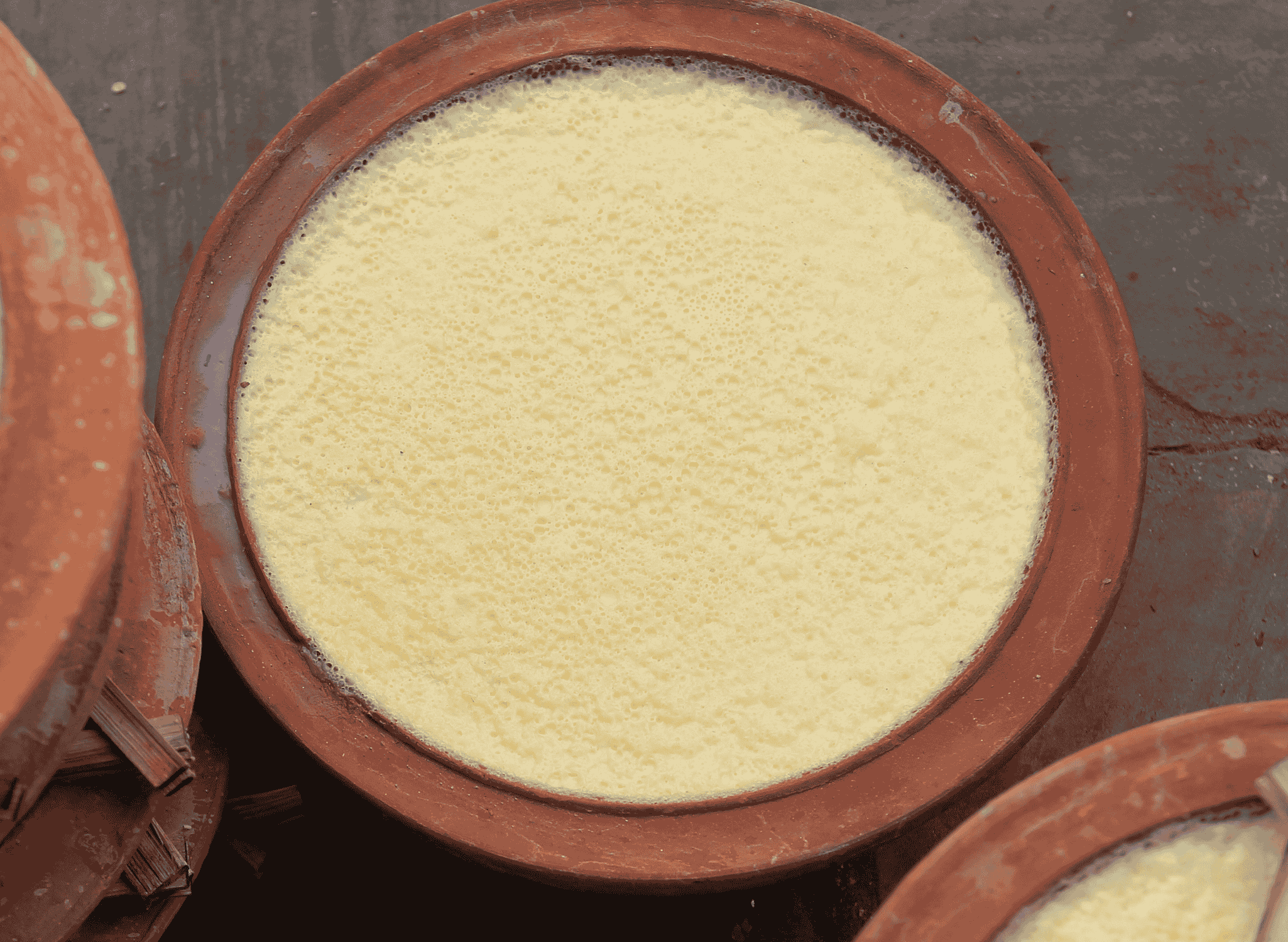
A rich, creamy sweetened yogurt from Bhaktapur, set in traditional clay pots that impart a distinctive earthy flavor. Known as the King of Yogurts, it has a thick custard-like texture and caramelized sweetness.
Nutrition & Info
Allergen Warnings
Equipment Needed
Instructions
-
1
Bring milk to a boil in a heavy-bottomed pan, stirring frequently to prevent scorching. Reduce heat and simmer for fifteen minutes to thicken.
-
2
Add sugar and cardamom, stir until dissolved. Let the milk cool to lukewarm, about forty degrees Celsius.
-
3
Mix in yogurt culture thoroughly and pour into clay pots.
-
4
Cover the clay pots with cloth and keep in a warm place for six to eight hours until set firm.
-
5
Refrigerate for at least two hours before serving. The yogurt should be thick, creamy, and slightly caramelized.
Did You Know?
Juju dhau can only be authentically made in Bhaktapur because the local clay, water, and traditional yogurt culture create a flavor that cannot be replicated elsewhere.
Chef's Notes
Equipment Tips
- clay pots
- heavy-bottomed pan
- thermometer (optional)
The Story Behind Juju Dhau
Juju dhau is the pride of Bhaktapur, one of the three royal cities of the Kathmandu Valley. This sweetened yogurt has been made by the Newar community for centuries using a closely guarded process involving buffalo milk, sugar, and specific clay pots. The porous clay absorbs excess moisture, resulting in the thick creamy texture that distinguishes juju dhau from ordinary yogurt. No Newari celebration is complete without juju dhau, and it is considered an essential offering during religious ceremonies and festivals in Bhaktapur.
More Nepali Dishes
Achar
Nepali Tomato Pickle
Served with every meal Medium
📜 Story
Medium
📜 Story
Aloo Tama
Potato and Bamboo Shoot Curry
Everyday meal, particularly during monsoon season Medium
📜 Story
Medium
📜 Story
Bara
Black Lentil Fritter
Festivals, morning breakfast, or as a snack Medium
📜 Story
Medium
📜 Story
Chatamari
Newari Rice Crepe
Festivals and celebrations, particularly during Indra Jatra
Comments (0)
Log in to leave a comment.
No comments yet. Be the first to share your thoughts!