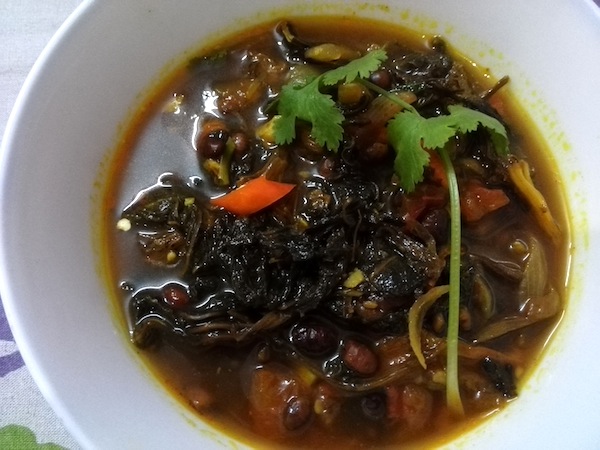
Naturally fermented leafy greens sun-dried into a tangy, umami-rich ingredient, cooked into a sour soup with potatoes and spices. Nepal's ancient answer to preserved vegetables.
Nutrition & Info
Equipment Needed
Presentation Guide
Instructions
-
1
Wash the leafy greens thoroughly and wilt them by leaving them spread out in a warm spot for one day until they become slightly limp and lose about a third of their moisture. This partial wilting kickstarts the fermentation process.
-
2
Pack the wilted greens tightly into a clean ceramic pot or glass jar, pressing down firmly with your fist to eliminate all air pockets. The greens should release some liquid as you press. Fill the container to within five centimetres of the rim.
-
3
Cover the jar with a plate weighted down with a stone or heavy object to keep the greens submerged in their own juice. Place in a warm corner of the kitchen and let ferment for seven to ten days until the greens develop a distinctly sour, tangy aroma.
-
4
Once fermented, remove the gundruk from the jar and spread it on clean trays in the sun for two to three days until completely dry and crumbly. Alternatively, use a food dehydrator at 60C for twelve hours. Store dried gundruk in an airtight container.
-
5
To prepare gundruk soup, soak a handful of dried gundruk in warm water for twenty minutes. Heat mustard oil in a pot, fry fenugreek seeds and dried chilies for one minute, add diced tomato, cook until soft, then add the soaked gundruk and four cups of water.
-
6
Simmer the soup for fifteen minutes until the gundruk is tender and the broth is tangy and flavourful. Season with salt to taste. The soup should have a distinctive fermented sourness balanced by the warmth of the spices and the richness of the mustard oil.
-
7
Serve the gundruk soup hot as an accompaniment to dal bhat. This fermented green preparation is one of Nepal's most distinctive culinary contributions, serving as a vital source of vitamins during the long winter months when fresh vegetables are scarce.
Did You Know?
Gundruk is one of the world's oldest fermented foods — it was developed in the hills of Nepal as a way to preserve vegetables through long, harsh winters.
Chef's Notes
Equipment Tips
- clay pot or glass jar
- saucepan
- strainer
Garnishing
sliced green chilies, sesame seeds
Accompaniments
steamed rice, dal
The Story Behind Gundruk
The Story: Gundruk is a fermented leafy green preparation unique to Nepal, developed centuries ago as a method of preserving surplus vegetables through the harsh Himalayan winters. Mustard greens, radish leaves, or cauliflower leaves are wilted, packed tightly into earthenware jars or bamboo vessels, and left to ferment for several weeks. The resulting product is sun-dried and stored for months, providing essential nutrients during lean seasons when fresh vegetables are unavailable.
On the Calendar: Gundruk is consumed year-round but holds special significance during winter and early spring when fresh produce is scarce in the hills. It appears in soups, stir-fries, and as a pickle accompaniment to dal bhat. During Dashain and Tihar festivals, gundruk dishes are part of the celebratory spread.
Then & Now: Once a survival food of rural hill communities, gundruk has gained recognition as one of the world's earliest examples of lacto-fermented vegetables. Nepal produces an estimated 2,000 tonnes of gundruk annually, and food scientists have begun studying its probiotic properties and nutritional profile.
Legacy: Gundruk embodies the Nepali genius for turning scarcity into sustenance, a preservation technique born of mountain necessity that has become a cherished national flavor.
More Nepali Dishes
Achar
Nepali Tomato Pickle
Served with every meal Medium
📜 Story
Medium
📜 Story
Aloo Tama
Potato and Bamboo Shoot Curry
Everyday meal, particularly during monsoon season Medium
📜 Story
Medium
📜 Story
Bara
Black Lentil Fritter
Festivals, morning breakfast, or as a snack Medium
📜 Story
Medium
📜 Story
Chatamari
Newari Rice Crepe
Festivals and celebrations, particularly during Indra Jatra
Comments (0)
Log in to leave a comment.
No comments yet. Be the first to share your thoughts!