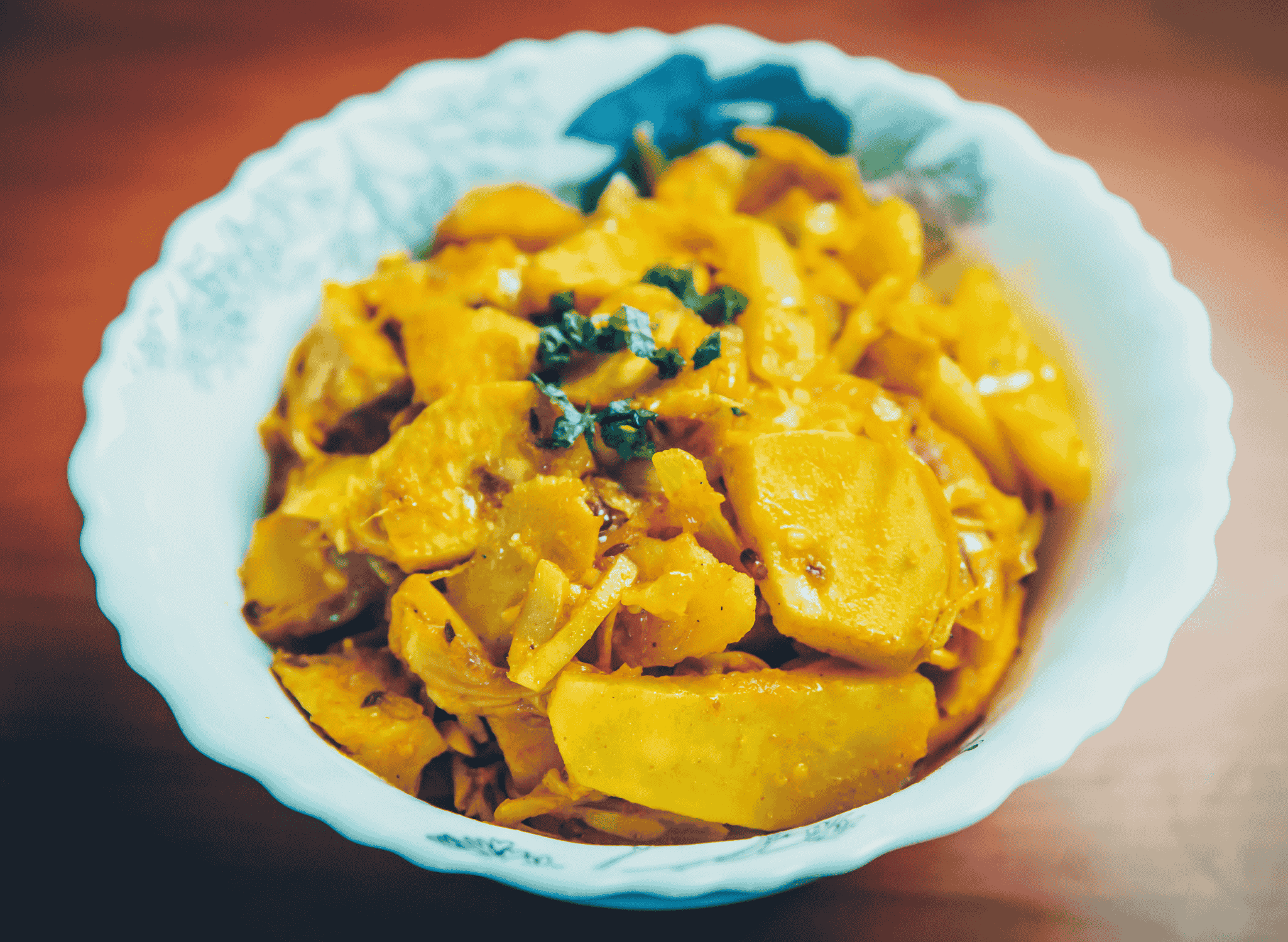
A thick dough-like staple made from buckwheat or millet flour stirred continuously in boiling water. The traditional main carbohydrate of Nepal's hill regions, served with meat curry, vegetables, and gundruk soup.
Nutrition & Info
Equipment Needed
Instructions
-
1
Bring water to a rolling boil in a heavy-bottomed pot.
-
2
Gradually add the flour to the boiling water while stirring continuously with a strong wooden spoon to prevent lumps.
-
3
Keep stirring vigorously over medium heat as the mixture thickens. It will require significant effort as the dough becomes very stiff.
-
4
Continue cooking and stirring for fifteen to twenty minutes until the dhido pulls away from the sides of the pot and forms a smooth cohesive mass.
-
5
Serve hot by scooping portions onto a plate. Eat with gundruk soup, meat curry, or vegetable side dishes by pinching off small pieces and dipping.
Did You Know?
Making dhido requires considerable arm strength as the flour must be stirred vigorously in boiling water to prevent lumps, and experienced cooks can make it perfectly smooth in under ten minutes.
Chef's Notes
Equipment Tips
- heavy-bottomed pot
- strong wooden spoon or ladle
The Story Behind Dhido
Dhido is the original staple food of Nepal's hill and mountain communities, predating the widespread adoption of rice. Made from locally grown buckwheat or millet flour, dhido sustained generations of farmers, herders, and traders in the Himalayan foothills. The dish is nutritionally dense and provided the energy needed for life at high altitudes. Though rice-based dal bhat has become dominant in modern Nepal, dhido remains a point of cultural pride and is experiencing a revival as health-conscious Nepalis rediscover its nutritional benefits.
More Nepali Dishes
Achar
Nepali Tomato Pickle
Served with every meal Medium
📜 Story
Medium
📜 Story
Aloo Tama
Potato and Bamboo Shoot Curry
Everyday meal, particularly during monsoon season Medium
📜 Story
Medium
📜 Story
Bara
Black Lentil Fritter
Festivals, morning breakfast, or as a snack Medium
📜 Story
Medium
📜 Story
Chatamari
Newari Rice Crepe
Festivals and celebrations, particularly during Indra Jatra
Comments (0)
Log in to leave a comment.
No comments yet. Be the first to share your thoughts!