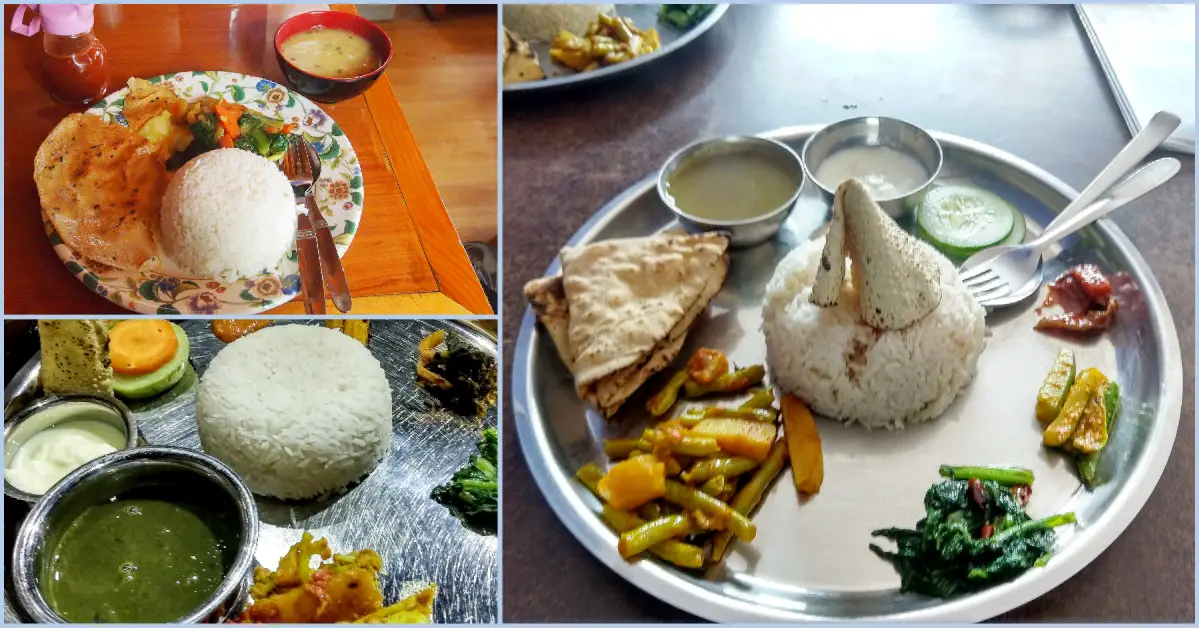
The backbone of Nepali life — steamed rice with lentil soup, vegetable curry, achar (pickle), and greens. Nepalis eat this twice daily and say 'dal bhat power, 24 hour!'
Nutrition & Info
Allergen Warnings
Equipment Needed
Presentation Guide
Vessel: stainless steel thali plate
Garnishes: fresh cilantro, lemon wedge
Accompaniments: tarkari (vegetable curry), achar (pickle), papadum
Instructions
-
1
Rinse the lentils in several changes of water until the water runs clear. Place them in a pot with three cups of water and the turmeric. Bring to a boil, skim the foam, then reduce to a simmer and cook for twenty-five minutes until the lentils are completely soft and breaking apart.
-
2
While the dal cooks, prepare the rice by rinsing it in several changes of water, then cooking in a pot with salted water using the absorption method. Bring to a boil, reduce to the lowest heat, cover tightly, and cook for fifteen minutes until fluffy and each grain is separate.
-
3
Once the lentils are very soft, mash them partially with the back of a spoon or whisk to create a creamy consistency with some whole lentils remaining for texture. The dal should be thinner than soup but thicker than broth, flowing easily when ladled.
-
4
Prepare the tadka by heating ghee in a small pan over medium-high heat. Add the mustard seeds and wait for them to pop, about thirty seconds. Add the dried red chili, cumin, garlic, and ginger, frying for one minute until the garlic turns golden and fragrant.
-
5
Add the diced tomatoes and onion to the tadka and cook for five minutes until the tomatoes break down. Pour this entire aromatic mixture into the simmering dal, stirring well. Season with salt and cayenne pepper, then simmer for five more minutes.
-
6
Prepare a simple achar by mixing diced tomato, green chili, lemon juice, and salt for a tangy accompaniment. Arrange each serving plate with a mound of rice in the centre, a bowl of dal for pouring over, and the achar on the side.
-
7
Serve the dal bhat hot with the dal poured over or alongside the rice. Garnish the dal with fresh cilantro. This is the quintessential Nepali meal eaten twice daily across the country, providing the perfect balance of protein, carbohydrates, and flavour.
Did You Know?
'Dal bhat power, 24 hour!' is a famous Nepali saying. Sherpas who summit Everest fuel themselves with dal bhat.
Chef's Notes
Equipment Tips
- pressure cooker
- rice cooker or pot
- small saucepan
Garnishing
fresh cilantro, lemon wedge
Accompaniments
tarkari (vegetable curry), achar (pickle), papadum
The Story Behind Dal Bhat
The Story: Dal bhat, meaning lentil soup and rice, is the foundational meal of Nepal, eaten by virtually every ethnic group across every ecological zone. Its origins trace to the earliest rice and lentil cultivation in the subcontinent, adapted to Nepal's terraced hillside farming over thousands of years. The meal is a complete nutritional system: rice provides carbohydrates, dal supplies protein, tarkari (vegetable curry) adds vitamins, and achar (pickle) stimulates digestion.
On the Calendar: Dal bhat is eaten twice daily, typically at mid-morning and in the early evening. It is the meal that anchors all of Nepali life, from ordinary workdays to festivals, weddings, and funerary rites. No celebration is considered complete without it.
Then & Now: The basic structure of dal bhat has remained unchanged for centuries, though regional variations are vast. In the Terai, fish curry might accompany the plate. In the hills, gundruk soup may replace or supplement the dal. In cities like Kathmandu, restaurants serve elaborate thali sets with a dozen accompaniments.
Legacy: Dal bhat is not merely a dish but a cultural institution, the edible expression of Nepali identity that unites a country of over 120 ethnic groups around a shared table.
More Nepali Dishes
Achar
Nepali Tomato Pickle
Served with every meal Medium
📜 Story
Medium
📜 Story
Aloo Tama
Potato and Bamboo Shoot Curry
Everyday meal, particularly during monsoon season Medium
📜 Story
Medium
📜 Story
Bara
Black Lentil Fritter
Festivals, morning breakfast, or as a snack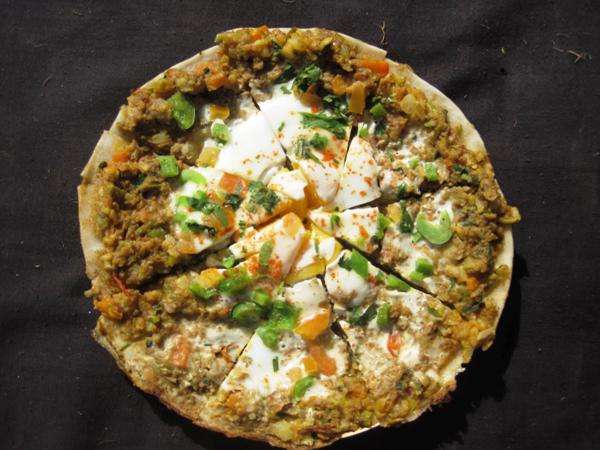 Medium
📜 Story
Medium
📜 Story
Chatamari
Newari Rice Crepe
Festivals and celebrations, particularly during Indra Jatra
Comments (0)
Log in to leave a comment.
No comments yet. Be the first to share your thoughts!