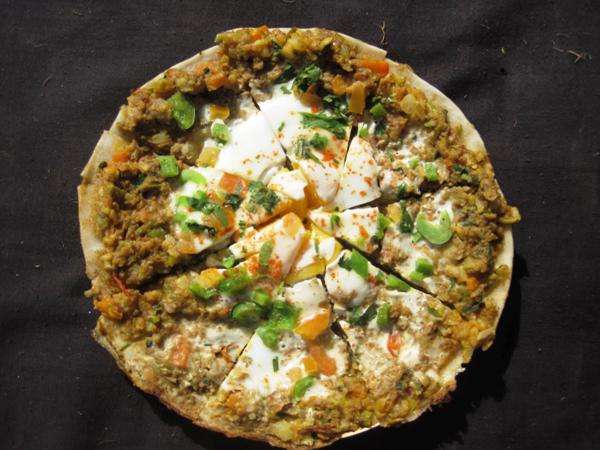
A thin rice flour crepe topped with minced meat, eggs, and fresh vegetables, often called Nepali pizza. This Newari delicacy is cooked on a flat griddle and served as a festive snack or light meal.
Nutrition & Info
Allergen Warnings
Equipment Needed
Instructions
-
1
Mix rice flour with water to form a smooth thin batter, similar to crepe consistency. Let it rest for fifteen minutes.
-
2
Season the minced meat with turmeric, cumin, salt, and chopped onion. Cook briefly in a pan until half done.
-
3
Heat a flat griddle or tawa and lightly oil it. Pour a thin layer of rice batter and spread it evenly in a circular shape.
-
4
Spread the seasoned meat mixture over the crepe and crack an egg on top. Cover and cook on medium heat for five to seven minutes until the edges crisp up.
-
5
Garnish with fresh cilantro and green chilies. Slide onto a plate and serve hot with tomato chutney.
Did You Know?
Chatamari is sometimes called Nepali pizza due to its flat shape and various toppings, but it predates Italian pizza by centuries as a staple of Newari feast culture.
Chef's Notes
Equipment Tips
- flat griddle or tawa
- mixing bowl
- ladle
The Story Behind Chatamari
Chatamari is one of the oldest dishes in Newari cuisine, originating in the Kathmandu Valley where the Newar people developed a sophisticated urban food culture. Traditionally prepared during festivals like Indra Jatra and family celebrations, the dish reflects the Newari emphasis on rice-based preparations. The thin crepe was historically made on stone griddles and served as both an offering to deities and a communal feast dish. Its preparation has been passed down through generations of Newari households.
More Nepali Dishes
Achar
Nepali Tomato Pickle
Served with every meal Medium
📜 Story
Medium
📜 Story
Aloo Tama
Potato and Bamboo Shoot Curry
Everyday meal, particularly during monsoon season Medium
📜 Story
Medium
📜 Story
Bara
Black Lentil Fritter
Festivals, morning breakfast, or as a snack Medium
📜 Story
Medium
📜 Story
Chhoyla Chiura
Spiced Meat with Beaten Rice
Lunch, festivals, social gatherings
Comments (0)
Log in to leave a comment.
No comments yet. Be the first to share your thoughts!