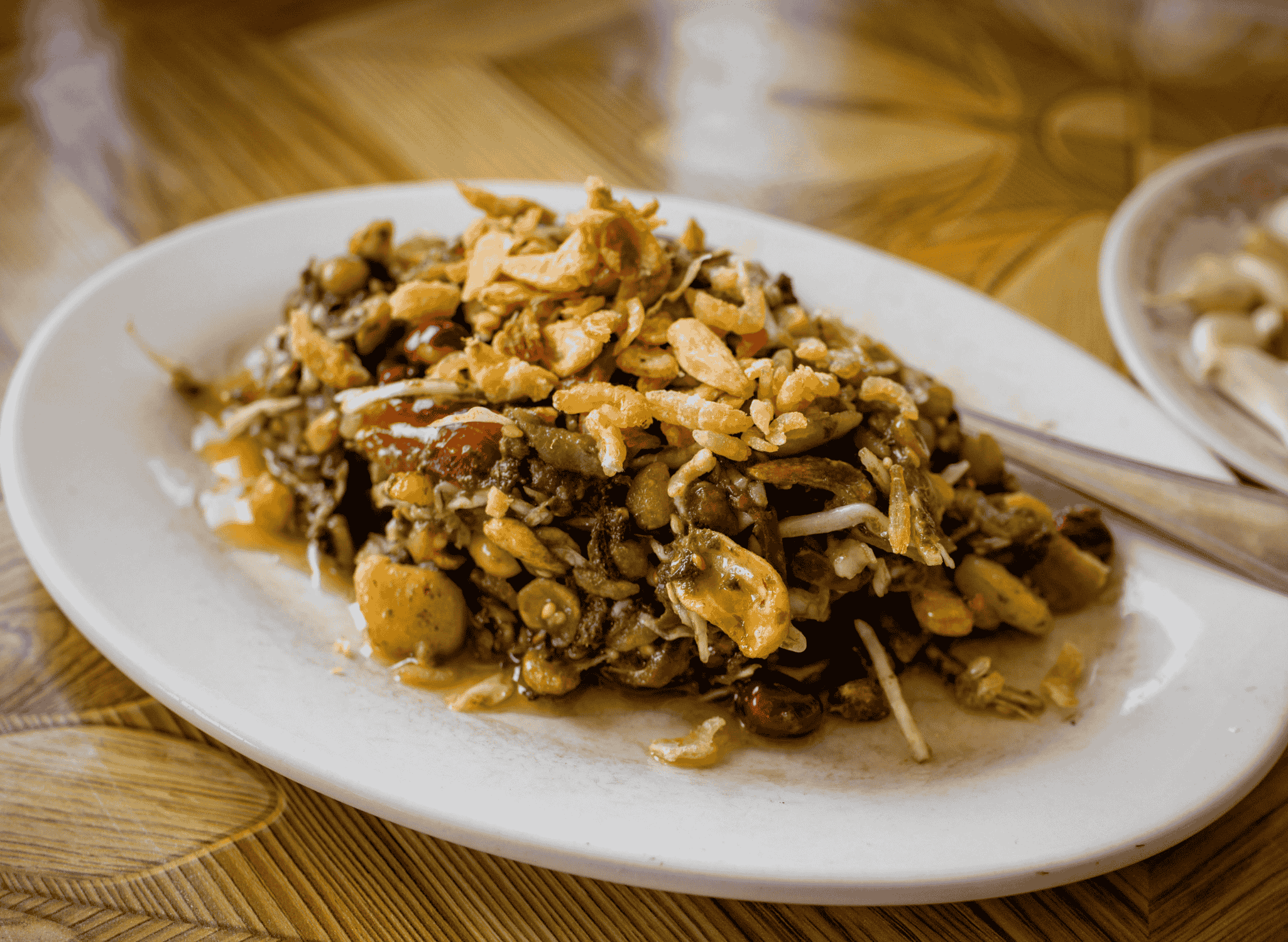
A uniquely Burmese salad of fermented tea leaves tossed with crunchy fried garlic, peanuts, sesame seeds, dried shrimp, and shredded cabbage. Earthy, tangy, crunchy, and utterly addictive.
Nutrition & Info
Allergen Warnings
Equipment Needed
Presentation Guide
Vessel: shallow bowl or lacquerware tray
Garnishes: fried garlic chips, toasted sesame seeds
Accompaniments: steamed rice
Instructions
-
1
If using whole fermented tea leaves, drain them well and chop finely. If using prepared lahpet from a jar, drain off the excess oil and transfer the leaves to a large mixing bowl as the base ingredient for this iconic Burmese salad.
-
2
Prepare all the crunchy toppings: fry the sliced garlic in oil until golden and crisp, toast the sesame seeds in a dry pan until fragrant, and ensure the peanuts, dried shrimp, and fried split peas are all measured and ready for assembly.
-
3
Add the diced tomato, sliced green chillies, fried garlic, roasted peanuts, toasted sesame seeds, dried shrimp, and fried split peas to the bowl with the fermented tea leaves. Each ingredient contributes a distinct texture and flavour to the salad.
-
4
Drizzle the vegetable oil, fish sauce, and lime juice over the assembled ingredients. The dressing should be light but punchy, with the lime cutting through the earthiness of the tea leaves and the fish sauce providing savoury depth.
-
5
Toss everything together thoroughly with your hands or two large spoons, ensuring the fermented tea leaves coat all the crunchy ingredients evenly. The oil should glisten on every component and the lime juice should be distributed throughout the mixture.
-
6
Serve the tea leaf salad immediately on a flat plate or in a shallow bowl to showcase all the colourful toppings. This dish is traditionally eaten as a snack or appetizer in Myanmar, often accompanied by green tea and lively conversation.
Did You Know?
Myanmar is the only country that eats tea — not just drinks it. Lahpet is so important that offering it symbolizes peace between adversaries.
Chef's Notes
Equipment Tips
- mixing bowl
- small frying pan
Garnishing
fried garlic chips, toasted sesame seeds
Accompaniments
steamed rice
The Story Behind Lahpet Thoke
### The Story
Lahpet thoke (fermented tea leaf salad) is Myanmar's most iconic dish, a crunchy, tangy, intensely flavored salad that is unique to Burmese cuisine -- no other culture in the world eats fermented tea leaves as a food. The practice of fermenting and eating tea leaves dates back centuries in Myanmar's Shan and Palaung highland communities, where tea was cultivated in the misty mountains long before it became a global beverage. Fresh tea leaves are steamed, packed tightly into bamboo tubes or clay pots, and buried underground for several months to ferment, developing their characteristic tangy, slightly bitter flavor. According to Burmese tradition, lahpet was historically used as a peace offering between warring kingdoms.
### On the Calendar
Lahpet thoke is served at virtually every significant Burmese occasion -- weddings, funerals, novitiation ceremonies for young monks, and New Year (Thingyan) celebrations. It is also an everyday snack and accompaniment to tea, available at teahouses and street stalls throughout the country.
### Then & Now
The salad combines fermented tea leaves with a kaleidoscope of crunchy toppings: fried garlic, roasted peanuts, toasted sesame seeds, fried split peas, dried shrimp, sliced tomatoes, fresh chilies, and shredded cabbage, all dressed with lime juice, fish sauce, and peanut oil. The contrasts of texture and flavor -- sour, crunchy, savory, nutty, spicy -- make it addictive. Traditional presentation uses a compartmentalized lacquerware tray (lahpet ohk) where each ingredient occupies its own section and diners mix to their preference.
### Legacy
Lahpet thoke is Myanmar's most distinctive culinary contribution to the world -- a dish born from the ingenious idea that tea is not just a drink but a food, elevated into a salad of extraordinary complexity.
Comments (1)
Log in to leave a comment.
The cultural background adds so much context. Beautiful dish.