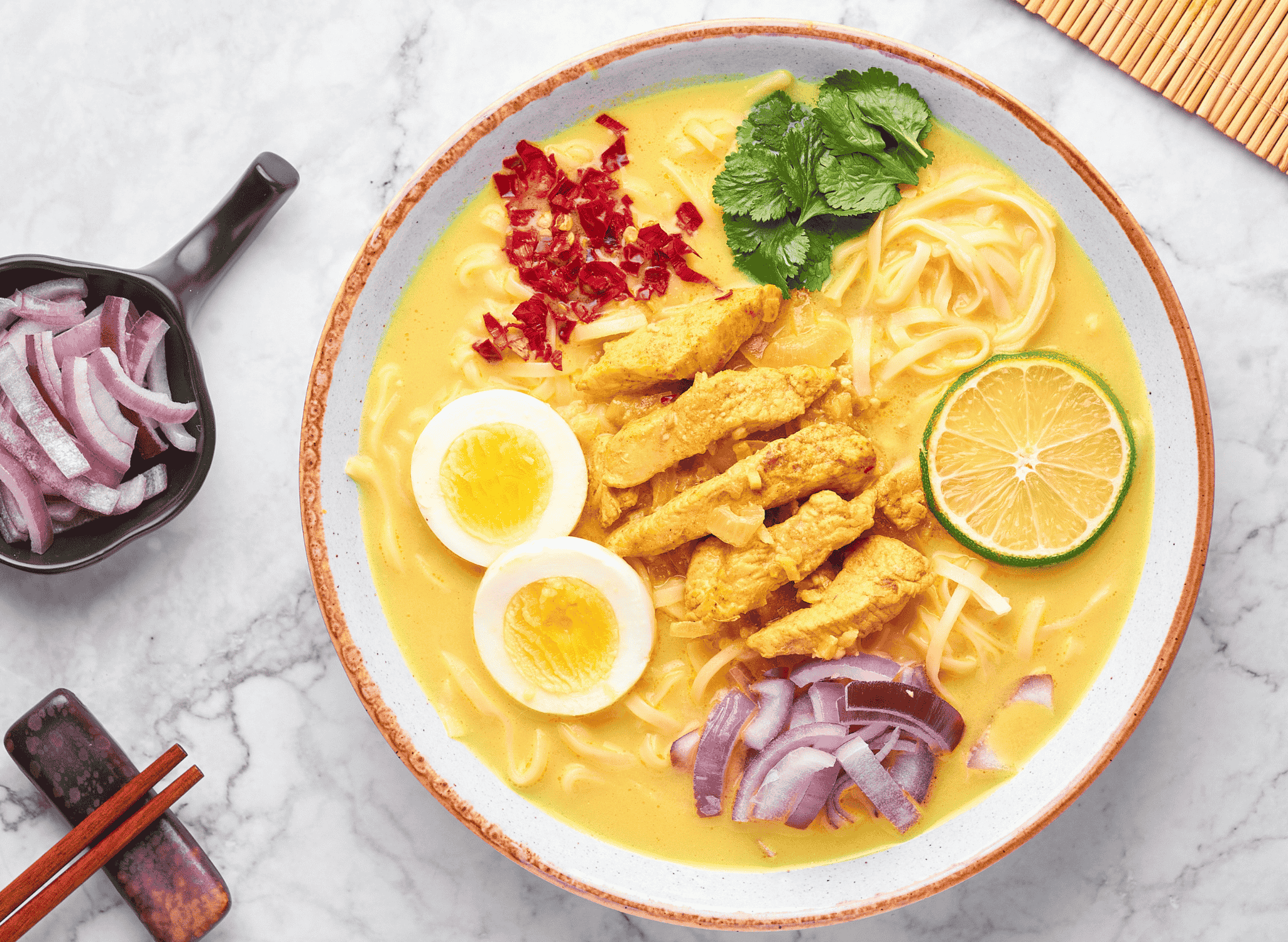
Ohn No Khao Swel
အုန်းနို့ခေါက်ဆွဲ (own-NO cow-SWELL)
Coconut Chicken Noodles
A creamy coconut milk noodle soup with tender chicken, seasoned with chickpea flour for body and topped with crispy fried noodles, sliced onions, and a squeeze of lime. This beloved Burmese comfort dish rivals mohinga in popularity.
Nutrition & Info
Allergen Warnings
Equipment Needed
Instructions
-
1
Simmer chicken thighs in water with turmeric and salt for twenty minutes until cooked through, then remove the chicken, shred it, and reserve the broth.
-
2
Toast chickpea flour in a dry pan until fragrant, then whisk it into the reserved broth to create a smooth thickened base.
-
3
Saute onions and garlic in oil until golden, add coconut milk and the chickpea-thickened broth, then season with fish sauce and chili flakes.
-
4
Simmer the coconut broth for fifteen minutes, return the shredded chicken, and adjust seasoning.
-
5
Cook egg noodles separately, divide among bowls, and ladle the coconut chicken broth over the noodles.
-
6
Garnish with crispy fried noodles, sliced onions, hard-boiled egg halves, and lime wedges.
Did You Know?
Ohn no khao swel is sometimes called the Burmese laksa because of its similarities to the Southeast Asian coconut curry noodle family, though Burmese cooks insist their chickpea flour thickening method is entirely unique.
Chef's Notes
Equipment Tips
- large pot
- wok
- strainer
The Story Behind Ohn No Khao Swel
Ohn no khao swel emerged as a household staple across central Myanmar during the early twentieth century, drawing on the coconut-based curries that traveled along Indian Ocean trade routes. The addition of chickpea flour as a thickener reflects Indian culinary influence, while the egg noodle base connects to Chinese traditions that shaped much of Burmese cuisine. By the mid-twentieth century it had become one of the most requested dishes at Burmese celebrations and family gatherings, second only to mohinga in national popularity.
Comments (0)
Log in to leave a comment.
No comments yet. Be the first to share your thoughts!