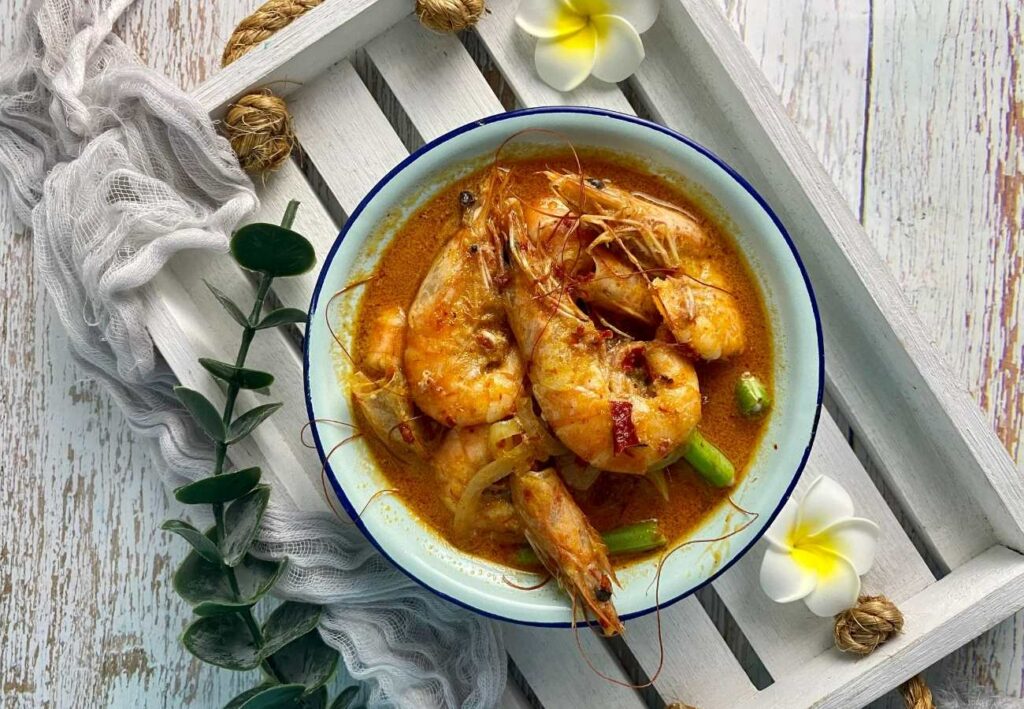
Caril de Camarão
Caril de Camarão (kah-REEL deh kah-mah-ROUW)
Mozambican Shrimp Curry
Plump prawns simmered in a fragrant curry of coconut milk, tomatoes, and piri-piri, reflecting Mozambique's Indian Ocean heritage.
Nutrition & Info
Allergen Warnings
Equipment Needed
Presentation Guide
Vessel: deep ceramic bowl
Garnishes: cilantro, lime wedges
Accompaniments: steamed rice, crusty bread
Instructions
-
1
Heat oil in a large saucepan, sauté onion and garlic until golden, about five minutes over medium heat.
-
2
Add curry powder and piri-piri, cook for one minute until fragrant, stirring constantly to avoid burning.
-
3
Add diced tomatoes and cook for five minutes until they break down into a thick sauce base.
-
4
Pour in coconut milk, stir well, and bring to a gentle simmer for ten minutes to meld flavors.
-
5
Add prawns and cook for four to five minutes until pink and curled, being careful not to overcook them.
-
6
Finish with lime juice, season with salt, garnish with cilantro, and serve over steamed rice.
Did You Know?
Mozambique's coastline stretches over 2,500 km, making seafood curries a cornerstone of the national cuisine.
Chef's Notes
Equipment Tips
- large saucepan
- wooden spoon
- cutting board
Garnishing
cilantro, lime wedges
Accompaniments
steamed rice, crusty bread
The Story Behind Caril de Camarão
Caril de camarão represents the magnificent convergence of Portuguese, Indian, and African culinary traditions along Mozambique's Indian Ocean coast. Indian traders brought curry spices centuries ago, Portuguese colonists added their cooking techniques, and local fishermen supplied the magnificent prawns from the warm Mozambique Channel. The result is a dish that tells the story of cultural exchange through food.
More Mozambican Dishes
 Easy
📜 Story
Easy
📜 Story
Arroz de Coco
Coconut Rice
Accompaniment to any main meal Medium
📜 Story
Medium
📜 Story
Badjias
Mozambican Bean Fritters
Street food, afternoon snack, appetizer Hard
📜 Story
Hard
📜 Story
Bibinca
Mozambican Coconut Layer Cake
Christmas, Easter, special celebrations Medium
📜 Story
Medium
📜 Story
Bolo Polana
Cashew and Potato Cake
Afternoon tea, celebrations, dessert
Comments (0)
Log in to leave a comment.
No comments yet. Be the first to share your thoughts!