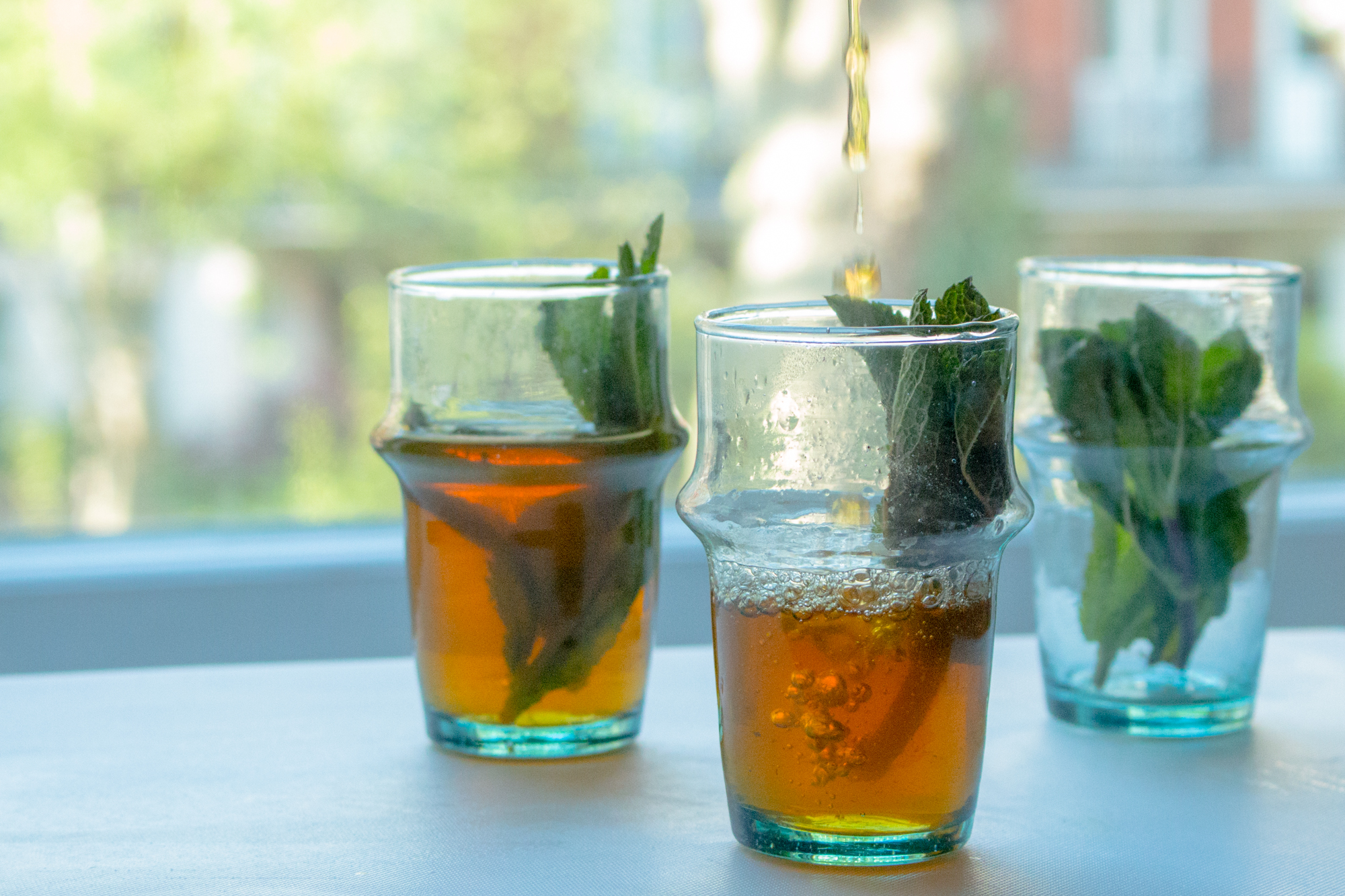
Sweet, aromatic green tea infused with generous bunches of fresh spearmint, poured from a height to create a frothy golden stream.
Nutrition & Info
Equipment Needed
Presentation Guide
Vessel: ornate tea glasses
Garnishes: fresh mint sprig, pine nuts
Accompaniments: Moroccan cookies, chebakia
Instructions
-
1
Rinse tea leaves with a splash of boiling water, swirl and discard. This removes bitterness from the gunpowder tea.
-
2
Add sugar and bruised mint leaves to the teapot with the rinsed tea. Pour boiling water over and steep five minutes.
-
3
Pour a glass of tea and return it to the pot. Repeat this process three times to mix and aerate the tea.
-
4
Pour tea from a height of thirty centimeters into small glasses to create the signature frothy top on each glass.
-
5
Place a fresh sprig of mint in each glass. Traditionally three glasses are served to each guest as a sign of respect.
-
6
Serve with Moroccan cookies or pastries. Refusing tea is considered impolite and offering it signals warm hospitality.
Did You Know?
The Moroccan proverb says: the first glass is gentle as life, the second strong as love, the third bitter as death.
Chef's Notes
Equipment Tips
- Moroccan teapot
- tea glasses
- tea tray
Garnishing
fresh mint sprig, pine nuts
Accompaniments
Moroccan cookies, chebakia
The Story Behind Atay Nana
Moroccan mint tea is far more than a beverage; it is the cornerstone of Moroccan hospitality and social life. Introduced in the eighteenth century through British trade, green tea was adopted and transformed with fresh mint and sugar into something uniquely Moroccan. The elaborate pouring ritual, the ornate teapots and glasses, and the three-glass tradition all elevate tea service into a cultural ceremony.


Comments (0)
Log in to leave a comment.
No comments yet. Be the first to share your thoughts!