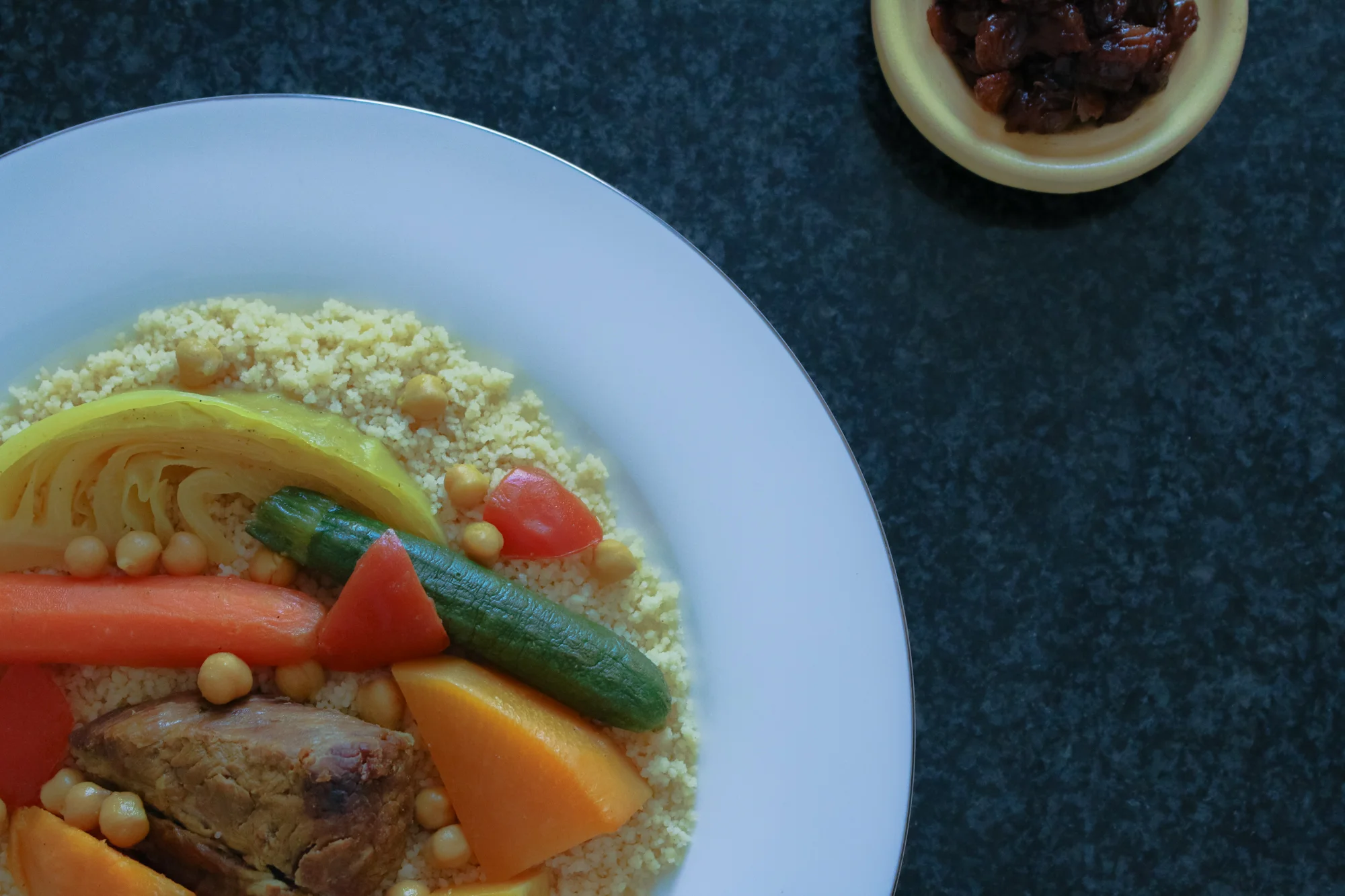
Light, fluffy semolina steamed to perfection and topped with a fragrant seven-vegetable stew — Morocco's sacred Friday tradition eaten communally by hand.
Nutrition & Info
Allergen Warnings
Equipment Needed
Presentation Guide
Vessel: large mounded platter, vegetables arranged around
Garnishes: caramelized onions, raisins, chickpeas
Accompaniments: broth on the side, harissa
Instructions
-
1
Heat the olive oil in the bottom of a couscoussier or large pot over medium-high heat. Brown the lamb chunks on all sides for five to six minutes until deeply golden. Remove the meat and set aside while you build the aromatic vegetable broth.
-
2
In the same pot, sauté the quartered onions for four minutes until softened. Add the chopped tomatoes, tomato paste, turmeric, ginger, and ras el hanout, stirring for two minutes until the spices are fragrant and the tomatoes begin to break down.
-
3
Return the lamb to the pot and add enough water to cover by five centimetres. Bring to a boil, then reduce heat and simmer covered for forty-five minutes. Add the carrots and turnips after the first thirty minutes so they cook without becoming mushy.
-
4
Place the dry couscous in a large shallow bowl and moisten with salted water, raking with your fingers to separate the grains. Set the couscous in the steamer basket above the simmering stew and steam uncovered for twenty minutes until fluffy and tender.
-
5
Remove the couscous to a bowl, break up any clumps with a fork, and drizzle with olive oil and a ladleful of broth. Toss to separate every grain. Add the zucchini and drained chickpeas to the stew below and cook for another fifteen minutes.
-
6
Return the couscous to the steamer for a second steaming of fifteen minutes over the bubbling stew. This double-steaming technique ensures each grain is perfectly light, separate, and infused with the aromatic steam rising from the spiced lamb and vegetables.
-
7
Mound the fluffy couscous on a large serving platter and create a well in the centre. Arrange the lamb and vegetables artfully on top, then ladle the rich broth generously over everything. Garnish with cilantro and serve harissa on the side.
Did You Know?
Couscous is served every Friday after prayers — refusing an invitation is considered bad luck.
Chef's Notes
Equipment Tips
- couscoussier (steamer)
- large serving platter
- ladle
Garnishing
caramelized onions, raisins, chickpeas
Accompaniments
broth on the side, harissa
The Story Behind كسكس
### The Story
Couscous is the national dish of Morocco and one of the oldest foods of the Amazigh (Berber) people of North Africa. Food historians debate the exact timeline: Lucie Bolens traces couscous to the ancient kingdom of Numidia under King Masinissa, citing cooking vessels resembling couscoussiers found in 3rd-century BCE graves in Algeria's Kabylia region. Food writer Charles Perry places its origin between the 11th-century Zirid dynasty and the 13th-century Almohad Caliphate. The word itself likely derives from the Berber root *KS, meaning "well rolled" or "well formed," describing the hand-rolling technique used to create the tiny granules from semolina.
### On the Calendar
In Morocco, couscous is traditionally served on Fridays after the midday prayer, making it the centerpiece of the weekly communal family meal. It is also served at celebrations, religious holidays, and funerals.
### Then & Now
Traditional Moroccan couscous is hand-rolled from semolina, steamed multiple times in a couscoussier over a simmering stew of vegetables and meat, and mounded on a communal platter. Modern instant couscous has made the dish accessible worldwide but lacks the light, airy texture of the hand-prepared original. In 2020, UNESCO inscribed couscous on the Intangible Cultural Heritage list, honoring the traditions of Morocco, Algeria, Tunisia, and Mauritania.
### Legacy
Couscous is more than a grain -- it is the edible identity of the Amazigh people, a dish that has sustained North African families for millennia and now nourishes tables on every continent.


Comments (0)
Log in to leave a comment.
No comments yet. Be the first to share your thoughts!