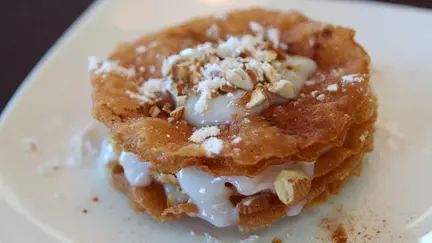
Bastilla au Lait
بسطيلة بالحليب (bas-TEE-lah oh LAY)
Milk Pastilla Dessert
Crispy warqa pastry layered with silky almond milk custard, dusted with cinnamon and powdered sugar, a refined Moroccan dessert.
Nutrition & Info
Allergen Warnings
Equipment Needed
Presentation Guide
Vessel: round serving plate
Garnishes: cinnamon pattern, powdered sugar, almond slivers
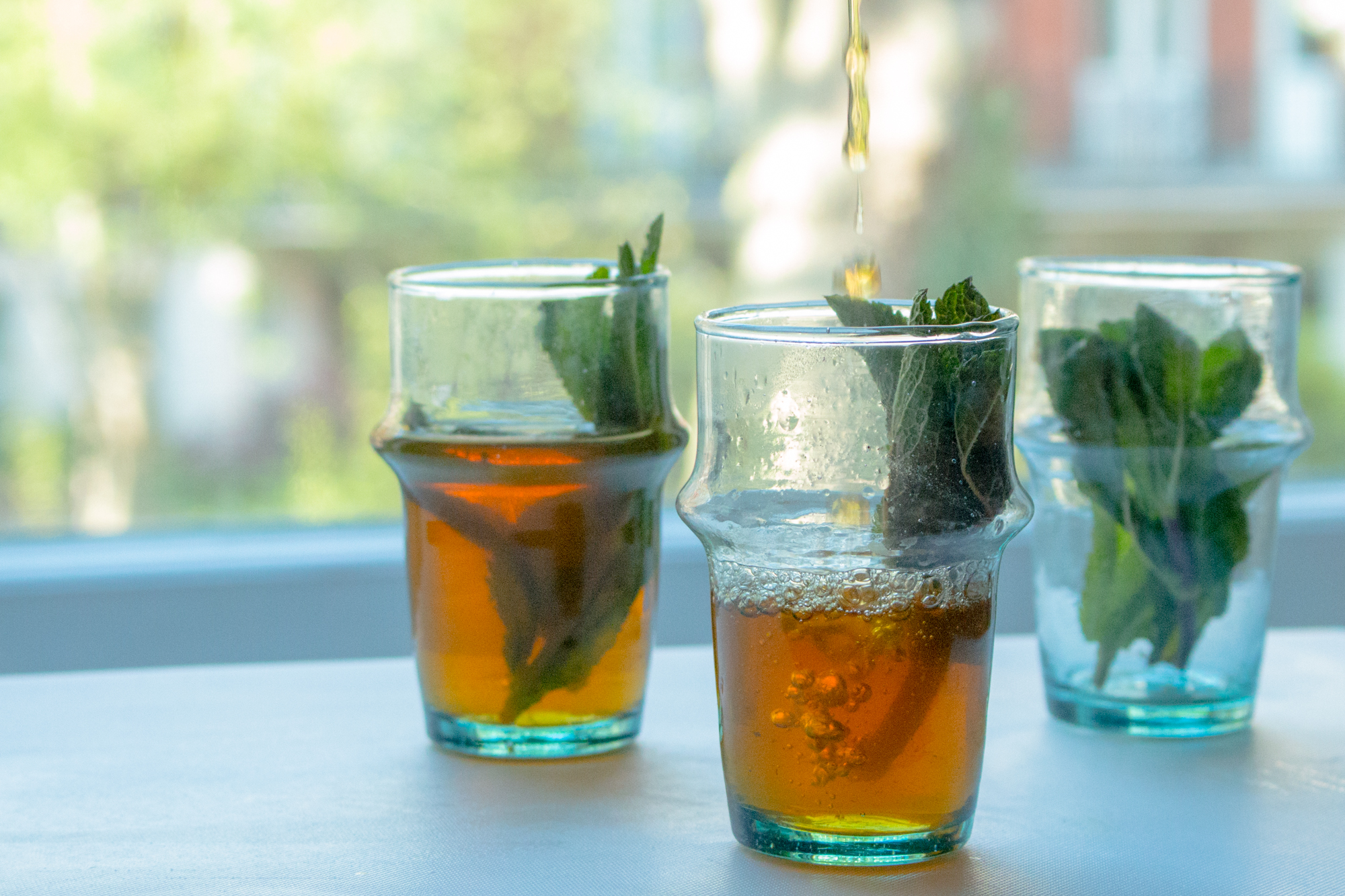
Accompaniments: mint tea
Instructions
-
1
Whisk cornstarch with a cup of cold milk until smooth. Heat remaining milk with sugar and vanilla until simmering gently.
-
2
Pour cornstarch mixture into hot milk while stirring constantly. Cook until thick custard forms, about eight minutes total.
-
3
Remove from heat, stir in orange blossom water and ground almonds. Let the custard cool to lukewarm temperature.
-
4
Brush a round pan with butter, layer four sheets of warqa letting edges drape over sides, brushing butter between them.
-
5
Pour custard filling over pastry layers, fold draped edges inward, and top with remaining buttered warqa sheets.
-
6
Bake at 180C for twenty-five minutes until golden and crisp. Invert, dust with cinnamon and powdered sugar generously.
Did You Know?
Bastilla au lait became wildly popular in Moroccan cafes during Ramadan, where it is served as a luxurious dessert to break the fast.
Chef's Notes
Equipment Tips
- round baking pan
- saucepan
- pastry brush
Garnishing
cinnamon pattern, powdered sugar, almond slivers
Accompaniments
mint tea
The Story Behind Bastilla au Lait
Bastilla au lait is the sweet cousin of the famous savory chicken bastilla. Born from the Andalusian-Moroccan pastry tradition, it showcases the Moroccan genius for combining flaky warqa dough with perfumed fillings. Orange blossom water and almonds connect this dessert to centuries of Arab confectionery art. It gained widespread popularity in the twentieth century as a Ramadan specialty in cities across Morocco.

Comments (0)
Log in to leave a comment.
No comments yet. Be the first to share your thoughts!