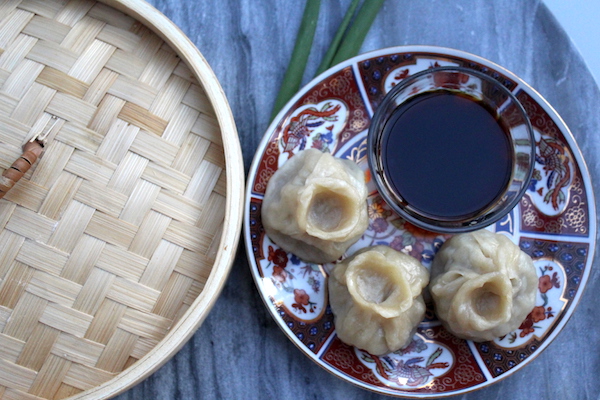
Juicy steamed dumplings filled with seasoned mutton and onions. Mongolia's most celebrated dish, essential for Tsagaan Sar (Lunar New Year).
Nutrition & Info
Allergen Warnings
Equipment Needed
Presentation Guide
Vessel: steamer basket or plate
Accompaniments: soy-vinegar dipping sauce, salad
Instructions
-
1
Combine the flour, pinch of salt, and warm water in a large bowl, mixing until a firm, smooth dough forms. Knead for eight minutes on a clean surface until elastic and not sticky, then cover with a damp cloth and rest for twenty minutes.
-
2
Prepare the filling by mixing the ground meat with finely diced onion, minced garlic, water, salt, and black pepper. The added water keeps the filling juicy during steaming. Mix thoroughly until the mixture is well combined and slightly sticky.
-
3
Divide the dough into walnut-sized balls, about twenty-five to thirty pieces. Roll each ball into a thin circle roughly eight centimetres in diameter, keeping the centre slightly thicker than the edges to prevent tearing when filled.
-
4
Place a tablespoon of meat filling in the centre of each dough circle. Gather the edges upward and pleat them together, pinching and twisting to create a small opening at the top for steam to escape, forming the classic buuz shape.
-
5
Line steamer tiers with oiled parchment paper or cabbage leaves to prevent sticking. Arrange the dumplings with at least two centimetres of space between each one to allow for expansion during cooking in the pressurised steam environment.
-
6
Steam the buuz over rapidly boiling water for eighteen to twenty minutes with the lid tightly closed. The dumplings are done when the dough becomes translucent and the filling is firm with clear juices visible at the top opening.
-
7
Transfer the steamed dumplings carefully to a warm serving plate. Serve immediately with soy sauce or a dipping mixture of soy sauce with rice vinegar and a touch of chilli oil arranged in small individual bowls alongside.
Did You Know?
Mongolian families make thousands of buuz for Tsagaan Sar, freezing them outside in the winter cold.
Chef's Notes
Equipment Tips
- steamer
- rolling pin
- mixing bowl
Accompaniments
soy-vinegar dipping sauce, salad
The Story Behind Buuz
The Story: Buuz are Mongolian steamed dumplings filled with seasoned mutton (or beef) and onions, shaped into round pleated pouches that trap the meat's juices during cooking. The dumpling tradition in Mongolia likely arrived via Chinese cultural exchange, with possible roots in the baozi of northern China, but Mongolians transformed the concept to suit their steppe diet, using the abundant mutton that defines their pastoral life. The pleating technique, producing between ten and thirty folds per dumpling, is a point of pride and a measure of a cook's skill.
On the Calendar: Buuz are most closely associated with Tsagaan Sar, the Mongolian Lunar New Year, when families prepare thousands of dumplings in the weeks before the holiday, freezing them in the winter cold for the days of feasting ahead. They are also served at weddings, national celebrations, and the Naadam festival.
Then & Now: Buuz remain the most popular prepared food in Mongolia, available at restaurants, canteens, and home kitchens nationwide. Modern fillings occasionally include beef or mixed meats, but the mutton original remains the standard. Fast-food buuz shops are a staple of Ulaanbaatar street life.
Legacy: Buuz are the dish that every Mongolian child learns to make, the centerpiece of every New Year, and the simplest proof that nomadic life produces food of extraordinary satisfaction.
More Mongolian Dishes
 Medium
📜 Story
Medium
📜 Story
Aaruul
Dried Curd Cheese
Year-round snack, especially during travel Hard
📜 Story
Hard
📜 Story
Airag
Fermented Mare's Milk
Summer beverage, Naadam festival Medium
📜 Story
Medium
📜 Story
Banshtai Tsai
Dumpling Soup with Milk Tea
Winter breakfast and cold weather meals Easy
📜 Story
Easy
📜 Story
Bantan
Flour Crumble Soup
When ill, for recovery, or on cold mornings
Comments (0)
Log in to leave a comment.
No comments yet. Be the first to share your thoughts!