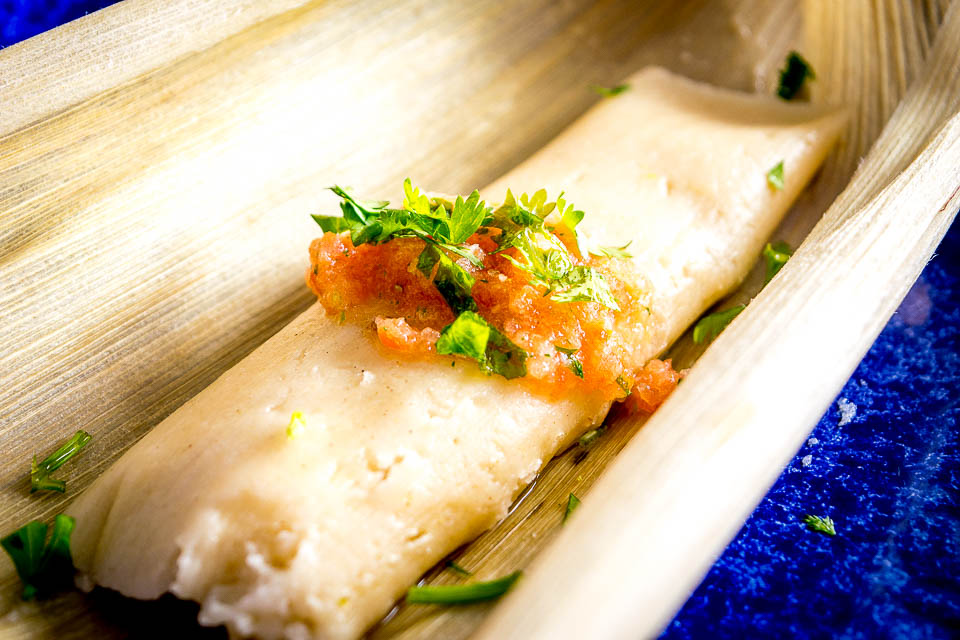
Masa dough filled with shredded chicken in salsa verde, wrapped in corn husks and steamed until tender. Making tamales is a communal family event called a tamalada.
Nutrition & Info
Allergen Warnings
Equipment Needed
Presentation Guide
Vessel: served in corn husk on plate
Garnishes: salsa verde or roja
Accompaniments: crema, pickled jalapeños, refried beans
Instructions
-
1
Soak the dried corn husks in hot water for at least one hour until completely pliable and easy to fold without cracking. Weight them down with a plate to keep them submerged. Drain and pat dry with paper towels before filling.
-
2
Beat the vegetable shortening with the salt and baking powder using an electric mixer for three minutes until light and fluffy. This whipping step incorporates air into the fat, which is essential for achieving tamales with a light, spongy texture rather than dense and heavy.
-
3
Gradually add the masa harina to the whipped shortening, alternating with the warm chicken broth. Beat for five minutes until the dough is smooth and spreadable. Test by dropping a small ball of dough into cold water; it should float, indicating sufficient air incorporation.
-
4
Combine the shredded chicken with the salsa verde or red chile sauce, tossing until every piece of chicken is well coated. The filling should be saucy enough to keep the chicken moist during steaming but not so wet that it soaks through the masa.
-
5
Lay a soaked corn husk flat with the wide end toward you. Spread three tablespoons of masa dough into a thin rectangle on the upper two-thirds of the husk, leaving borders on the sides. Place two tablespoons of the chicken filling down the centre of the masa.
-
6
Fold both long sides of the husk inward over the filling so the masa edges meet and enclose the chicken. Fold the narrow bottom end up and secure by tying with a thin strip of corn husk or placing seam-side down in the steamer.
-
7
Stand the tamales upright in a steamer basket with the open ends facing up. Steam over simmering water for one hour to one hour and fifteen minutes. The tamales are done when the masa pulls away cleanly from the husk without sticking. Rest five minutes before serving.
Did You Know?
Tamales date back to 5000 BC in Mesoamerica. In Mexico, the person whose tamale contains the hidden figurine must host a party on Dia de la Candelaria.
Chef's Notes
Equipment Tips
- large steamer pot
- mixing bowl
- corn husks
Garnishing
salsa verde or roja
Accompaniments
crema, pickled jalapeños, refried beans
The Story Behind Tamales
### The Story
Tamales are among the oldest prepared foods in the Americas, with some historians dating their origins to 8000-5000 BCE. Archaeological evidence, including the Mural of San Bartolo in Guatemala (c. 100 CE) and Classic Maya hieroglyphs, confirms their deep antiquity. The Aztec, Maya, Olmec, and Toltec civilizations all relied on tamales -- corn dough (masa) filled with meats, chilies, or fruits, wrapped in corn husks or banana leaves and steamed. They were practical food for armies, hunters, and travelers, and sacred food offered to the gods. Fray Bernardino de Sahagun documented the extraordinary variety of tamales sold in Aztec markets in his Florentine Codex.
### On the Calendar
Tamales are essential at Christmas, Dia de la Candelaria (February 2), Dia de los Muertos, and family celebrations. Making tamales (tamaladas) is a communal family event, often spanning an entire day.
### Then & Now
Modern Mexico boasts hundreds of regional tamale varieties -- from Oaxacan tamales wrapped in banana leaves to the massive zacahuil of the Huasteca region. Sweet, savory, vegetarian, and elaborate mole-filled versions all thrive.
### Legacy
Tamales are the edible thread connecting modern Mexico to its Mesoamerican roots -- a food so ancient it predates written history, yet so vital it remains at the center of Mexican celebration.




Comments (1)
Log in to leave a comment.
Tried this for a dinner party and got so many compliments!