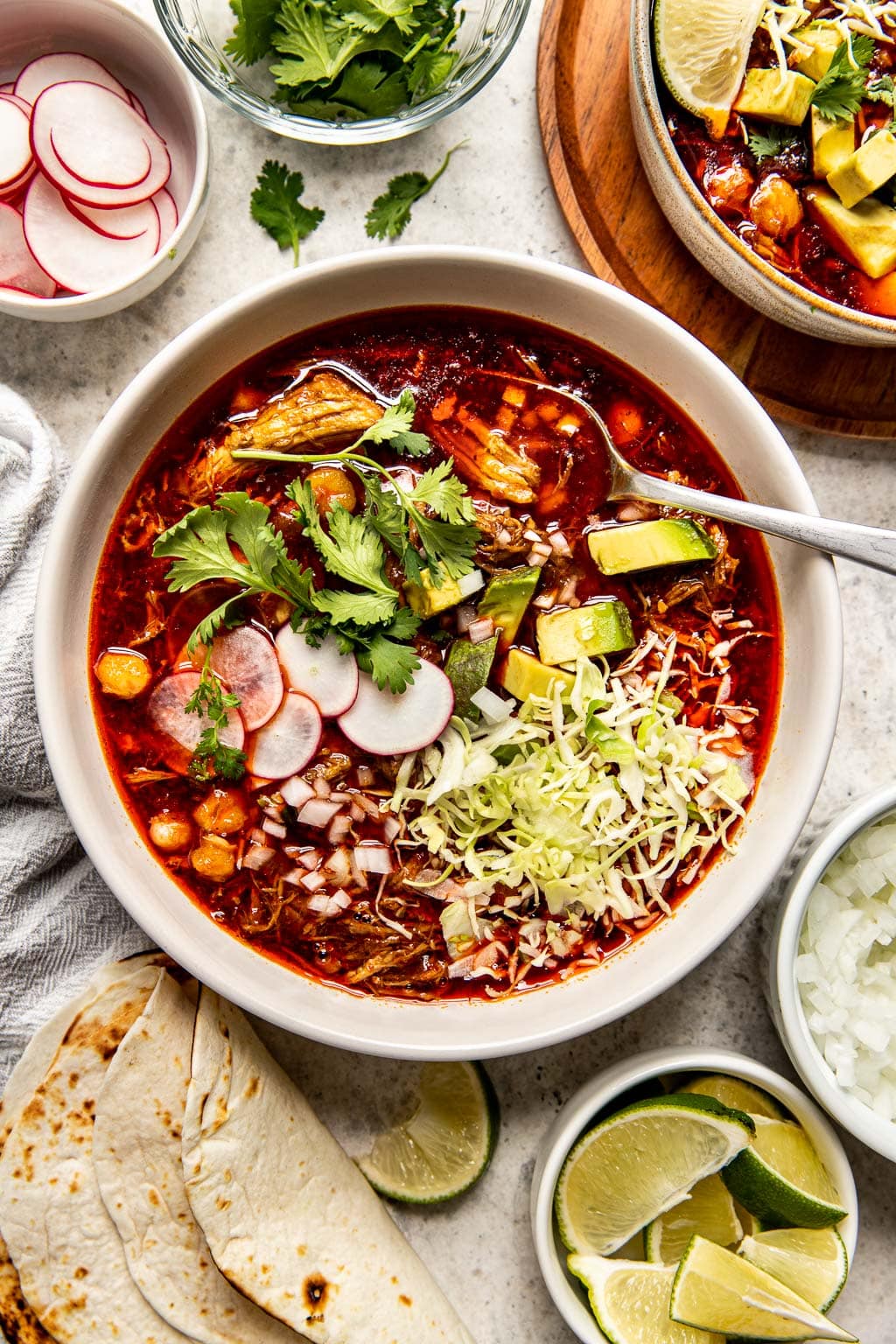
A hearty, festive soup of hominy corn and tender chicken in a rich, chili-red broth, topped with crunchy radish, cabbage, and oregano. Uses chicken instead of traditional meat.
Instructions
-
1
Place the chicken thighs in a large pot with eight cups of water, half the onion, and three garlic cloves. Bring to a boil, skim the foam, then reduce to a simmer. Cook for thirty-five minutes until the chicken is tender and the broth is flavourful.
-
2
While the chicken cooks, toast the dried guajillo and ancho chiles in a dry skillet over medium heat for one to two minutes per side until fragrant and slightly puffed. Soak the toasted chiles in hot water for twenty minutes until soft and pliable.
-
3
Blend the soaked chiles with the remaining half onion, remaining garlic cloves, oregano, cumin, and one cup of the soaking liquid until you have a completely smooth, deep red chile sauce. Strain through a fine-mesh sieve to remove any remaining skin pieces.
-
4
Remove the cooked chicken from the broth and let cool. Shred the meat into large pieces, discarding the skin and bones. Strain the broth through a fine sieve and return the clear broth to the pot over medium heat.
-
5
Add the chile sauce to the broth, stirring well to combine. Add the drained hominy and bring to a simmer. Cook for twenty minutes, stirring occasionally, to allow the hominy to absorb the chile-flavoured broth and for the flavours to meld together.
-
6
Return the shredded chicken to the pot and season generously with salt. Simmer for ten more minutes. The finished pozole should be a rich, brick-red broth with plump, tender hominy kernels and generous shreds of chicken in every bowl.
-
7
Ladle the pozole into deep bowls and serve with a large platter of garnishes: finely shredded cabbage, thinly sliced radishes, diced white onion, dried oregano for crumbling, lime wedges, and crispy tostadas for breaking into the soup.
Did You Know?
Uses chicken instead of traditional pork. Pozole has Aztec origins — hominy corn was considered sacred in Mesoamerican cultures.
The Story Behind Pozole
### The Story
Pozole (from the Nahuatl pozolli) is one of Mexico's most ancient dishes, documented in Fray Bernardino de Sahagun's 16th-century Florentine Codex. In pre-Columbian Mesoamerica, pozole was a sacred ceremonial food reserved for the Aztec elite, prepared with hominy (nixtamalized corn) -- a grain considered divine. After the Spanish conquest in the early 16th century, colonial authorities banned the ritual practices associated with the dish. Pork replaced the original protein, and pozole transitioned from a ceremonial food into a communal celebration dish accessible to all social classes.
### On the Calendar
Pozole is served at Mexican Independence Day celebrations on September 15-16, at Christmas, New Year's, birthdays, and other family gatherings. Thursday is traditionally "pozole day" in many parts of Mexico.
### Then & Now
Three main regional varieties exist: pozole rojo (red, with dried chiles) from Jalisco, pozole verde (green, with tomatillos and pepitas) from Guerrero, and pozole blanco (white, unadorned broth). Each is served with an array of garnishes -- shredded cabbage, radishes, oregano, lime, and tostadas.
### Legacy
Pozole is Mexico's great communal stew -- a dish that transformed from sacred Aztec ritual into the centerpiece of modern Mexican celebration.




Comments (2)
Log in to leave a comment.
Tried this for a dinner party and got so many compliments!
One of the best recipes I've found online. Authentic and delicious.