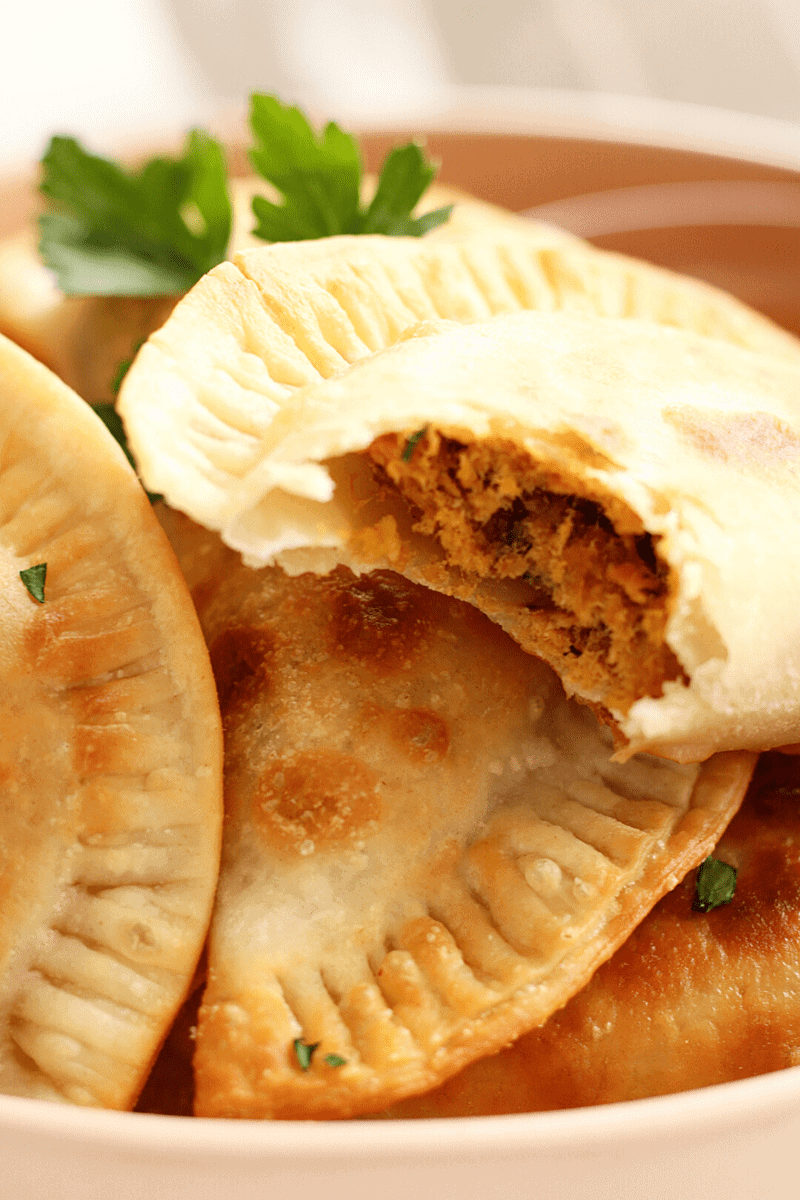
Crispy half-moon pastries filled with seasoned fish, onions, and parsley, deep-fried until shatteringly golden. These addictive Mauritanian street snacks are the most popular quick bite in Nouakchott.
Nutrition & Info
Allergen Warnings
Equipment Needed
Presentation Guide
Instructions
-
1
Make dough by mixing flour, egg, salt, oil, and water. Knead until smooth and elastic. Rest for 20 minutes.
-
2
Combine flaked fish with diced onion, parsley, cumin, cayenne, lemon juice, and salt.
-
3
Roll dough thin and cut into 10cm circles. Place a spoonful of fish filling on each circle.
-
4
Fold into half-moons and seal edges firmly with a fork, pressing tightly to prevent opening during frying.
-
5
Heat oil to 175C. Fry pastels in batches for 3-4 minutes until deep golden and crispy.
-
6
Drain on paper towels and serve hot with lime wedges and hot pepper sauce.
Did You Know?
Pastel vendors in Nouakchott set up at every street corner by 4pm, their frying oil perfuming entire neighborhoods.
Chef's Notes
Equipment Tips
- deep fryer or heavy pot
- mixing bowl
- rolling pin
- fork
Garnishing
lime wedges
Accompaniments
hot sauce, onion salad
The Story Behind Pastels
Pastels trace their ancestry to Portuguese empanadas, arriving on Mauritania's coast through centuries of Atlantic maritime trade. The Mauritanian version filled with locally caught fish became a street food phenomenon in Nouakchott, where vendors fry them fresh throughout the afternoon and evening. They represent the coastal culinary identity of a country often associated only with its desert interior.


Comments (0)
Log in to leave a comment.
No comments yet. Be the first to share your thoughts!