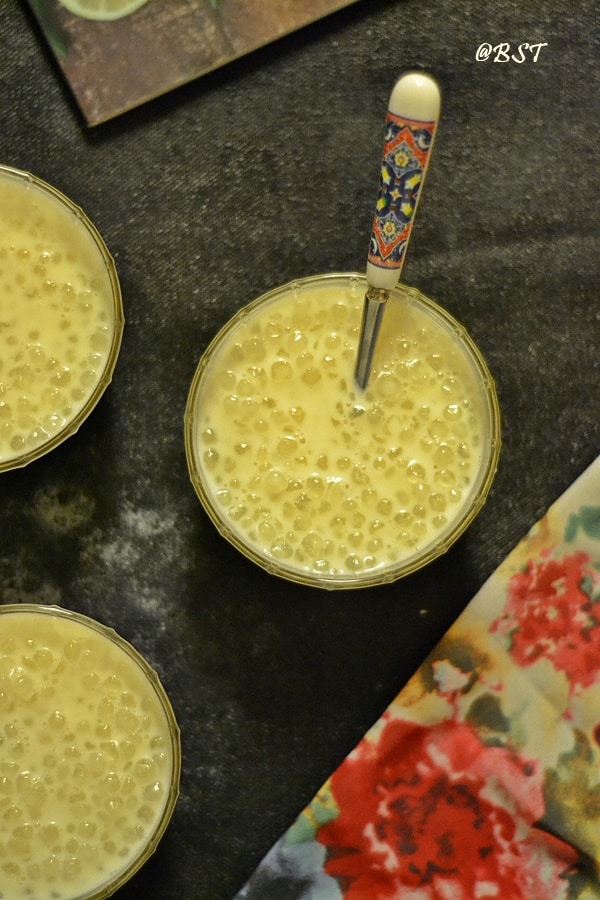
Saagu Bondibai
ސާގު ބޮނޑިބައި (SAH-goo bon-dee-BY)
Sago Coconut Pudding
A creamy, aromatic dessert of sago pearls cooked in sweetened coconut milk with cardamom, rose water, and a sprinkle of crushed nuts.
Nutrition & Info
Allergen Warnings
Equipment Needed
Presentation Guide
Vessel: small glass bowls
Garnishes: crushed cashews, cardamom pods
Accompaniments: none
Instructions
-
1
Soak sago pearls in water for thirty minutes until slightly swollen. Drain well.
-
2
Bring coconut milk and water to a gentle boil in a heavy saucepan. Add drained sago pearls and stir continuously.
-
3
Add sugar and crushed cardamom pods. Reduce heat to low and cook fifteen minutes, stirring often to prevent sticking.
-
4
The pudding is ready when sago pearls turn translucent and the mixture thickens to a creamy porridge consistency.
-
5
Remove from heat and stir in rose water. Toast crushed cashews in ghee until golden.
-
6
Pour into serving bowls and top with toasted cashews. Serve warm or chilled depending on preference.
Did You Know?
Saagu Bondibai is the first dessert Maldivian children learn to make, as it requires only stirring and patience.
Chef's Notes
Equipment Tips
- heavy-bottomed saucepan
- ladle
- serving bowls
Garnishing
crushed cashews, cardamom pods
Accompaniments
none
The Story Behind Saagu Bondibai
Saagu Bondibai reflects the Maldives' position along ancient maritime trade routes, combining sago from Southeast Asia, cardamom from India, and rose water from Arabia. This pudding became the quintessential Ramadan dessert, prepared in large batches to share among neighbors during iftar. The dish demonstrates how the Maldives absorbed ingredients from every passing merchant vessel and transformed them into something uniquely Maldivian.



Comments (0)
Log in to leave a comment.
No comments yet. Be the first to share your thoughts!