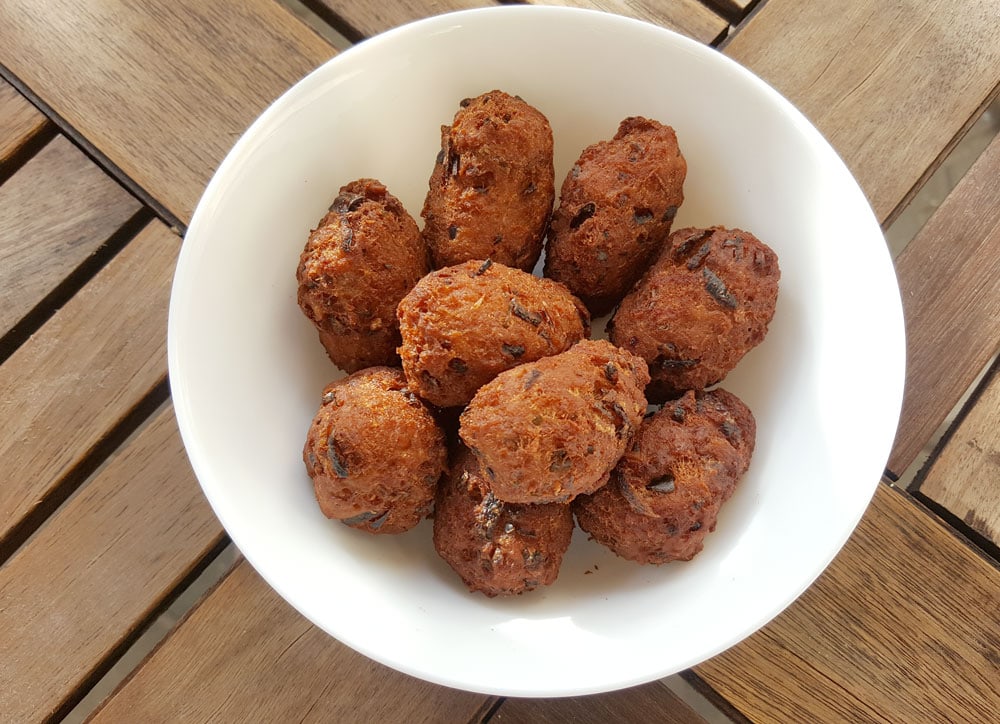
Dense, flavorful deep-fried fritters made from ground lentils mixed with tuna, onion, ginger, and aromatic spices, crunchy outside and soft within.
Nutrition & Info
Allergen Warnings
Equipment Needed
Presentation Guide
Instructions
-
1
Drain soaked chana dal and grind to a coarse paste in a food processor. Do not make it too smooth.
-
2
Mix ground dal with shredded tuna, onion, chilies, ginger, curry leaves, fennel, cumin, and turmeric.
-
3
Season with salt and mix well. The mixture should hold together when pressed. Add a tablespoon of rice flour if too wet.
-
4
Shape into small oval or round patties about two inches across and one inch thick.
-
5
Deep fry in batches at 160C for five to six minutes until dark golden brown and cooked through.
-
6
Drain well and serve hot with a tangy dipping sauce or sweet chili. These are best eaten within an hour of frying.
Did You Know?
Kavaabu is considered the king of Maldivian hedhikaa, and a proper tea time spread must include it alongside Bajiyaa and Bis Keemiya.
Chef's Notes
Equipment Tips
- food processor
- deep pan
- mixing bowl
Garnishing
curry leaves, lime
Accompaniments
chili sauce, tea
The Story Behind Kavaabu
Kavaabu draws from both Indian and Arab culinary traditions, combining lentils from the Indian subcontinent with the Maldivian love of smoked tuna. The name itself has Arabic roots, connected to the kebab family of preparations. This fritter became a cornerstone of the Maldivian hedhikaa tradition, the elaborate snack spreads served with afternoon tea that are central to Maldivian social life and hospitality.



Comments (0)
Log in to leave a comment.
No comments yet. Be the first to share your thoughts!