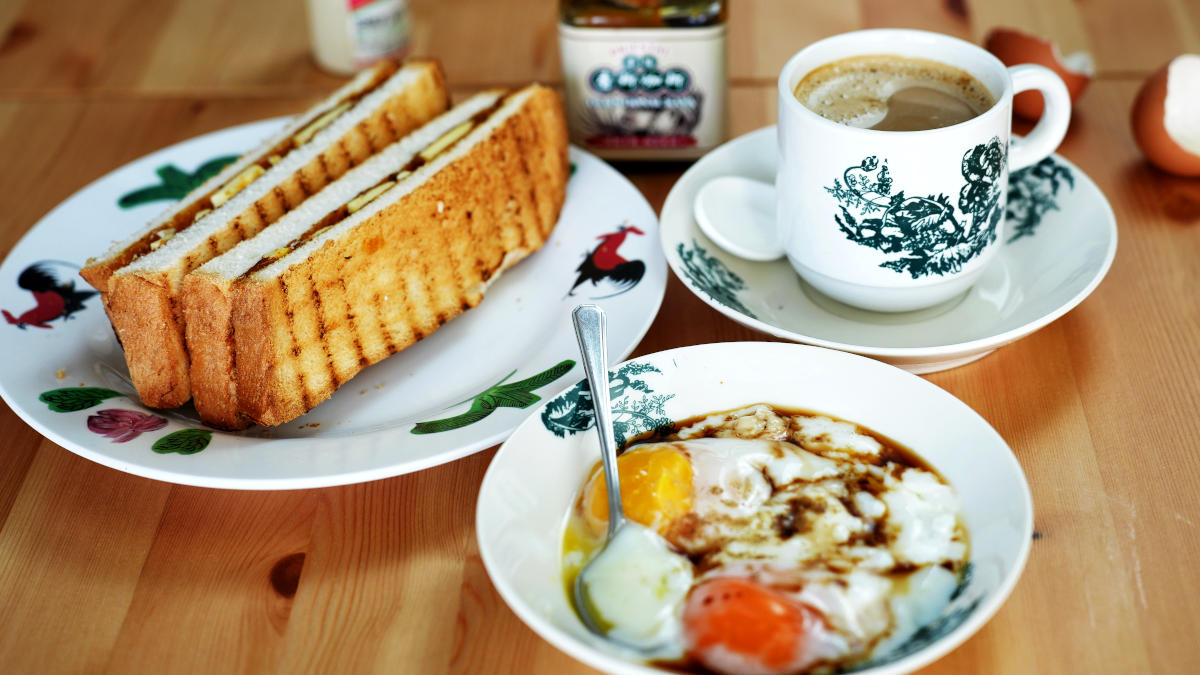
Crispy charcoal-toasted bread slathered with kaya (coconut and pandan egg jam) and cold slabs of butter — served with soft-boiled eggs seasoned with soy sauce and white pepper.
Nutrition & Info
Allergen Warnings
Equipment Needed
Presentation Guide
Vessel: small plate with egg dish
Garnishes: none — simplicity is the point
Accompaniments: soft-boiled eggs, kopi-o or kopi-c
Instructions
-
1
Toast bread slices over charcoal or in a toaster until golden and crispy on both sides.
-
2
Spread a generous layer of kaya on one slice, place cold butter slabs on top.
-
3
Sandwich with the second slice and cut diagonally.
-
4
Soft-boil eggs: bring water to a boil, turn off heat, add eggs, cover for 7 minutes.
-
5
Crack eggs into a small dish. Season with a dash of light soy sauce and white pepper.
-
6
Dip the kaya toast into the runny egg mixture and enjoy with kopi-o.
Did You Know?
The original kopitiams used charcoal-fired metal frames to toast bread, and purists insist this charcoal toast has a flavor that modern electric toasters can never replicate.
Chef's Notes
Equipment Tips
- charcoal bread toaster or regular toaster
- small saucepan
Garnishing
none — simplicity is the point
Accompaniments
soft-boiled eggs, kopi-o or kopi-c
The Story Behind Kaya Toast
Kaya toast was created by Hainanese Chinese immigrants who worked as cooks in British colonial households. They adapted Western toast-and-jam breakfasts with local kaya (coconut egg jam flavored with pandan), creating a uniquely Malaysian breakfast institution. Kopitiams (coffee shops) became the neighborhood gathering spots where kaya toast, soft-boiled eggs, and thick kopi formed the essential morning ritual. This tradition continues unchanged across thousands of kopitiams today.
More Malaysian Dishes
 Easy
📜 Story
Easy
📜 Story
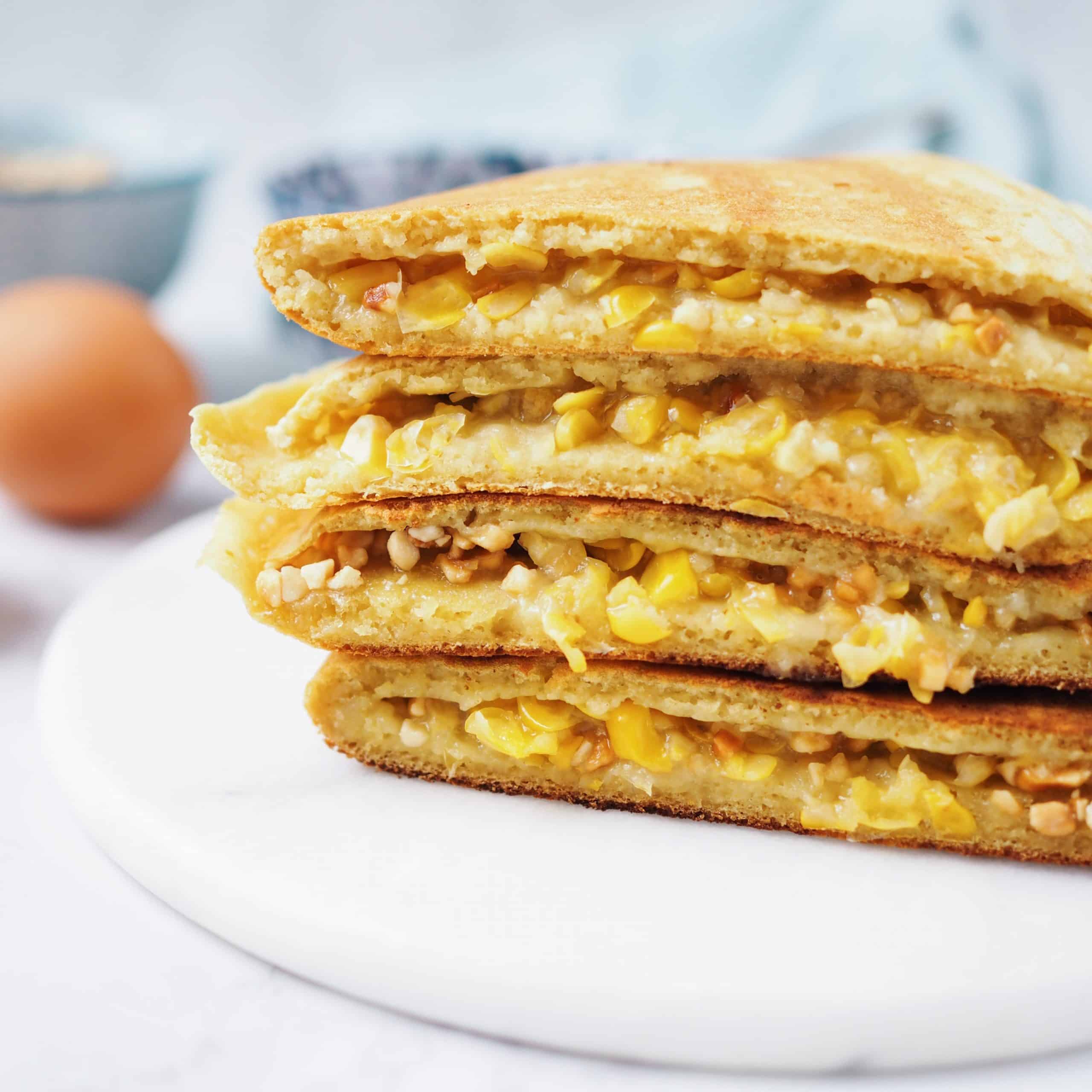
Apam Balik
Peanut Pancake Turnover
Night market snack, afternoon treat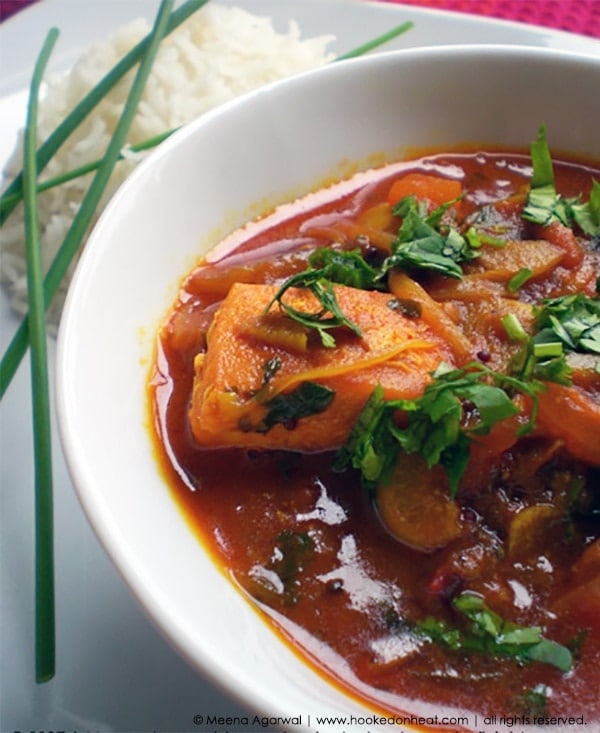 Medium
📜 Story
Medium
📜 Story
Asam Pedas
Sour and Spicy Fish Stew
Lunch, especially along the coastal states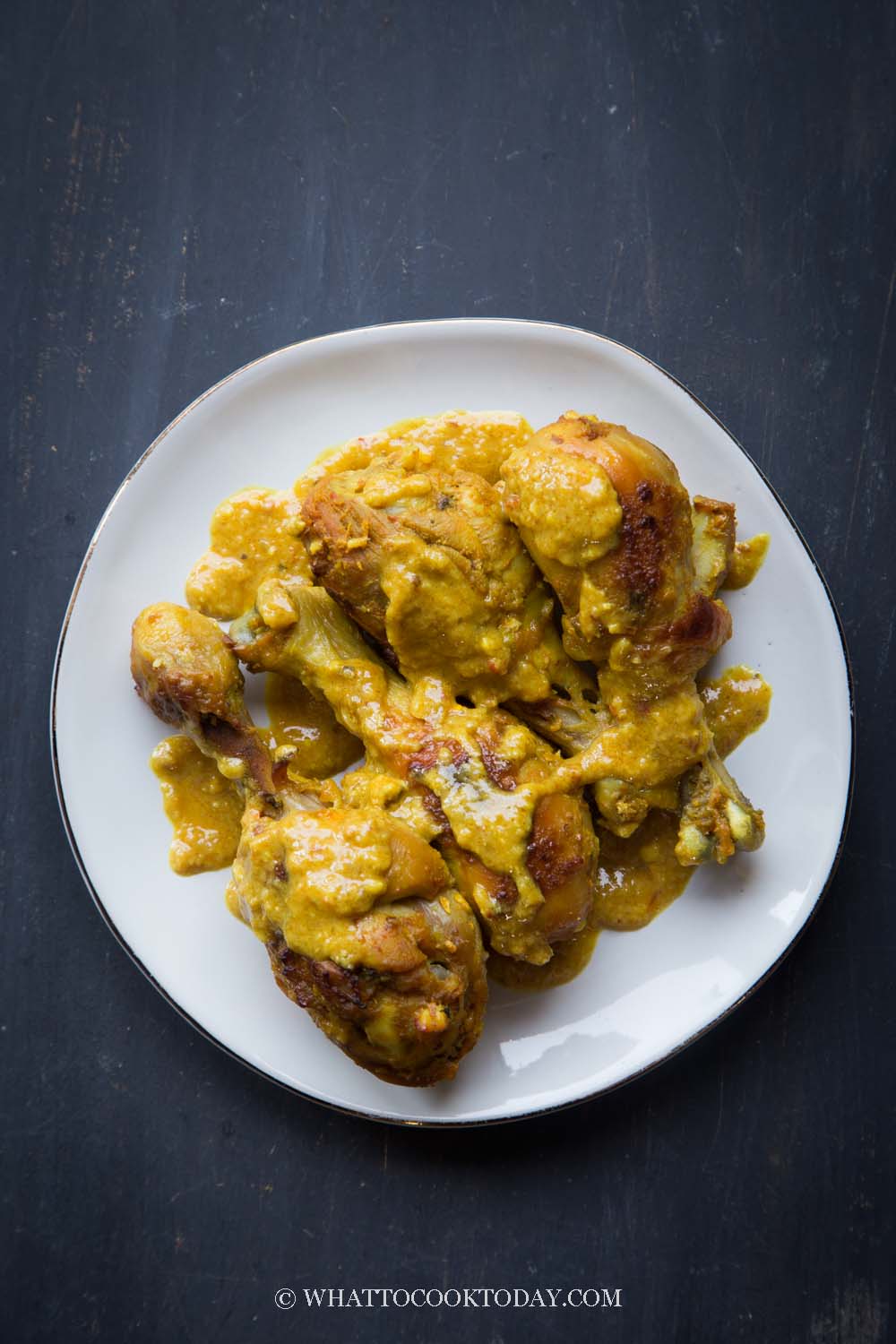 Medium
📜 Story
Medium
📜 Story
Ayam Percik
Flame-Grilled Spiced Chicken
Ramadan bazaars, night markets, festive occasions Medium
📜 Story
Medium
📜 Story
Banana Leaf Rice
South Indian Rice on Banana Leaf
Lunch, the main midday meal at Indian restaurants
Comments (0)
Log in to leave a comment.
No comments yet. Be the first to share your thoughts!