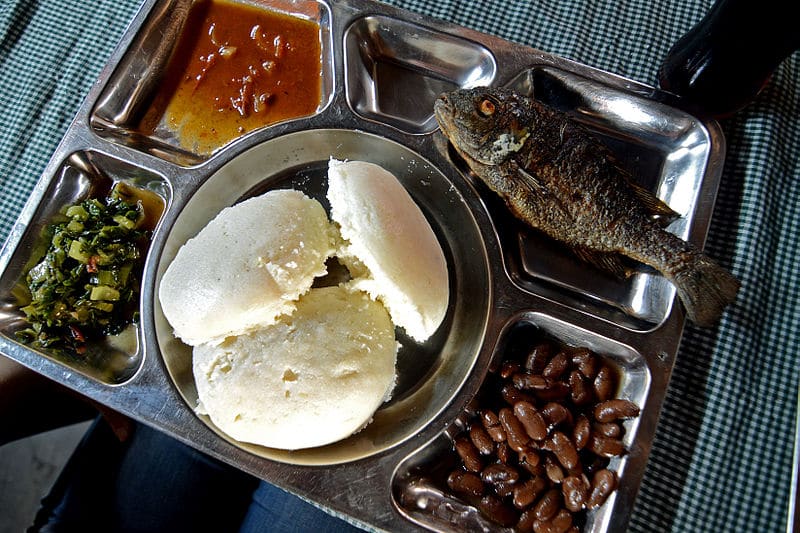
Nsima with Ndiwo
Nsima ndi Ndiwo (n-SEE-mah n-dee n-DEE-woh)
Maize Porridge with Relish
Thick nsima served with a rich vegetable or bean relish. The foundation of every Malawian meal.
Nutrition & Info
Allergen Warnings
Equipment Needed
Presentation Guide
Vessel: plate with nsima mound and relish alongside
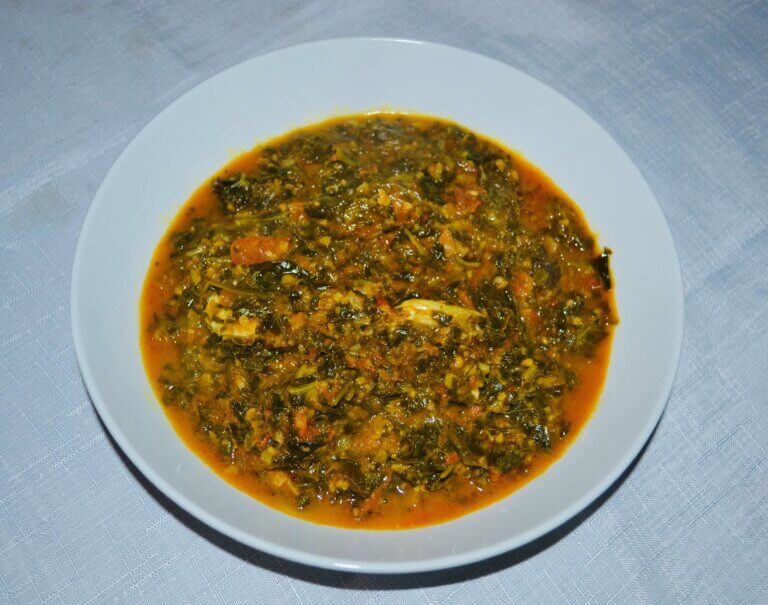
Accompaniments: vegetable or meat relish
Instructions
-
1
Pour the water into a large heavy-bottomed pot and bring to a boil over high heat. Sprinkle in one cup of the maize flour while stirring constantly with a wooden spoon to make a thin, smooth porridge.
-
2
Reduce the heat to medium-low, cover the pot, and let the thin porridge simmer for ten minutes, stirring occasionally to prevent it from sticking to the bottom of the pot or forming lumps.
-
3
Remove the lid and begin adding the remaining maize flour gradually, one handful at a time, stirring vigorously and pressing out any lumps after each addition until the mixture becomes very thick and stiff.
-
4
Continue stirring the nsima forcefully for five more minutes over low heat until it pulls away cleanly from the sides of the pot and forms a smooth, cohesive mass that holds its shape when pressed.
-
5
While the nsima cooks, prepare the ndiwo relish. Heat the vegetable oil in a separate pan over medium heat, add the diced onion, and sauté for three minutes until softened and lightly golden.
-
6
Add the diced tomatoes to the onion and cook for three minutes until they break down. Add the soaked beans with just enough water to cover, then simmer for twenty minutes until the beans are tender.
-
7
Add the chopped leafy greens to the bean mixture, season with salt, and cook for five more minutes until the greens are tender and the relish has thickened, with most of the liquid absorbed.
-
8
Wet a wooden spoon and scoop portions of nsima, shaping them into smooth rounds on individual plates. Serve with the bean and greens ndiwo alongside, eating by hand by rolling small balls of nsima into the relish.
Did You Know?
Nsima etiquette requires eating with the right hand, rolling a small ball and using it to scoop relish.
Chef's Notes
Equipment Tips
- heavy pot
- wooden spoon (mthiko)
- skillet
Accompaniments
vegetable or meat relish
The Story Behind Nsima with Ndiwo
The Story: Nsima with ndiwo is the fundamental Malawian meal: a firm mound of maize porridge (nsima) served with one or more relishes (ndiwo) that provide flavor, protein, and vegetables. Nsima is prepared by gradually adding maize flour to boiling water while stirring vigorously until the mixture becomes a smooth, thick, moldable mass. The ndiwo might be stewed greens (masamba), bean curry, fish stew, or groundnut sauce. Before maize arrived in the sixteenth century, similar preparations were made with millet and sorghum, meaning the concept predates the specific grain.
On the Calendar: Nsima with ndiwo is eaten at virtually every lunch and dinner across Malawi, regardless of social class. It is not a special-occasion dish but rather the daily reality of Malawian eating. A day without nsima is considered a day without a proper meal.
Then & Now: The maize-based version has been standard for centuries, though nutritionists now promote composite flours that add soybean or orange-fleshed sweet potato for improved nutrition. The technique of preparing nsima remains a marker of domestic skill, and a well-made nsima, smooth, firm, and properly textured, is a source of pride.
Legacy: Nsima is not merely food in Malawi; it is sustenance elevated to cultural identity. To be Malawian is to eat nsima, and the dish binds the nation across ethnic, regional, and economic divides.


Comments (0)
Log in to leave a comment.
No comments yet. Be the first to share your thoughts!