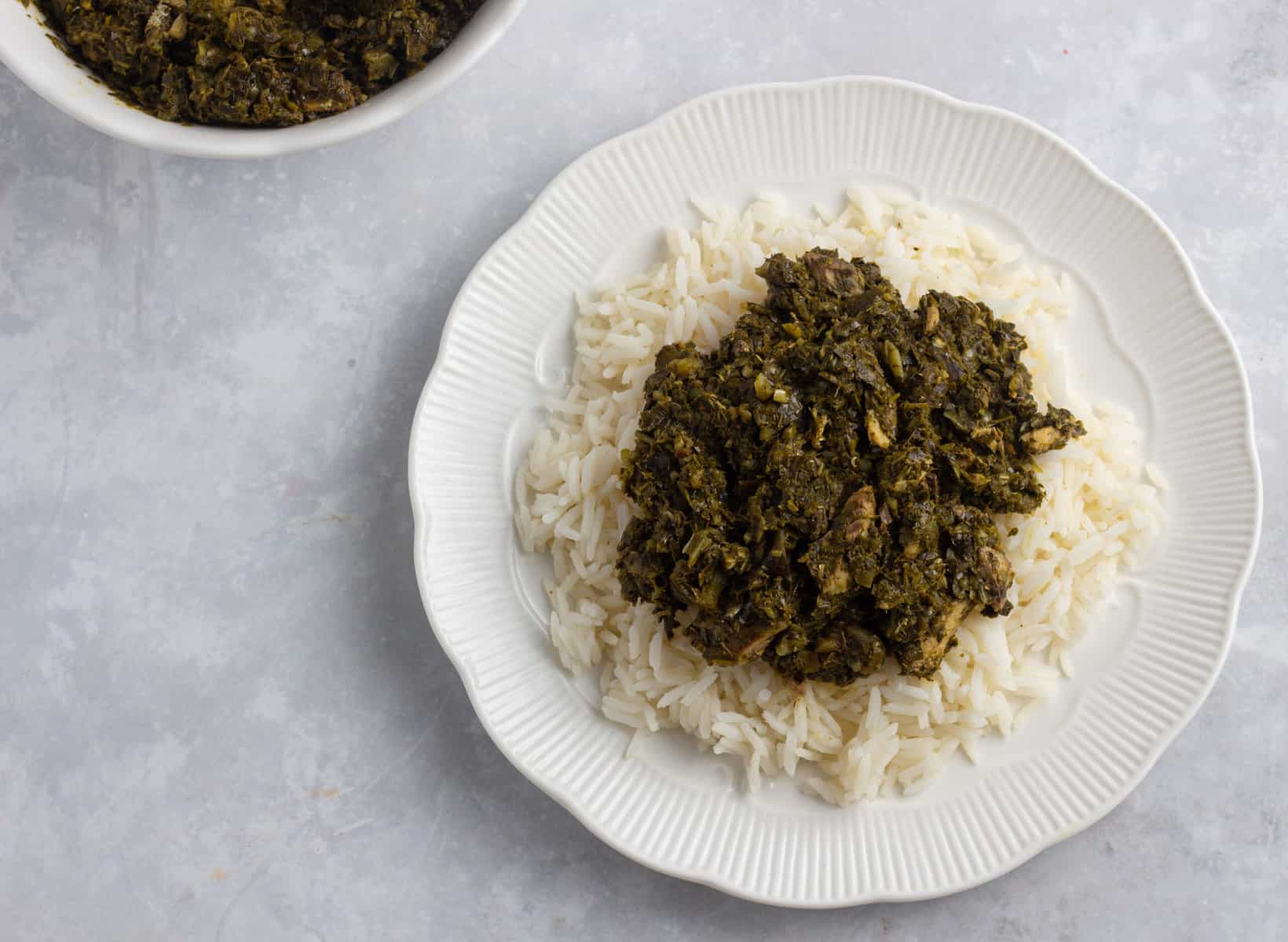
Pounded cassava leaves braised with shredded beef, coconut milk, and garlic. A rich, earthy Malagasy classic.
Nutrition & Info
Allergen Warnings
Equipment Needed
Presentation Guide
Vessel: deep bowl
Garnishes: coconut cream drizzle
Accompaniments: steamed white rice
Instructions
-
1
If using fresh cassava leaves, pound them in a mortar or pulse in a food processor until finely ground. Bring a large pot of water to a boil, add the ground leaves, and boil vigorously for twenty minutes to remove bitterness.
-
2
Drain the boiled cassava leaves thoroughly in a colander, pressing out excess water with the back of a spoon. If using spinach as a substitute, blanch for only two minutes before draining and chopping finely.
-
3
Heat the vegetable oil in a large heavy-bottomed pot over medium-high heat. Add the diced onion and sauté for three minutes until translucent, then add the minced garlic and sliced chilli, stirring for one minute.
-
4
Add the beef strips to the pot and cook for five minutes, stirring regularly, until the meat is browned on all sides and no pink remains visible. Season lightly with salt and pepper at this stage.
-
5
Add the diced tomato and cook for three minutes until the tomato breaks down into a sauce. Add the drained cassava leaves to the pot and stir well to combine everything into a uniform mixture.
-
6
Pour in the coconut milk and stir to incorporate it evenly throughout the stew. Reduce the heat to low, cover the pot, and simmer for twenty minutes, stirring occasionally to prevent sticking.
-
7
The ravitoto is ready when the leaves are very tender, the beef is fully cooked through, and the sauce has thickened to a rich, creamy consistency. Taste and adjust seasoning with salt and pepper.
-
8
Serve the ravitoto hot over a generous mound of steamed white rice, which is the traditional accompaniment in Malagasy cuisine, spooning extra sauce over the top of each portion.
Did You Know?
Ravitoto is traditionally made with zebu beef, the sacred humped cattle of Madagascar.
Chef's Notes
Equipment Tips
- mortar and pestle or food processor
- large pot
- wooden spoon
Garnishing
coconut cream drizzle
Accompaniments
steamed white rice
The Story Behind Ravitoto
The Story: Ravitoto is a rich, earthy dish of pounded cassava leaves slowly simmered with garlic, onions, ginger, and tomatoes until the greens break down into a thick, deeply flavored stew. The dish is traditionally prepared with zebu beef or dried shrimp for protein. Cassava, introduced to Madagascar from South America via Portuguese traders in the sixteenth century, was rapidly adopted across the island, and its leaves became as important as the tuber itself. The labor-intensive process of pounding the tough cassava leaves into a fine paste before cooking is traditionally women's work, requiring significant time and effort.
On the Calendar: Ravitoto is everyday food across Madagascar, served over rice as a laoka at lunch or dinner. It is particularly common in the central highlands and is considered a comfort food that Malagasy abroad associate strongly with home.
Then & Now: The basic preparation has changed little over centuries, though modern cooks may use a blender to pound the cassava leaves rather than a traditional mortar. Ravitoto remains one of the most affordable and widely consumed dishes across all social classes in Madagascar.
Legacy: Ravitoto represents the Malagasy genius for transforming a humble leaf into something deeply satisfying, proving that the most nourishing dishes are often those born from patience and necessity.
Comments (2)
Log in to leave a comment.
One of the best recipes I've found online. Authentic and delicious.
Reminds me of my grandmother's cooking. Such a nostalgic flavor.