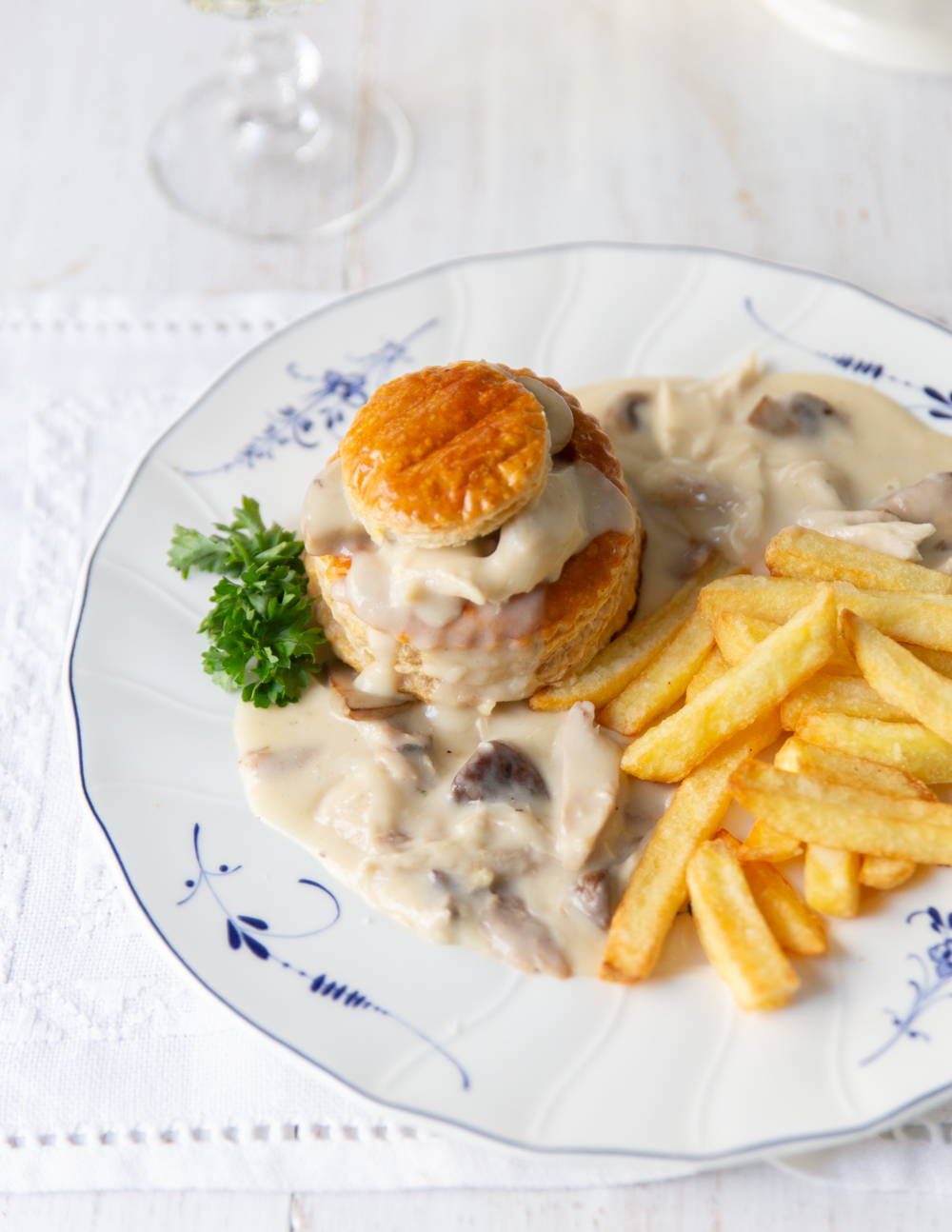
Bouchée à la Reine
Bouchée à la Reine (boo-SHAY ah lah REHN)
Queen-Style Vol-au-Vent
A crisp puff pastry shell filled with tender chicken, mushrooms, and sweetbreads in a velvety cream sauce, Luxembourg's beloved celebration dish.
Nutrition & Info
Allergen Warnings
Equipment Needed
Presentation Guide
Instructions
-
1
Bake vol-au-vent pastry cases at 200°C (400°F) until golden and puffed. Remove tops and hollow out.
-
2
Sauté mushrooms in half the butter until golden. Set aside.
-
3
Make a roux with remaining butter and flour. Gradually whisk in chicken broth to make a smooth velouté.
-
4
Simmer 10 minutes, then add cream. Mix egg yolk with lemon juice and stir in off heat.
-
5
Fold in diced chicken, sweetbreads, and mushrooms. Season with salt, white pepper, and nutmeg.
-
6
Fill warm pastry cases with the mixture. Top with pastry lids and serve immediately.
Did You Know?
In Luxembourg, Bouchée à la Reine is so popular for celebrations that many families consider it more important than birthday cake.
Chef's Notes
Equipment Tips
- saucepan
- oven
- pastry cutter
- whisk
Garnishing
parsley sprig, pastry lid
Accompaniments
rice, green salad
The Story Behind Bouchée à la Reine
While French in origin, Bouchée à la Reine was adopted so enthusiastically by Luxembourgish home cooks that it became a national institution. Found on every celebration table from weddings to Christmas, the dish exemplifies Luxembourg's talent for absorbing French culinary refinement and making it entirely their own. The rich cream filling represents Luxembourgish generosity at the table.

Comments (0)
Log in to leave a comment.
No comments yet. Be the first to share your thoughts!