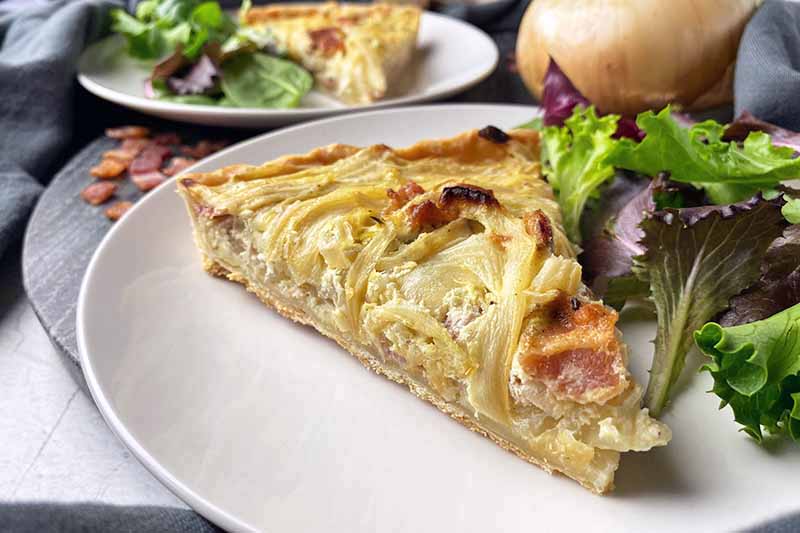
A savory tart with a yeasted dough base filled with caramelized onions, cream, eggs, and caraway seeds, baked until golden and custardy.
Nutrition & Info
Allergen Warnings
Equipment Needed
Presentation Guide
Vessel: tart pan or cutting board
Garnishes: caraway seeds, fresh herbs
Accompaniments: new wine, green salad
Instructions
-
1
Make dough by combining flour, yeast, warm milk, softened butter, and salt. Knead until smooth and let rise thirty minutes covered.
-
2
Cook sliced onions slowly in butter over medium-low heat for twenty-five minutes, stirring occasionally, until deeply golden and sweet.
-
3
Whisk together eggs, sour cream, cream, caraway seeds, salt, pepper, and nutmeg to make the custard filling.
-
4
Roll out dough and press into a greased tart pan, forming a slight rim around the edges to contain the filling.
-
5
Spread caramelized onions evenly over the dough. Pour the egg and cream mixture over the onions, ensuring even distribution.
-
6
Bake at 190 degrees for thirty-five minutes until the custard is set and golden brown on top. Let cool slightly before slicing.
Did You Know?
In the Rhine Valley, Zwiebelkuchen is traditionally paired with new wine in autumn, creating one of the year's most anticipated seasonal treats.
Chef's Notes
Equipment Tips
- tart pan
- rolling pin
- mixing bowl
- oven
Garnishing
caraway seeds, fresh herbs
Accompaniments
new wine, green salad
The Story Behind Zwiebelkuchen
Zwiebelkuchen marks the autumn season in Liechtenstein, when the onion harvest coincides with the grape harvest along the Rhine Valley. This savory tart became a celebration food, served at harvest festivals and paired with the year's new wine. The tradition connects Liechtenstein to the broader German-speaking cultural region where onion tarts have been baked for centuries, while the local version reflects the principality's own agricultural rhythms and festive traditions.


Comments (0)
Log in to leave a comment.
No comments yet. Be the first to share your thoughts!