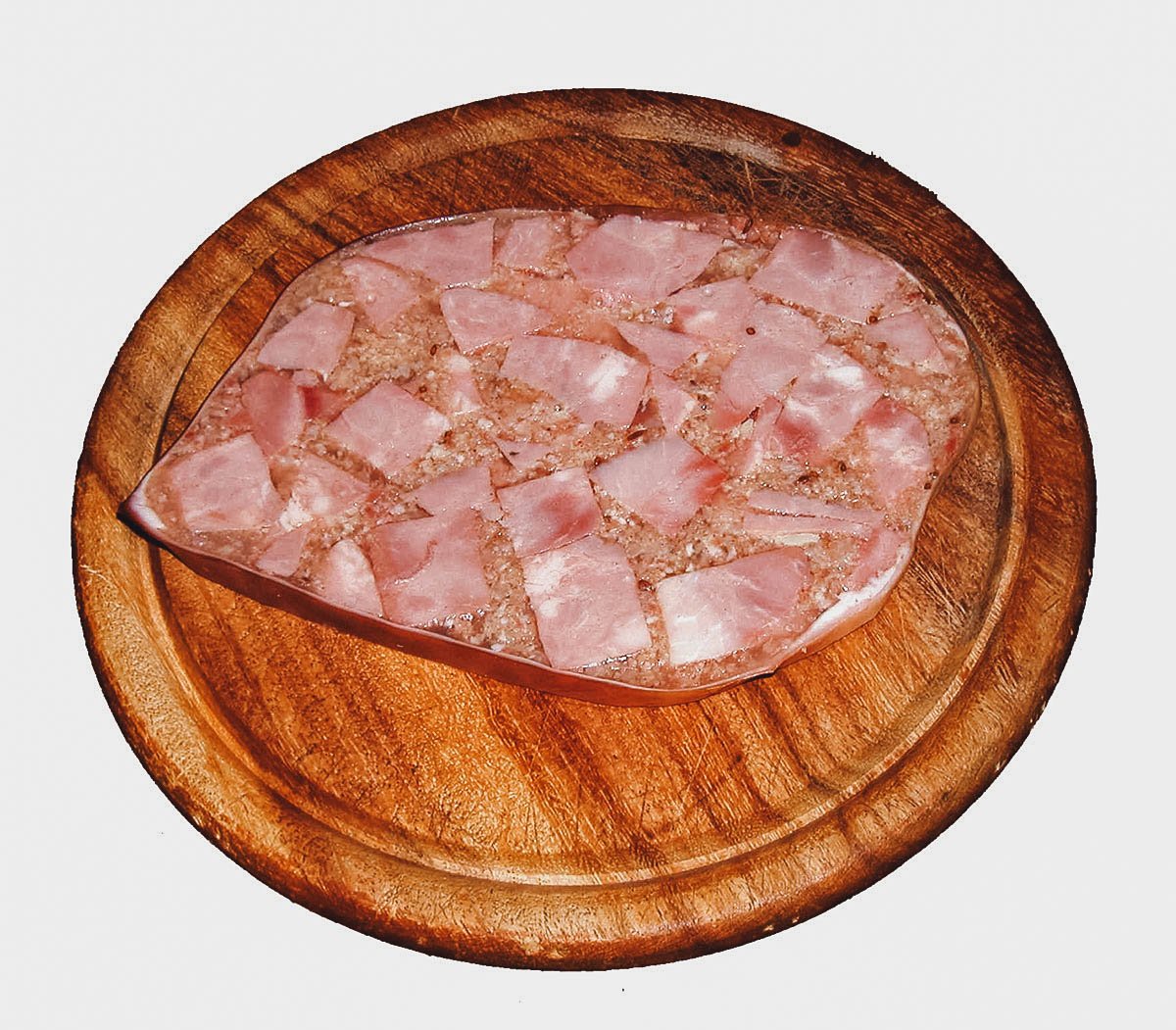
Schwartenmagen
Schwartenmagen (SHVAR-ten-mah-gen)
Beef and Herb Terrine
A traditional cold-pressed terrine of seasoned ground beef and fresh herbs set in a savory gelatin, sliced and served with pickles and mustard.
Nutrition & Info
Equipment Needed
Presentation Guide
Vessel: wooden cutting board
Garnishes: cornichons, mustard, fresh herbs
Accompaniments: crusty bread, pickled onions
Instructions
-
1
Season ground beef with garlic, parsley, marjoram, caraway, salt, and pepper. Mix thoroughly and form into a compact cylinder.
-
2
Poach the beef roll gently in simmering beef broth for forty-five minutes until cooked through. Remove and let cool slightly.
-
3
Dissolve bloomed gelatin in the warm strained broth, add vinegar, and season to taste. Let cool until syrupy but not set.
-
4
Slice the cooked beef and layer slices in a terrine mold, pouring gelatin broth between layers to fill all gaps.
-
5
Cover with cling film, place a weight on top, and refrigerate for at least six hours or overnight until firmly set.
-
6
Unmold terrine and slice thinly with a sharp knife. Serve cold with cornichons and wholegrain mustard.
Did You Know?
Schwartenmagen is a fixture at Liechtenstein national celebrations, including the prince's birthday festivities on August 15th.
Chef's Notes
Equipment Tips
- terrine mold
- large pot
- weight for pressing
- sharp slicing knife
Garnishing
cornichons, mustard, fresh herbs
Accompaniments
crusty bread, pickled onions
The Story Behind Schwartenmagen
This cold terrine reflects the alpine tradition of charcuterie and meat preservation that sustained Liechtensteiner families through long winters. The technique of pressing seasoned meat into terrines dates back centuries in the Rhine Valley. In Liechtenstein, the dish became associated with celebrations and formal occasions, where it appears on cold buffet tables alongside pickles and bread. It represents the principality's connection to the broader German-speaking charcuterie tradition.



Comments (0)
Log in to leave a comment.
No comments yet. Be the first to share your thoughts!