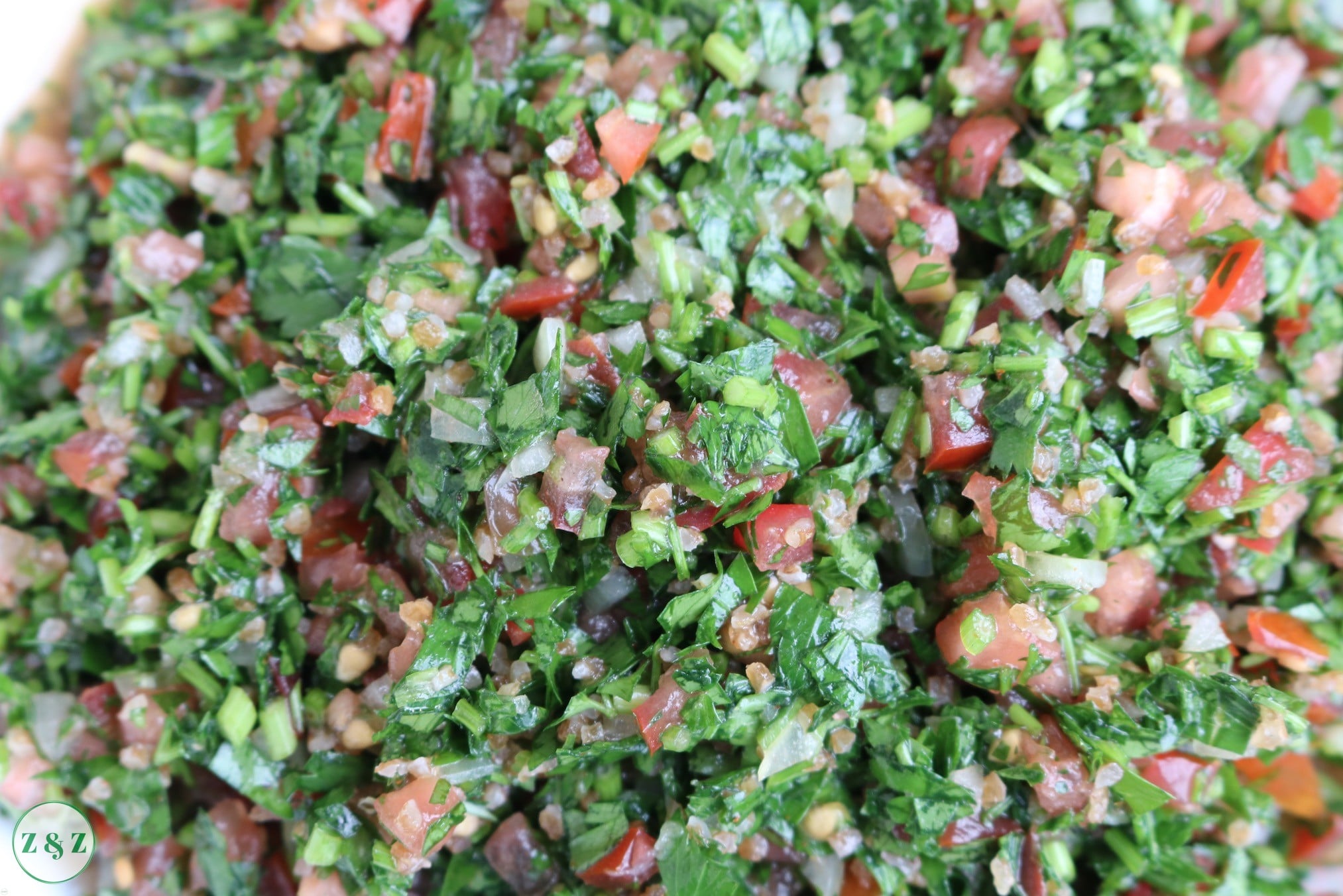
A refreshing parsley-forward salad bursting with bright lemon juice, fine bulgur wheat, and juicy tomatoes. Each forkful delivers a garden-fresh crunch that defines Lebanese mezze.
Nutrition & Info
Allergen Warnings
Equipment Needed
Presentation Guide
Vessel: shallow serving bowl lined with lettuce leaves
Garnishes: extra virgin olive oil drizzle, lemon wedges
Accompaniments: pita bread, hummus
Instructions
-
1
Place the fine bulgur wheat in a small bowl, pour over enough boiling water to cover by two centimetres, and let it soak for fifteen minutes until the grains are tender and have absorbed the water. Drain any excess and squeeze dry in a clean towel.
-
2
Wash the parsley thoroughly in several changes of cold water, then spin dry in a salad spinner or pat dry with towels. Remove all thick stems and chop the leaves very finely, almost to a mince, using a sharp knife or mezzaluna.
-
3
Chop the mint leaves finely to match the parsley texture, and thinly slice the green onions, using both the white and light green parts. Dice the tomatoes into small, uniform five-millimetre pieces, collecting any juices to add to the salad.
-
4
In a large serving bowl, combine the chopped parsley, mint, green onions, diced tomatoes with their juices, and the squeezed bulgur wheat. The parsley should visually dominate the salad, as it is the star ingredient in authentic Lebanese tabbouleh.
-
5
In a small bowl, whisk together the olive oil, lemon juice, salt, and black pepper until well combined. Pour the dressing over the salad and toss gently but thoroughly, ensuring every herb and grain is lightly coated with the bright vinaigrette.
-
6
Taste the tabbouleh and adjust the seasoning, adding more lemon juice for a sharper tang, salt for depth, or a drizzle of olive oil for richness. Let it rest for ten minutes before serving to allow the flavours to meld.
-
7
Separate the romaine lettuce leaves and arrange them around the edge of the serving bowl or on a separate plate. Guests can use the crisp lettuce leaves as scoops, filling each one with a generous spoonful of the herbed salad.
Did You Know?
In Lebanon, proper tabbouleh should be predominantly green with parsley — the bulgur is just an accent.
Chef's Notes
Equipment Tips
- sharp knife
- large mixing bowl
- citrus juicer
Garnishing
extra virgin olive oil drizzle, lemon wedges
Accompaniments
pita bread, hummus
The Story Behind تبولة
## The Story
Tabbouleh originated in the mountains of Lebanon and Syria, where wild herbs flourished on the hillsides. The name derives from the Arabic tabil, from an Aramaic root meaning 'seasoning' or 'dip.' While the first English use of 'tabbouleh' appeared in 1939, the dish itself may date back 3,000 to 5,000 years, when ancient Levantine peoples prepared similar herb-based salads. Originally, lush greens provided the bulk of the dish, with grain playing a minor supporting role.
## On the Calendar
Tabbouleh became a symbol of Lebanese identity in the 1920s, when open-air cafes in the Bekaa Valley began serving it as part of meze spreads to attract travelers from across the Middle East. It is a fixture of Sunday family lunches and celebratory meals.
## Then & Now
Modern tabbouleh features finely chopped parsley as the dominant ingredient, with bulgur wheat, tomatoes, mint, lemon juice, and olive oil. In authentic Lebanese tradition, the parsley should vastly outweigh the bulgur. International versions that reverse this ratio are considered inauthentic by Lebanese cooks.
## Legacy
Tabbouleh is Lebanon's national salad and a cornerstone of meze culture, representing the Levantine reverence for fresh herbs, olive oil, and the communal table.


Comments (0)
Log in to leave a comment.
No comments yet. Be the first to share your thoughts!