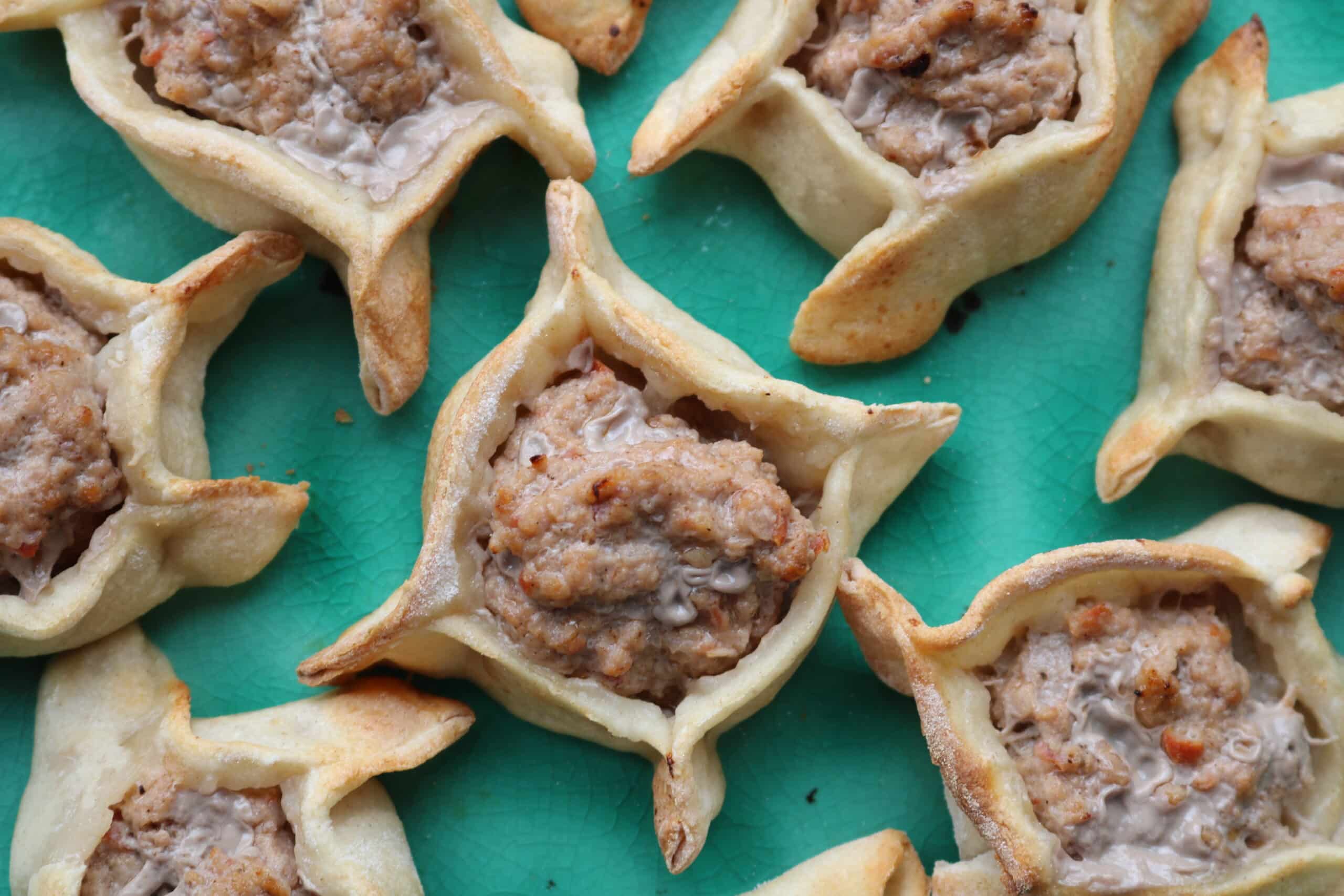
Small open-faced pastries topped with a zesty mixture of spiced lamb, tomatoes, and pine nuts, baked until golden. These bite-sized Lebanese meat pies are perfect party food with an irresistible savory topping.
Nutrition & Info
Allergen Warnings
Equipment Needed
Instructions
-
1
Mix flour, yeast, sugar, salt, olive oil, and warm water. Knead for 8 minutes until smooth and elastic. Cover and let rise for 30 minutes.
-
2
Combine ground lamb with diced tomatoes, onion, pine nuts, pomegranate molasses, allspice, lemon juice, salt, and pepper thoroughly.
-
3
Divide dough into walnut-sized balls. Roll each into a thin 8cm circle on a lightly floured surface.
-
4
Place a generous tablespoon of the meat mixture on each dough circle, spreading it to the edges and leaving a thin border.
-
5
Arrange on greased baking sheets. Bake at 200C for 12-15 minutes until the edges are golden and the meat topping is cooked.
-
6
Serve hot with a squeeze of fresh lemon juice and a side of yogurt or a fresh herb salad alongside.
Did You Know?
Lebanese emigrants brought sfiha to Brazil, where it became so popular that Brazilian Portuguese adopted the word "esfiha" into everyday language.
Chef's Notes
Equipment Tips
- baking sheets
- mixing bowl
- rolling pin
- pastry brush
The Story Behind Sfiha
Sfiha is a cornerstone of Lebanese bakery culture, found in every neighborhood furn (bakery) across the country. The dish shares roots with Turkish and Armenian meat-topped flatbreads but developed its distinctively Lebanese character through the addition of pomegranate molasses and pine nuts. The massive Lebanese diaspora in Brazil and Argentina spread sfiha across South America, where it became a beloved snack food adapted with local ingredients.


Comments (0)
Log in to leave a comment.
No comments yet. Be the first to share your thoughts!