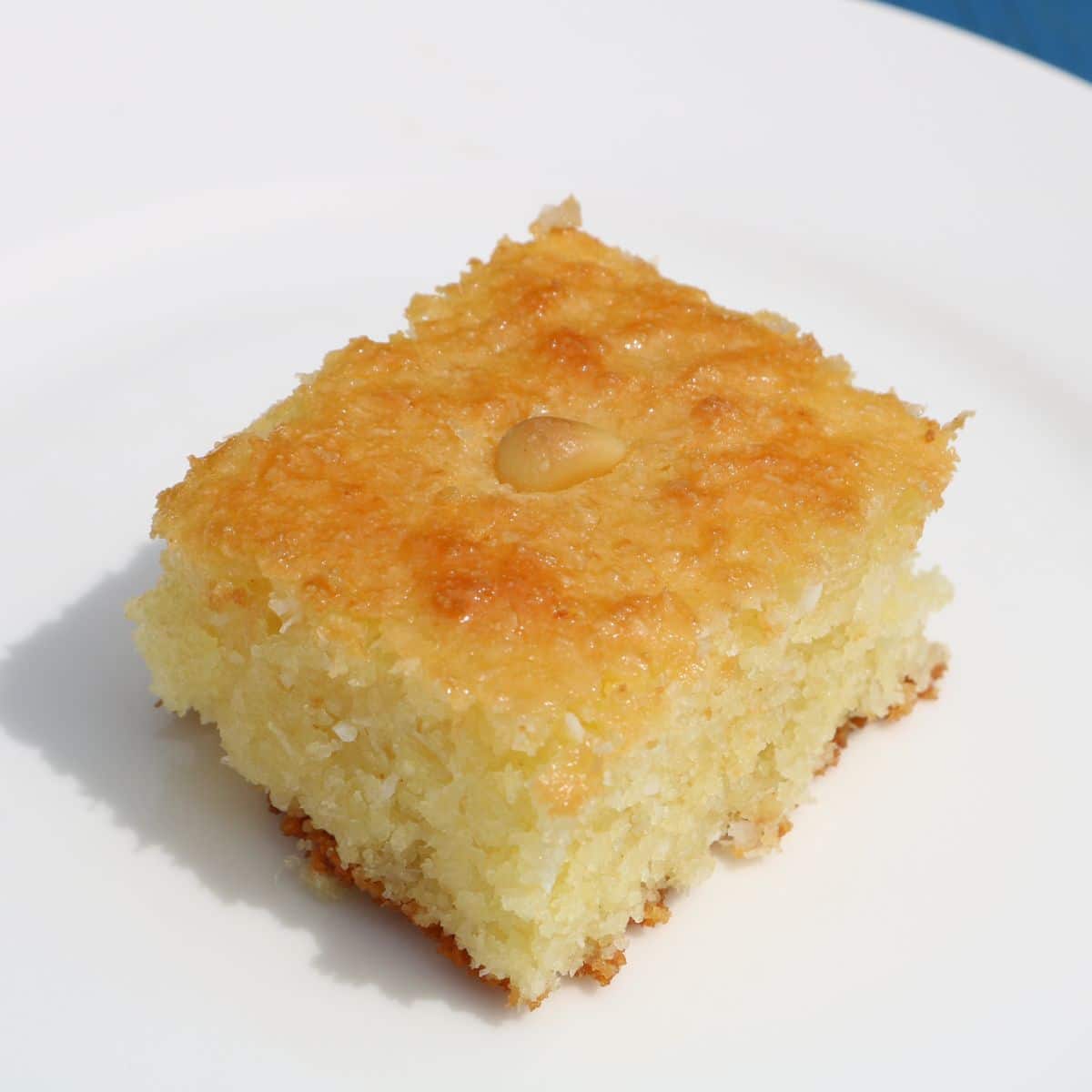
A golden semolina cake soaked in fragrant orange blossom syrup, dense yet tender, topped with blanched almonds. This beloved Lebanese sweet is a fixture at celebrations and a cherished afternoon treat with coffee.
Nutrition & Info
Allergen Warnings
Equipment Needed
Instructions
-
1
Mix semolina, sugar, yogurt, melted butter, and baking powder in a bowl until smooth. Let the batter rest for 30 minutes to hydrate.
-
2
Make the syrup by boiling sugar, water, and lemon juice for 10 minutes. Add orange blossom water, stir, and let cool completely.
-
3
Grease a 9x13 baking pan with tahini. Spread the batter evenly, smoothing the top with a wet spatula for a flat surface.
-
4
Score the batter into diamond or square shapes with a sharp knife. Press one blanched almond into the center of each piece.
-
5
Bake at 180C for 30-35 minutes until the top is deeply golden and the cake pulls slightly away from the edges of the pan.
-
6
Pour the cold syrup evenly over the hot cake immediately out of the oven. Let it absorb for at least one hour before serving.
Did You Know?
The secret to perfect namoura is the temperature contrast — cold syrup must meet hot cake for ideal absorption without sogginess.
Chef's Notes
Equipment Tips
- 9x13 baking pan
- mixing bowl
- saucepan
- whisk
The Story Behind Namoura
Namoura belongs to the vast family of syrup-soaked semolina desserts found across the former Ottoman Empire, known by different names from basbousa to revani. Lebanese namoura distinguishes itself through the use of orange blossom water in its syrup and the signature tahini-greased pan that adds a subtle nutty base note. It has been a cornerstone of Lebanese pastry shops for generations, traditionally served at religious celebrations, weddings, and family gatherings.


Comments (0)
Log in to leave a comment.
No comments yet. Be the first to share your thoughts!