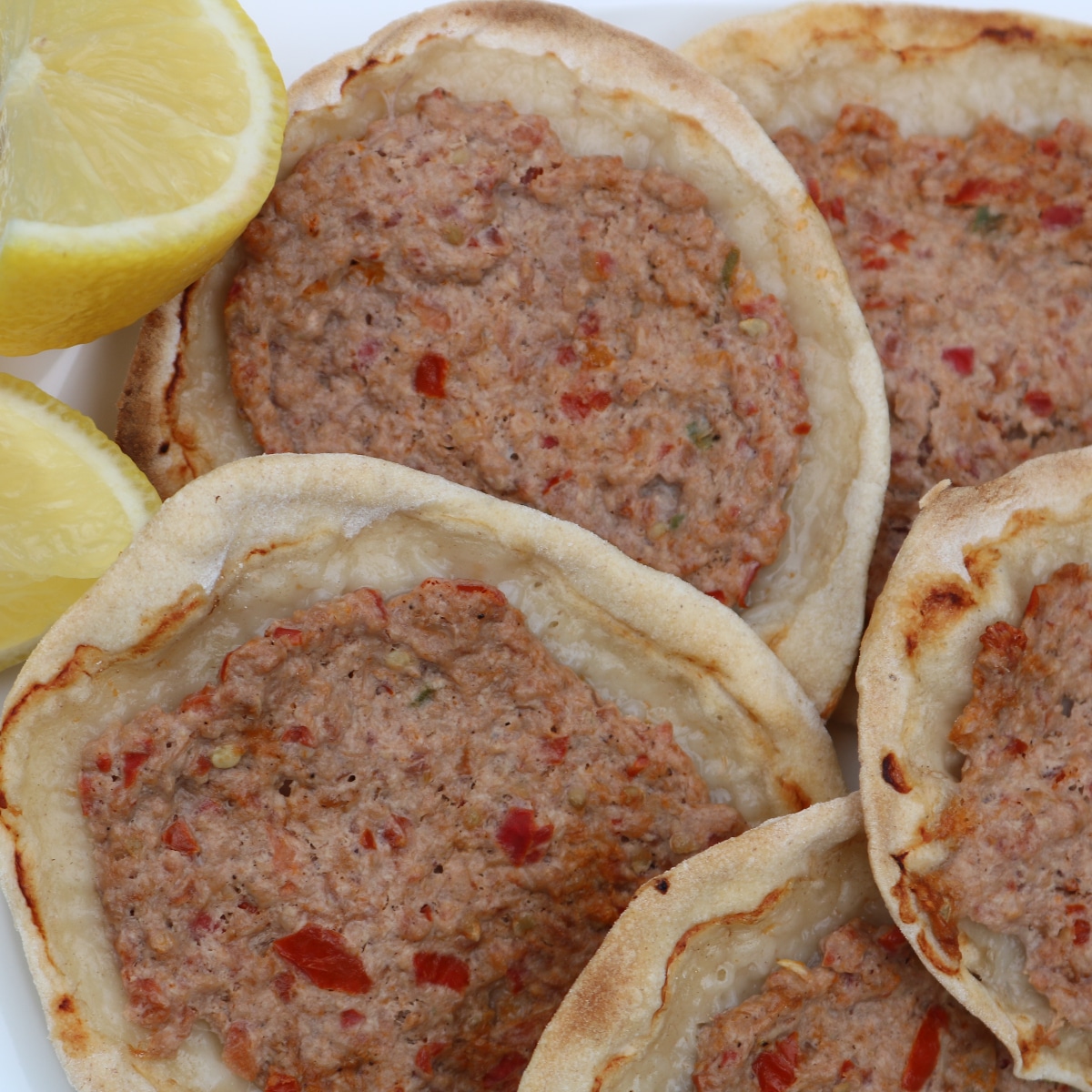
Paper-thin dough topped with a zesty, finely minced lamb mixture of tomatoes, onions, and spices, baked until crisp. This Lebanese meat pizza is folded, rolled, and eaten with a squeeze of fresh lemon.
Nutrition & Info
Allergen Warnings
Equipment Needed
Instructions
-
1
Make dough by mixing flour, yeast, salt, water, and olive oil. Knead for 8 minutes until smooth and elastic. Rest covered for 30 minutes.
-
2
Process the lamb, tomatoes, onion, tomato paste, pomegranate molasses, and spices in a food processor until the mixture forms a smooth, spreadable paste.
-
3
Divide dough into golf ball-sized portions. Roll each paper-thin into an oval or rectangle on a floured surface.
-
4
Spread a thin, even layer of the meat paste over each piece of dough, reaching to the very edges of the thin base.
-
5
Scatter a few pine nuts on top of each piece. Bake at 220C on preheated baking sheets for 8-10 minutes until edges are crisp.
-
6
Serve immediately with lemon wedges, fresh mint, and a bowl of yogurt. Squeeze lemon over each piece and roll up to eat by hand.
Did You Know?
In Lebanon, the test of a great lahm bi ajin is that the dough must be thin enough to fold without cracking while still holding its juicy topping.
Chef's Notes
Equipment Tips
- baking sheets
- rolling pin
- food processor
- mixing bowl
The Story Behind Lahm bi Ajin
Lahm bi ajin, meaning "meat on dough," has roots shared with Turkish lahmacun and Armenian lahmajoun, reflecting the intertwined culinary heritage of the Eastern Mediterranean. Lebanese versions are distinguished by their use of pomegranate molasses, which adds a sweet-tart depth to the meat topping. The dish was traditionally baked in communal village ovens, where families would bring their prepared trays for baking, making it a social as well as culinary tradition.


Comments (0)
Log in to leave a comment.
No comments yet. Be the first to share your thoughts!