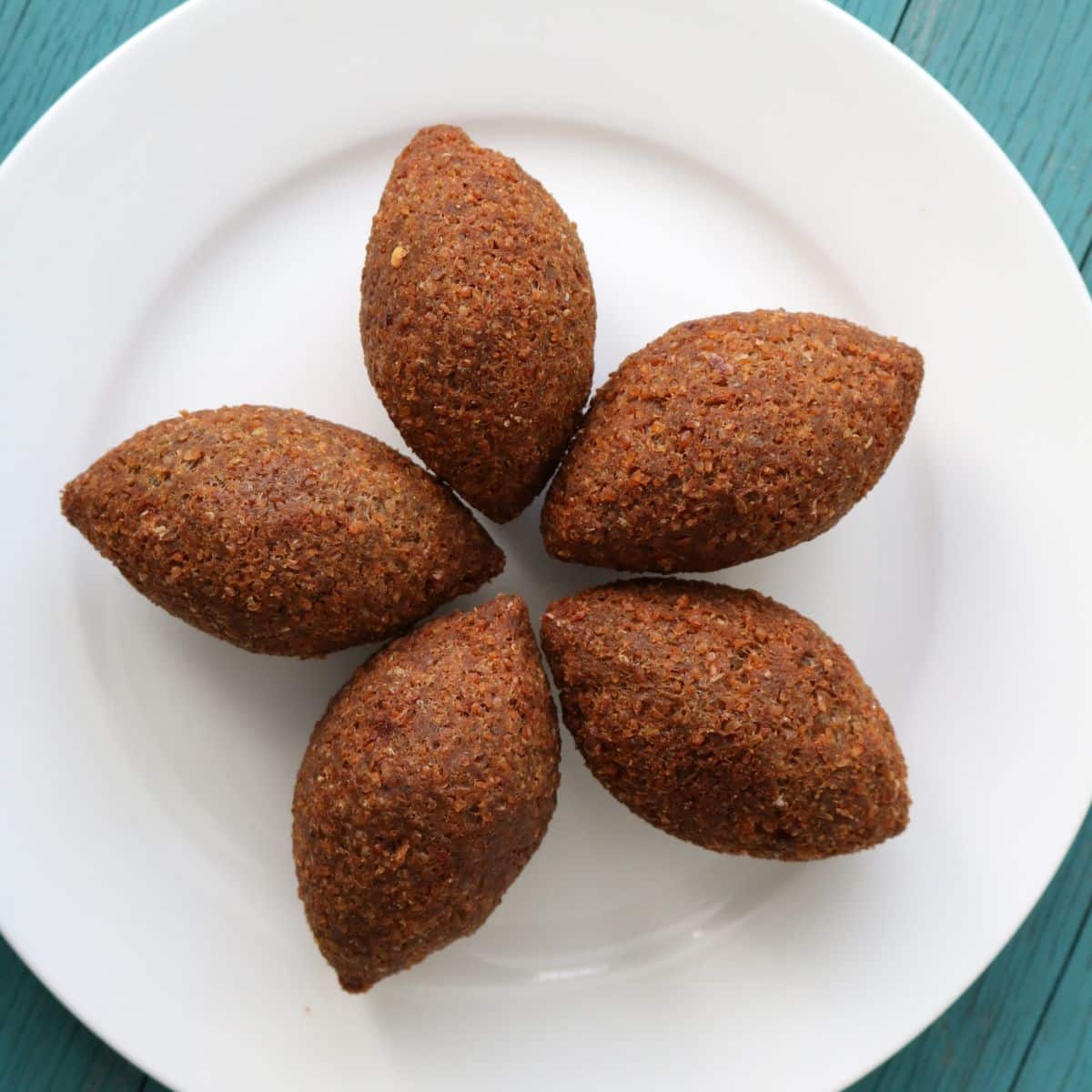
Crispy torpedo-shaped shells of bulgur and lamb encasing spiced ground lamb, onions, and toasted pine nuts. These golden beauties shatter with each bite.
Nutrition & Info
Allergen Warnings
Equipment Needed
Presentation Guide
Vessel: serving platter
Garnishes: fresh mint leaves, lemon wedges
Accompaniments: yogurt sauce, fattoush, pickled turnips
Instructions
-
1
Soak the fine bulgur in cold water for thirty minutes, then drain thoroughly and squeeze out all excess moisture by pressing handfuls firmly in a clean kitchen towel. The bulgur should be damp but not dripping wet.
-
2
In a food processor, combine the soaked bulgur, 500g ground lamb, grated onion, allspice, salt, and pepper. Process for two to three minutes until the mixture forms a smooth, cohesive paste that holds together when pinched.
-
3
For the filling, heat a tablespoon of oil in a skillet over medium heat. Sauté the diced onion for five minutes until golden, then add the 250g ground lamb, cinnamon, and nutmeg. Cook until browned and crumbly, about eight minutes.
-
4
Stir the toasted pine nuts into the cooked filling mixture, season with salt and pepper, and transfer to a plate to cool completely. Warm filling is difficult to handle and will soften the kibbeh shell during shaping.
-
5
To shape each kibbeh, wet your hands with cold water and take a golf-ball-sized portion of the shell mixture. Form it into an oval, then use your index finger to hollow out the centre, creating a thin-walled pocket for the filling.
-
6
Place a heaping teaspoon of the cooled filling inside the hollow, then pinch the opening closed and smooth the shell around it. Shape into a pointed torpedo or football form with tapered ends. Repeat with the remaining mixture.
-
7
Chill the shaped kibbeh on a tray in the refrigerator for one hour. This firming step is essential for maintaining the torpedo shape during frying and preventing the shells from cracking open in the hot oil.
-
8
Heat oil in a deep pot to 175°C. Fry the kibbeh in batches of four or five for three to four minutes, turning once, until the shells are a deep, even golden brown and the interior filling is hot throughout. Drain on paper towels.
-
9
Serve the fried kibbeh hot on a platter with a bowl of thick yogurt sauce or tahini dip on the side, along with a fresh herb salad. The contrast of the crispy shell with the juicy, spiced filling is the hallmark of great kibbeh.
Did You Know?
Kibbeh is considered the national dish of Lebanon — skilled cooks are judged by how thin they can shape the shell.
Chef's Notes
Equipment Tips
- food processor
- deep fryer or oven
- mixing bowl
Garnishing
fresh mint leaves, lemon wedges
Accompaniments
yogurt sauce, fattoush, pickled turnips
The Story Behind كبة
Kibbeh's ancestry can be traced to the ancient Near East, with a precursor dish called gubibate documented as adorning the table of the King of Assyria in the 9th century BCE. The earliest mention of modern kibbeh, made with filled shells of ground meat and grains, appears in the 18th-century Arabic dictionary Taj al-Arus, describing it as a disk made by the people of al-Sham (the Levant). American missionary William Thomson, visiting Lebanon in 1847, documented kibbeh's preparation by mortar and pestle and described it as 'the national dish of the Arabs.' The Syrian city of Aleppo claims at least 17 distinct varieties of kibbeh.
Kibbeh is considered the national dish of both Lebanon and Syria and is a powerful symbol of Levantine identity, hospitality, and culinary skill. A woman's ability to make perfect kibbeh, with thin, even walls and well-seasoned filling, was traditionally considered a measure of her cooking prowess. The raw version, kibbeh nayyeh, served with olive oil, mint, and fresh onion, is considered the pinnacle of the tradition and an expression of trust between host and guest, as it requires the freshest, highest-quality meat. The communal act of making kibbeh together reinforces family bonds across generations.


Comments (0)
Log in to leave a comment.
No comments yet. Be the first to share your thoughts!