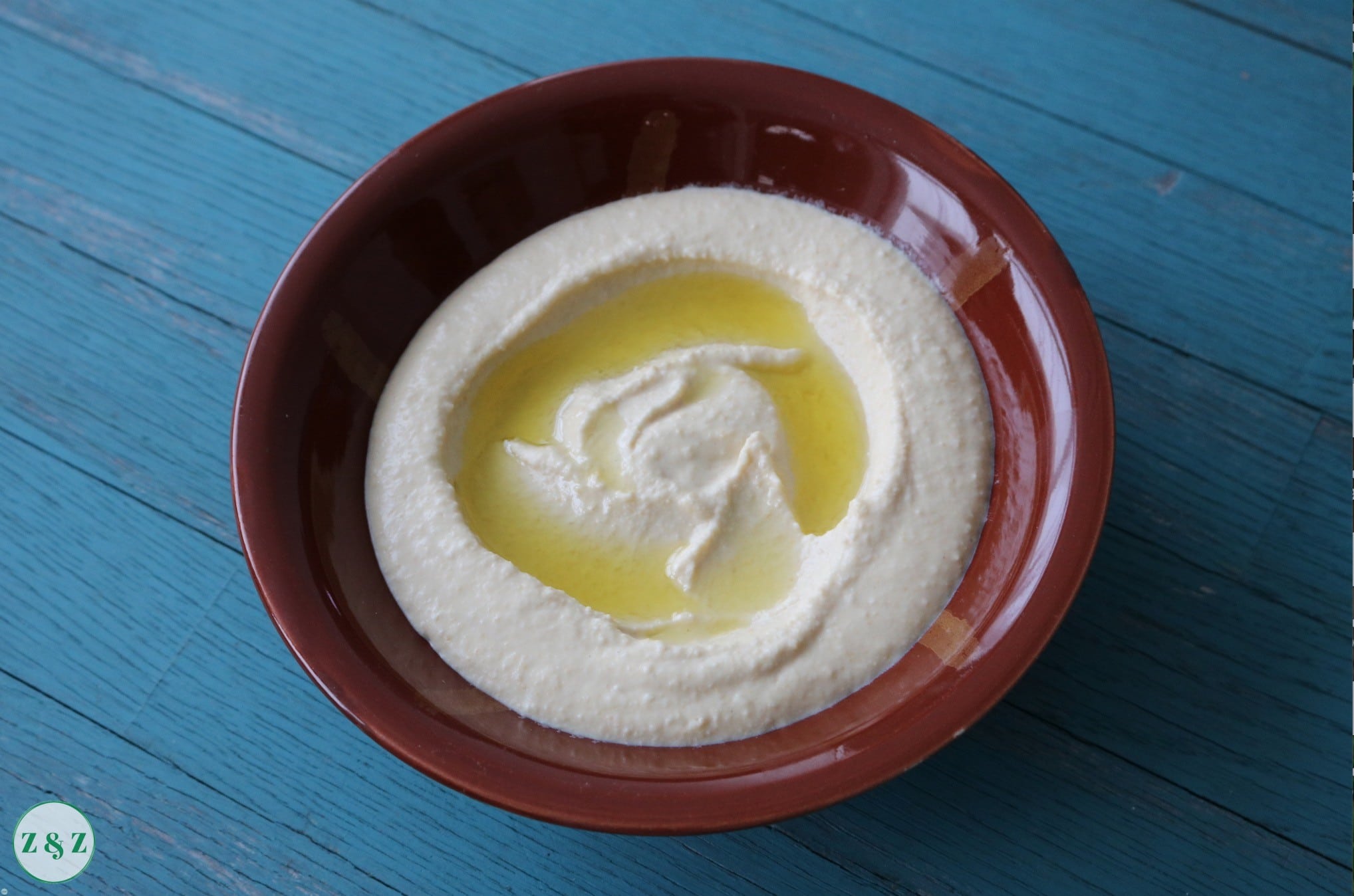
Silky smooth chickpea puree swirled with tahini, garlic, and lemon, drizzled with golden olive oil. This iconic dip tastes best scooped with warm pita bread.
Nutrition & Info
Allergen Warnings
Equipment Needed
Presentation Guide
Vessel: shallow ceramic plate with well in center
Garnishes: olive oil pool, paprika, whole chickpeas, fresh parsley
Accompaniments: warm pita bread, raw vegetables
Instructions
-
1
Place the drained chickpeas in a saucepan, cover with water, and add half a teaspoon of baking soda. Boil for fifteen minutes until the skins begin to slip off and the chickpeas are very soft, almost falling apart when pressed.
-
2
Drain the chickpeas and let them cool for five minutes. For the smoothest possible hummus, rub handfuls of chickpeas between your palms over a bowl of water, allowing the loose skins to float to the surface for easy removal.
-
3
Place the garlic and salt in a food processor and pulse ten times to mince the garlic finely. Add the tahini and lemon juice, then process continuously for ninety seconds until the mixture turns pale, thick, and very creamy.
-
4
Add the drained chickpeas and cumin to the processor. Blend for two full minutes, scraping down the sides once, until the mixture is completely smooth with no visible chunks or graininess remaining in the texture.
-
5
With the processor running, slowly drizzle in the ice-cold water one tablespoon at a time. Continue blending for another sixty seconds until the hummus becomes impossibly silky, light, and airy in consistency.
-
6
Taste and adjust the seasoning, adding more lemon juice for brightness, salt for depth, or tahini for richness. The hummus should taste balanced with a clean, creamy finish and a subtle nuttiness from the sesame.
-
7
Spread the hummus onto a shallow plate using the back of a large spoon, creating a well in the centre with sweeping circular motions. Drizzle generously with olive oil, dust with paprika, scatter parsley, and serve with warm pita.
Did You Know?
Lebanon and Israel have competed for the world record of the largest plate of hummus.
Chef's Notes
Equipment Tips
- food processor
- saucepan
- serving plate
Garnishing
olive oil pool, paprika, whole chickpeas, fresh parsley
Accompaniments
warm pita bread, raw vegetables
The Story Behind حمص
## The Story
Hummus has ancient roots in the eastern Mediterranean, where chickpeas have been cultivated for approximately 10,000 years and sesame was pressed into oil in Mesopotamia by 2500 BCE. The earliest known recipe resembling modern hummus appears in a 13th-century cookbook from Aleppo attributed to historian Ibn al-Adim. A more complete version incorporating tahini, chickpeas, and lemon appears in the 13th-century Syrian text Al-Wusla ila al-Habib. Modern hummus as we know it may have crystallized in 18th-century Damascus.
## On the Calendar
Hummus is everyday food in Lebanon, eaten at breakfast, lunch, and as part of meze. It is present at virtually every communal meal, from casual family dinners to elaborate celebrations.
## Then & Now
The dish has remained remarkably stable for centuries: mashed chickpeas blended with tahini, lemon juice, and garlic, served with a drizzle of olive oil. Lebanese hummus is traditionally smoother and more tahini-forward than other regional versions. The global hummus market has exploded in the 21st century, though purists insist nothing matches fresh-made Levantine hummus.
## Legacy
Hummus is claimed by Lebanese, Palestinian, Syrian, and Egyptian cultures alike, testament to its deep Levantine roots and its power as a symbol of shared culinary heritage across the region.


Comments (0)
Log in to leave a comment.
No comments yet. Be the first to share your thoughts!