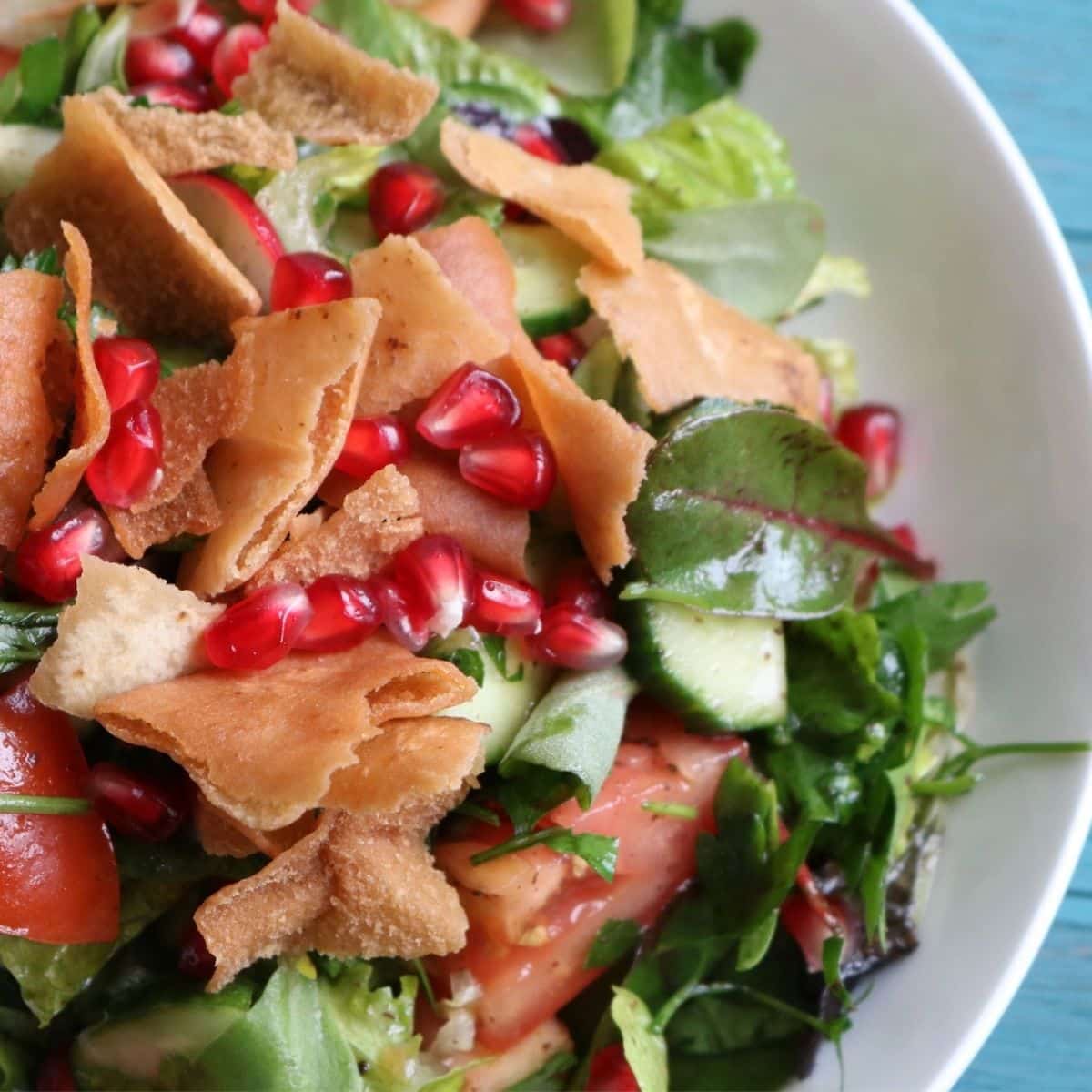
A vibrant Levantine salad starring crispy fried pita chips tossed with fresh vegetables and a tangy sumac-lemon dressing.
Nutrition & Info
Allergen Warnings
Equipment Needed
Presentation Guide
Vessel: wide shallow bowl
Garnishes: crispy pita chips on top, sumac sprinkle, pomegranate molasses drizzle
Accompaniments: grilled meats, hummus
Instructions
-
1
Preheat the oven to 200°C. Spread the torn pita pieces on a baking sheet, drizzle with one tablespoon of olive oil, and toss to coat. Bake for eight to ten minutes, turning once, until the pita chips are golden and shatteringly crisp.
-
2
While the pita toasts, prepare all the vegetables: chop the lettuce, dice the tomatoes and cucumber, thinly slice the radishes, and tear the mint leaves. Place everything in a large, wide salad bowl, keeping it loosely arranged.
-
3
In a small jar or bowl, combine the remaining olive oil, lemon juice, pomegranate molasses, minced garlic, one tablespoon of the sumac, and a generous pinch of salt. Whisk or shake vigorously until the dressing is emulsified and thick.
-
4
Add the chopped parsley to the salad bowl and pour the dressing over the vegetables. Toss gently with your hands or salad tongs, lifting from the bottom to ensure every leaf and vegetable piece is evenly coated with the tangy dressing.
-
5
Add the toasted pita chips to the salad just before serving and toss once more. Adding them at the last moment is critical, as they will absorb the dressing and lose their crunch within minutes of being dressed.
-
6
Transfer to a serving platter, sprinkle the remaining tablespoon of sumac over the top for colour and its distinctive lemony tang, and serve immediately. Fattoush waits for no one and is best enjoyed the moment it is assembled.
Did You Know?
Fattoush was originally a way to use stale pita bread — turning leftovers into a delicacy.
Chef's Notes
Equipment Tips
- large salad bowl
- baking sheet
- sharp knife
Garnishing
crispy pita chips on top, sumac sprinkle, pomegranate molasses drizzle
Accompaniments
grilled meats, hummus
The Story Behind فتوش
Fattoush originated in northern Lebanon, where farming communities invented a creative solution for stale flatbread. Rather than waste their leftover pita, farmers crushed it into pieces, fried it in olive oil, and tossed it with whatever fresh vegetables and herbs they had on hand. The word 'fattoush' derives from the Arabic 'fatt' meaning 'crumbs,' referencing the essential bread component. Historian Nawal Nasrallah identifies recipes resembling fattoush in a 10th-century Arabic cookbook by Ibn Sayyar al-Warraq, which describes vegetarian tharid (bread-based salads) using dried crumbled bread, cucumbers, herbs, and olive oil.
Fattoush embodies the Lebanese philosophy of zero waste and resourceful cooking, transforming humble leftover bread into a dish of bright, complex flavors. The inclusion of sumac, with its tangy, berry-like acidity, is distinctly Levantine and predates the use of lemon in the region. Purslane (baqleh), a wild herb often considered a weed elsewhere, is prized in Lebanese cooking for its slightly sour, crunchy character. Fattoush represents the peasant roots of Lebanese cuisine, a reminder that the most celebrated Levantine dishes often began as creative solutions to scarcity.


Comments (0)
Log in to leave a comment.
No comments yet. Be the first to share your thoughts!