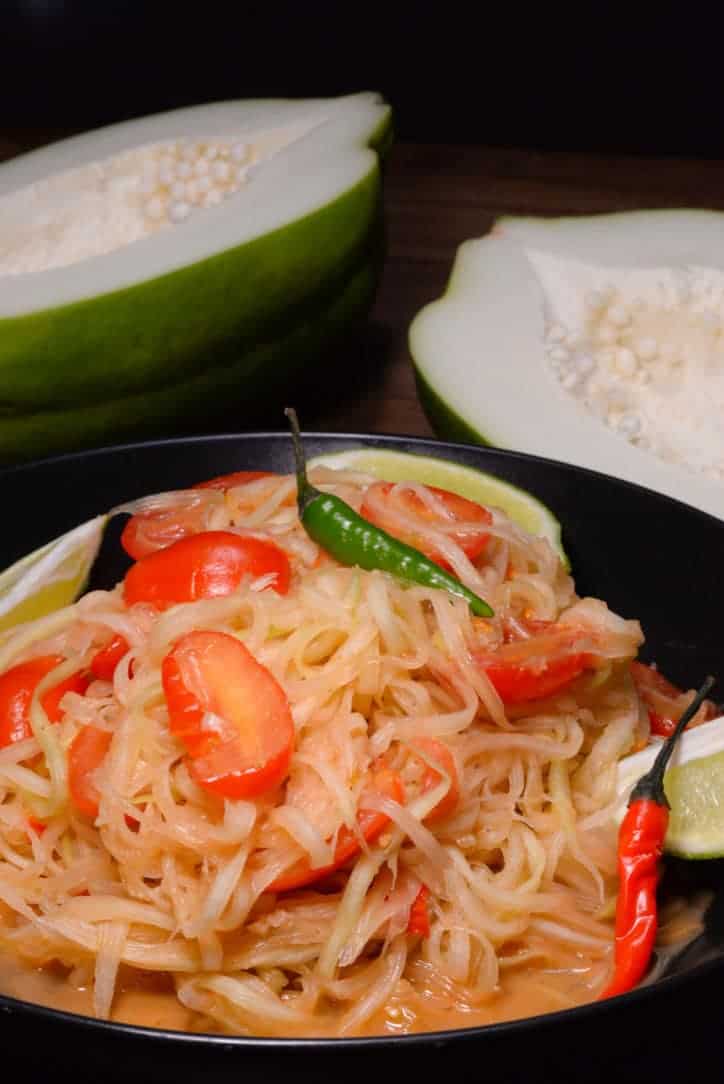
Shredded green papaya pounded with lime, fish sauce, tomatoes, chilies, and fermented crab paste. Spicier and funkier than its Thai cousin.
Nutrition & Info
Allergen Warnings
Equipment Needed
Presentation Guide
Vessel: plate or shallow bowl
Garnishes: fresh herbs, Thai chilies
Accompaniments: sticky rice, raw vegetables, grilled chicken
Instructions
-
1
Using a sharp knife or julienne peeler, peel the green papaya and shred it into long, thin strips about two millimetres wide. You should have about three cups of loosely packed shredded papaya for one serving.
-
2
In a large clay or wooden mortar, pound the garlic cloves and bird's eye chilies together with a heavy pestle until they form a rough, fragrant paste. The mortar should be big enough to toss the salad in later.
-
3
Add the cut long beans and halved cherry tomatoes to the mortar. Pound gently, just enough to bruise them and release their juices without completely smashing them into a pulp. You want visible, textured pieces remaining.
-
4
Add the fish sauce, padaek, lime juice, and palm sugar to the mortar. Stir and pound briefly to dissolve the sugar and combine the dressing ingredients into a cohesive, pungent sauce at the bottom of the mortar.
-
5
Add the shredded papaya to the mortar in two batches, pounding and tossing with the pestle and a large spoon after each addition. The goal is to gently bruise the papaya so it absorbs the dressing while staying crunchy.
-
6
Taste the salad and adjust the balance of flavours: add more lime for sourness, fish sauce for salt, sugar for sweetness, or chilies for heat. The final taste should be a bold, harmonious balance of all four elements.
-
7
Transfer the finished tam mak hoong to a plate, scraping out all the dressing from the mortar. Serve immediately alongside a basket of warm sticky rice, using pinches of rice to scoop up the spicy, tangy salad.
Did You Know?
The key difference from Thai som tam is the use of padaek, giving Lao papaya salad a deeper, funkier flavor.
Chef's Notes
Equipment Tips
- large mortar and pestle
- sharp knife
Garnishing
fresh herbs, Thai chilies
Accompaniments
sticky rice, raw vegetables, grilled chicken
The Story Behind Tam Mak Hoong
The Story: Tam mak hoong is the Lao green papaya salad, a pounded preparation of shredded unripe papaya with lime juice, padaek (fermented fish paste), garlic, chilies, tomatoes, and sometimes fermented crab or land snail. The dish is made in a large wooden mortar (khok) with a wooden pestle, and the rhythmic pounding sound is one of the most recognizable kitchen sounds in Laos. While papaya salad is now globally associated with Thailand (where it is called som tam), Lao food historians assert that the dish originated in Laos and northeastern Thailand (Isan), regions that share the same Lao ethnic and linguistic heritage.
On the Calendar: Tam mak hoong is eaten daily, at virtually every meal, as a side dish or snack. It is especially popular at markets and street stalls, where it is prepared to order with the customer specifying the heat level and the inclusion of padaek or fermented crab.
Then & Now: The global popularity of papaya salad, largely through Thai restaurants, has overshadowed its Lao origins. However, the Lao version, distinguished by its use of padaek rather than fish sauce and its more aggressive flavoring, has gained recognition through Lao diaspora restaurants and food media.
Legacy: Tam mak hoong is the sound and soul of the Lao kitchen: the mortar's pounding rhythm, the sharp bite of chili and lime, and the deep funk of padaek that separates the Lao original from all imitations.
Comments (0)
Log in to leave a comment.
No comments yet. Be the first to share your thoughts!