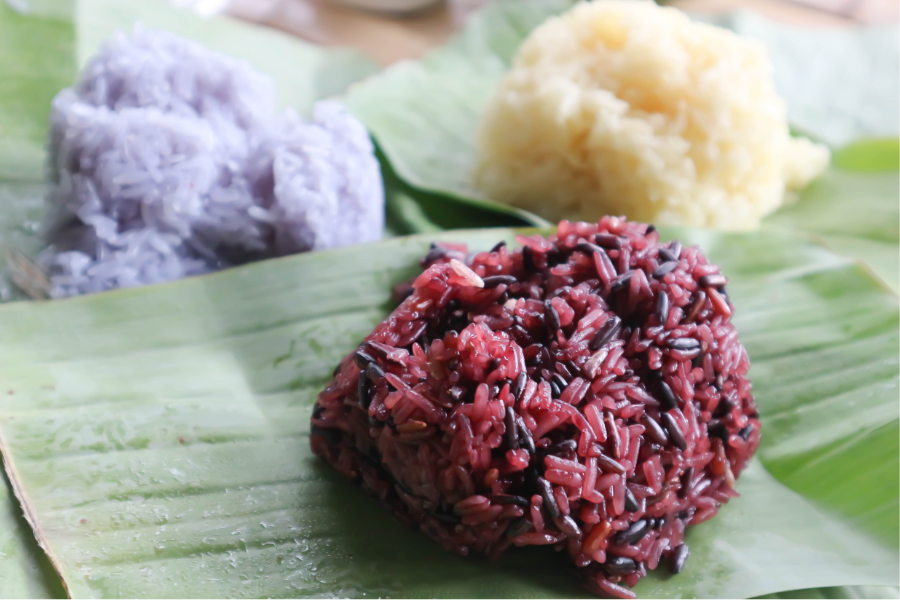
Glutinous rice steamed in a bamboo basket until perfectly sticky and chewy. The soul of every Laotian meal, eaten by hand.
Nutrition & Info
Equipment Needed
Presentation Guide
Vessel: traditional bamboo basket (tip khao)
Accompaniments: laab, papaya salad, grilled meats
Instructions
-
1
Place the glutinous rice in a large bowl, cover with room-temperature water by at least eight centimetres, and soak for a minimum of four hours. For the best texture, soak overnight for a full eight to twelve hours.
-
2
Before steaming, soak your bamboo steamer basket in water for fifteen minutes to prevent the rice from sticking and to generate additional steam during the cooking process that helps cook the rice evenly throughout.
-
3
Drain the soaked rice thoroughly in a fine-mesh sieve, shaking gently to remove excess water. Let it drain for five minutes so the grains are damp but not waterlogged when they go into the steamer.
-
4
Fill the base pot of your sticky rice steamer with water to about eight centimetres deep, ensuring the water level sits well below the bottom of the bamboo basket. Bring the water to a vigorous rolling boil.
-
5
Transfer the drained rice into the soaked bamboo basket, mounding it slightly in the centre. Place the basket over the boiling water, cover with a lid or aluminium foil, and steam on high heat for fifteen minutes.
-
6
Remove the lid, flip the entire mound of rice using a paddle or by inverting the basket briefly. Cover again and steam for another ten to fifteen minutes until the grains are translucent, sticky, and tender throughout.
-
7
Turn the cooked sticky rice out onto a clean wooden board or tray and gently fluff and fold it a few times with dampened hands or a paddle. Transfer it to a traditional bamboo serving basket and cover to keep warm.
Did You Know?
Laos consumes more sticky rice per capita than any other country — it accompanies literally every meal.
Chef's Notes
Equipment Tips
- bamboo steamer basket (huad)
- pot
- soaking container
Accompaniments
laab, papaya salad, grilled meats
The Story Behind Khao Niew
The Story: Sticky rice (khao niew) is not merely a food in Laos; it is the foundation of national identity. Laos is the world's highest per-capita consumer of glutinous rice, and the Lao people have cultivated it for over a thousand years. The rice is soaked overnight, steamed in a conical bamboo basket (huad) placed over a pot of boiling water, and served in a covered basket (tip khao) that keeps it warm and pliable. The technique of steaming rather than boiling preserves the sticky, chewy texture essential to the Lao eating style of pinching and scooping.
On the Calendar: Sticky rice is eaten at every meal, every day, without exception. It also plays a sacred role in the morning alms-giving ceremony (tak bat), when residents place balls of sticky rice into the bowls of Buddhist monks walking through the streets at dawn.
Then & Now: Despite modernization and the availability of jasmine rice, sticky rice remains the non-negotiable center of Lao eating. In diaspora communities from California to France, Lao families steam sticky rice daily as an act of cultural preservation.
Legacy: Sticky rice is the soul of Laos. To eat sticky rice is to be Lao, and no other food comes close to its cultural significance.
Comments (0)
Log in to leave a comment.
No comments yet. Be the first to share your thoughts!