
Fragrant rice pilaf layered with tender lamb, sweet carrots, and aromatic spices cooked together in a heavy cauldron. The Kyrgyz version features generous cumin and garlic.
Nutrition & Info
Equipment Needed
Instructions
-
1
Heat oil in kazan until smoking, brown lamb pieces on all sides.
-
2
Add onions and cook until golden.
-
3
Add carrots and cook 5 minutes.
-
4
Add cumin, salt, and water; simmer 30 minutes.
-
5
Drain rice and spread evenly over meat mixture.
-
6
Add water to cover rice by 1 cm, nestle garlic head in center.
-
7
Cook uncovered until water is absorbed, then cover tightly.
-
8
Steam on lowest heat for 20 minutes, then serve on platter.
Did You Know?
In Kyrgyz tradition, the quality of a cook is judged by their plov. A perfect plov has rice grains that are separate and glistening, never sticky, which requires precise water ratios passed down through generations.
Chef's Notes
Equipment Tips
- kazan (heavy cauldron)
- wooden spoon
The Story Behind Plov
Plov is Central Asia's most iconic dish, and the Kyrgyz version carries distinct characteristics shaped by highland pastoral life. The dish arrived with Persian and Turkic culinary traditions and was adapted to use lamb from mountain flocks and carrots sweetened by cold-climate growing.
In Kyrgyz culture, plov is the centerpiece of osh ceremonies, served at weddings, funerals, and community gatherings. The oshpoz, or master plov cook, holds a respected social position.
The kazan (cast-iron cauldron) is essential to proper plov, as its thick walls distribute heat evenly, allowing the rice to steam gently atop the meat and vegetables.
More Kyrgyz Dishes
 Easy
📜 Story
Easy
📜 Story
Ak Serke
Fermented Barley Drink
Summer, served with heavy meals Medium
📜 Story
Medium
📜 Story
Ashlyam-Fu
Cold Noodle and Starch Salad
Summer lunch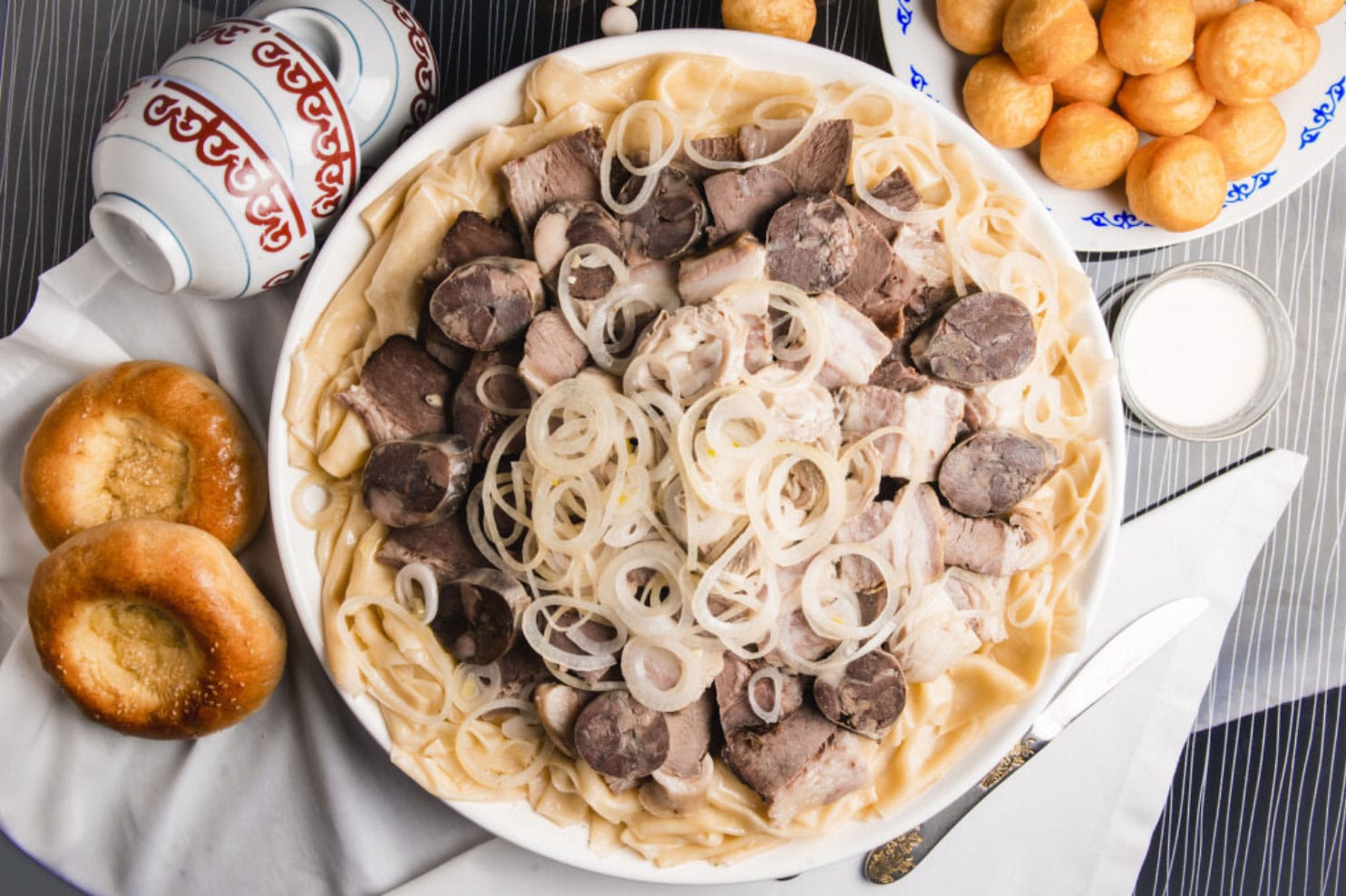 Medium
📜 Story
Medium
📜 Story
Beshbarmak
Kyrgyz Five-Finger Dish
Celebrations, honored guest meals Easy
📜 Story
Easy
📜 Story
Boorsok
Fried Bread Diamonds
All celebrations, holidays, and guest arrivals
Comments (0)
Log in to leave a comment.
No comments yet. Be the first to share your thoughts!