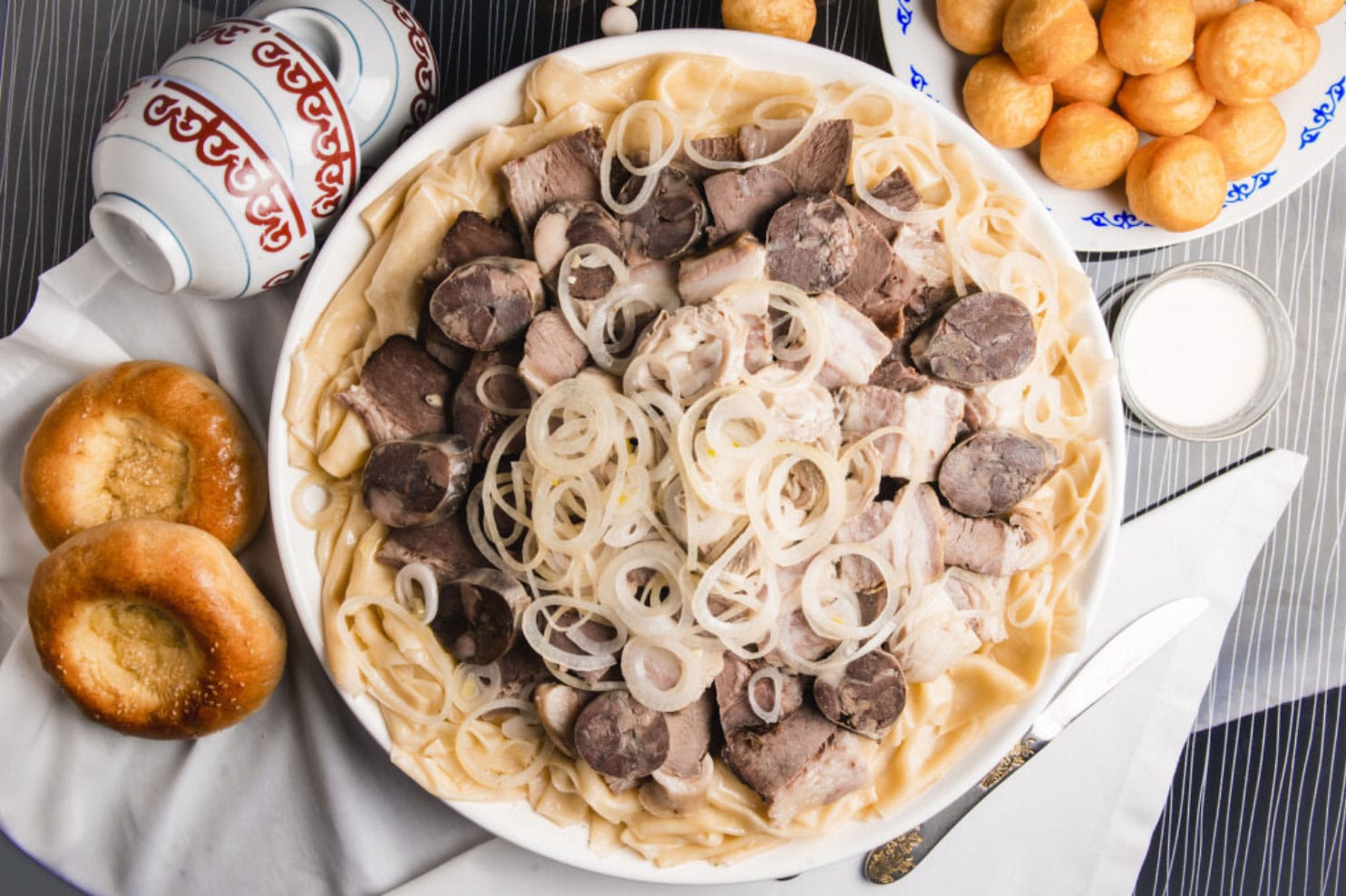
Wide noodles topped with boiled lamb and rich onion sauce. Kyrgyzstan's most sacred dish, served to honor guests.
Nutrition & Info
Allergen Warnings
Equipment Needed
Presentation Guide
Vessel: large communal platter
Garnishes: sliced onions, fresh dill
Accompaniments: chyk (sour broth), kymyz
Instructions
-
1
Place the bone-in lamb in a large heavy pot, cover with cold water by eight centimetres, and bring to a boil. Skim off all foam thoroughly, then add the bay leaves, peppercorns, and salt. Reduce to a gentle simmer.
-
2
Cook the lamb at a gentle simmer for two and a half hours, partially covered, checking occasionally that the water level stays above the meat. The lamb is done when it is so tender it falls off the bone with no resistance.
-
3
While the meat cooks, make the noodle dough by combining flour, eggs, a pinch of salt, and water. Knead for ten minutes until the dough is very smooth and elastic, then wrap tightly in plastic and rest for thirty minutes.
-
4
Roll the rested dough on a generously floured surface until it is about two millimetres thick. Cut it into large squares or wide rectangles, roughly ten centimetres across, which are the traditional noodle shape for this dish.
-
5
Remove the cooked lamb from the broth, reserving the broth at a simmer. Skim two tablespoons of rendered lamb fat from the surface and heat it in a separate skillet to sauté the onion rings until softened and golden.
-
6
Cook the noodle squares in the hot lamb broth in batches for six to eight minutes each, removing them carefully with a large slotted spoon and arranging them flat across a wide heated serving platter.
-
7
Cut the tender lamb into large, generous pieces, discarding the bones. Arrange the meat over the noodles and top with the sautéed onion rings. Spoon several ladles of the hot broth over everything to keep it moist.
-
8
Garnish with fresh dill and parsley. Serve the remaining broth in small cups alongside the platter, allowing each guest to sip the rich, aromatic liquid between bites of noodle and lamb eaten with the fingers.
Did You Know?
The host traditionally carves the lamb head and distributes parts to guests based on their status and age.
Chef's Notes
Equipment Tips
- large stock pot
- rolling pin
- sharp knife
Garnishing
sliced onions, fresh dill
Accompaniments
chyk (sour broth), kymyz
The Story Behind Beshbarmak
The Story: Beshbarmak is the supreme dish of Kyrgyz cuisine and culture: large pieces of boiled lamb or horse meat served atop wide, flat noodles (hand-rolled and cut into squares or diamonds), all drenched in the rich, onion-laden broth (chyk) produced by the long simmering of the meat. The name means five fingers in Turkic languages, referring to the traditional method of eating by hand. Beshbarmak is the centerpiece of Kyrgyz hospitality, prepared for honored guests, wedding feasts, funerals, and any occasion of significance. The specific cuts of meat served to each guest follow a strict protocol based on age, status, and relationship.
On the Calendar: Beshbarmak is the supreme celebration dish, served at weddings, funerals (ash), holidays, and the arrival of important guests. Preparing beshbarmak signals the highest level of respect and welcome. It is also served at national holidays and community gatherings.
Then & Now: The preparation is essentially unchanged from its nomadic origins, with the same technique of boiling meat, rolling noodles, and preparing onion broth practiced for centuries. Modern Kyrgyz families may use beef alongside lamb, but the ritual of serving beshbarmak remains deeply traditional.
Legacy: Beshbarmak is not merely food but the central ritual of Kyrgyz social life, a dish that encodes nomadic values of hospitality, hierarchy, and communal sharing in every hand-pulled bite.

Comments (0)
Log in to leave a comment.
No comments yet. Be the first to share your thoughts!