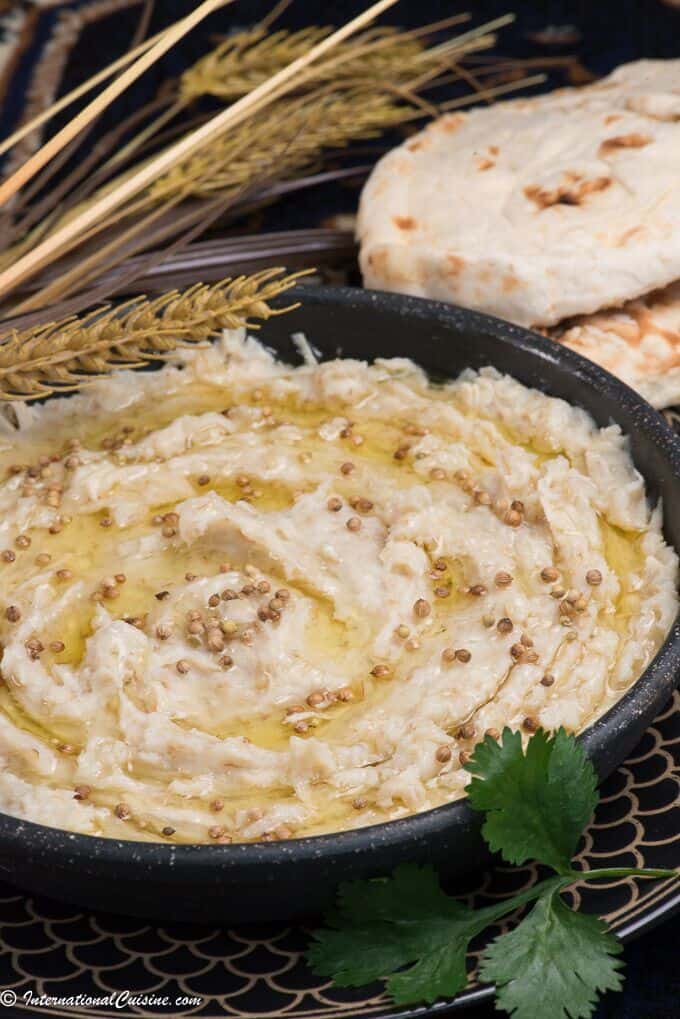
A silky, slow-cooked porridge of crushed wheat and tender lamb, simmered until the grains dissolve into a velvety, soul-warming bowl finished with a golden pool of clarified butter. This ancient dish is the heart of Kuwaiti Ramadan tables.
Nutrition & Info
Allergen Warnings
Equipment Needed
Instructions
-
1
Soak crushed wheat overnight in cold water. Drain and rinse thoroughly before cooking to remove excess starch.
-
2
Place lamb shoulder with quartered onion, salt, cinnamon, and cardamom in a heavy pot. Cover with water and bring to a boil, skimming foam.
-
3
Reduce heat to low, add drained wheat, and simmer covered for 2.5-3 hours, stirring every 20 minutes to prevent sticking on the bottom.
-
4
Remove bones from the lamb. Use an immersion blender or wooden spoon to mash everything into a smooth, porridge-like consistency.
-
5
Taste and adjust salt and spices. The texture should be thick and velvety, like a savory pudding that holds its shape on a spoon.
-
6
Serve in bowls, creating a well in the center. Pour melted ghee into the well and dust with cinnamon. Eat with a spoon.
Did You Know?
Kuwaiti families traditionally cook harees in enormous pots during Ramadan, sharing portions with neighbors in a beloved communal ritual.
Chef's Notes
Equipment Tips
- large heavy pot
- wooden spoon
- immersion blender
The Story Behind Harees
Harees is one of the oldest dishes in Arabian cuisine, mentioned in medieval Arab cookbooks dating to the 10th century. In Kuwait, it holds a sacred place at the Ramadan iftar table, where its comforting warmth and nourishing simplicity are treasured after a long day of fasting. Kuwaiti grandmothers spent hours stirring enormous pots by hand before modern kitchen tools arrived. The dish connects modern Kuwaitis to their Bedouin heritage, when wheat and meat were precious desert provisions transformed through patient cooking into sustenance.


Comments (0)
Log in to leave a comment.
No comments yet. Be the first to share your thoughts!