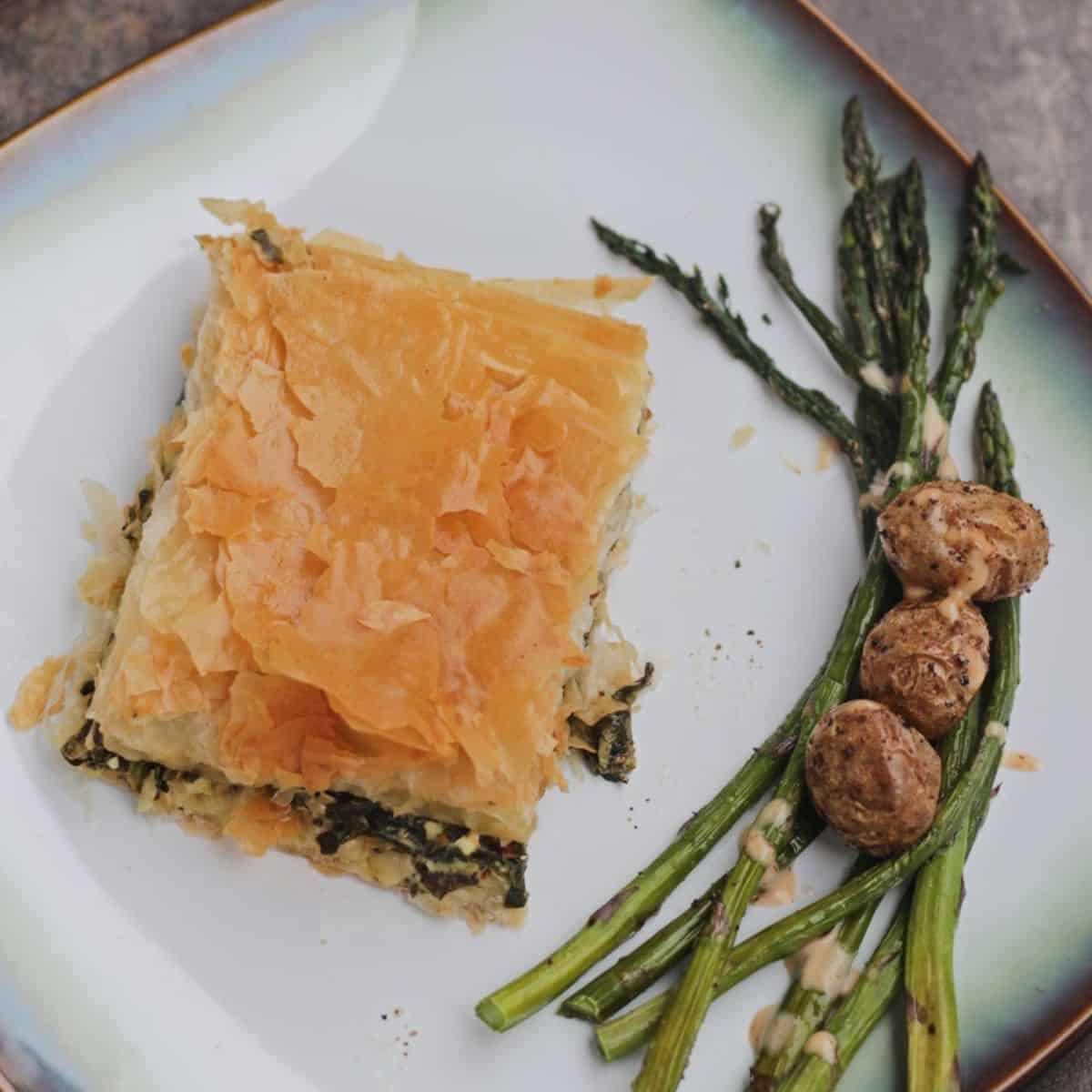
A large, round savory pie with paper-thin dough layers filled with cheese, spinach, or meat.
Nutrition & Info
Allergen Warnings
Equipment Needed
Presentation Guide
Vessel: round baking tray, sliced into portions
Garnishes: butter glaze
Accompaniments: yogurt, pickled vegetables
Instructions
-
1
Combine the flour and salt in a large bowl. Gradually add the warm water while mixing with your hands, kneading for ten minutes until the dough is very smooth, soft, and elastic enough to stretch without tearing.
-
2
Divide the dough into eight equal balls, brush each lightly with oil to prevent drying, and cover with a clean towel. Let the dough balls rest for at least thirty minutes so the gluten relaxes and makes stretching easier.
-
3
In a bowl, mix the crumbled feta cheese, chopped spinach, and beaten eggs together, seasoning lightly with pepper. The feta provides enough salt, so taste the filling before adding any more.
-
4
On a lightly floured surface, take one ball of dough and roll it as thin as possible. Then carefully stretch it over the backs of your hands until it becomes paper-thin and nearly translucent, working from the centre outward.
-
5
Brush the stretched dough sheet with oil, spread a thin layer of the cheese and spinach filling across its surface, then gently fold or roll it into a long strip. Coil the strip into a spiral shape.
-
6
Place the filled coil into a well-oiled round baking pan. Continue stretching, filling, and coiling the remaining dough balls, arranging each coil next to the previous one until the entire pan is filled in a spiral pattern.
-
7
Brush the top of the assembled pite generously with olive oil and any remaining beaten egg. Bake in a preheated oven at 190°C for thirty-five to forty minutes until the top is a deep, crackling golden brown.
-
8
Let the pite cool in the pan for five minutes before slicing into portions. Serve warm or at room temperature, traditionally paired with cold yogurt thinned with water or a glass of buttermilk on the side.
Did You Know?
Pite-making skills are passed from mother to daughter and considered essential for any Kosovar woman.
Chef's Notes
Equipment Tips
- rolling pin
- large baking tray
- pastry brush
Garnishing
butter glaze
Accompaniments
yogurt, pickled vegetables
The Story Behind Pite
The Story: Pite is the Kosovar savory pie tradition: thin layers of hand-stretched phyllo dough filled with white cheese, spinach, leeks, ground meat, or pumpkin, rolled or layered in a round baking pan and baked until golden and flaky. The technique of stretching dough paper-thin over a large table is a skill passed from mother to daughter, and the quality of a family's pite is a source of deep pride. While burek and similar phyllo pies are found across the Balkans and former Ottoman territories, Kosovar pite has its own character, particularly in the thinness of the dough and the generous use of local white cheese.
On the Calendar: Pite is both everyday food and celebration food in Kosovo. Cheese pite appears at breakfast and as a snack, while meat-filled pite is served at family lunches and dinners. Elaborate multi-variety pite spreads grace holiday tables, particularly during Eid and Bajram.
Then & Now: While commercially produced phyllo dough has simplified preparation, many Kosovar households still stretch dough by hand for special occasions. The tradition of communal pite-making, where women of the family work together to prepare large batches, remains important.
Legacy: Pite represents the Kosovar woman's art of transforming flour, water, and simple fillings into golden, flaky layers of nourishment that anchor the family table and honor every guest.


Comments (0)
Log in to leave a comment.
No comments yet. Be the first to share your thoughts!