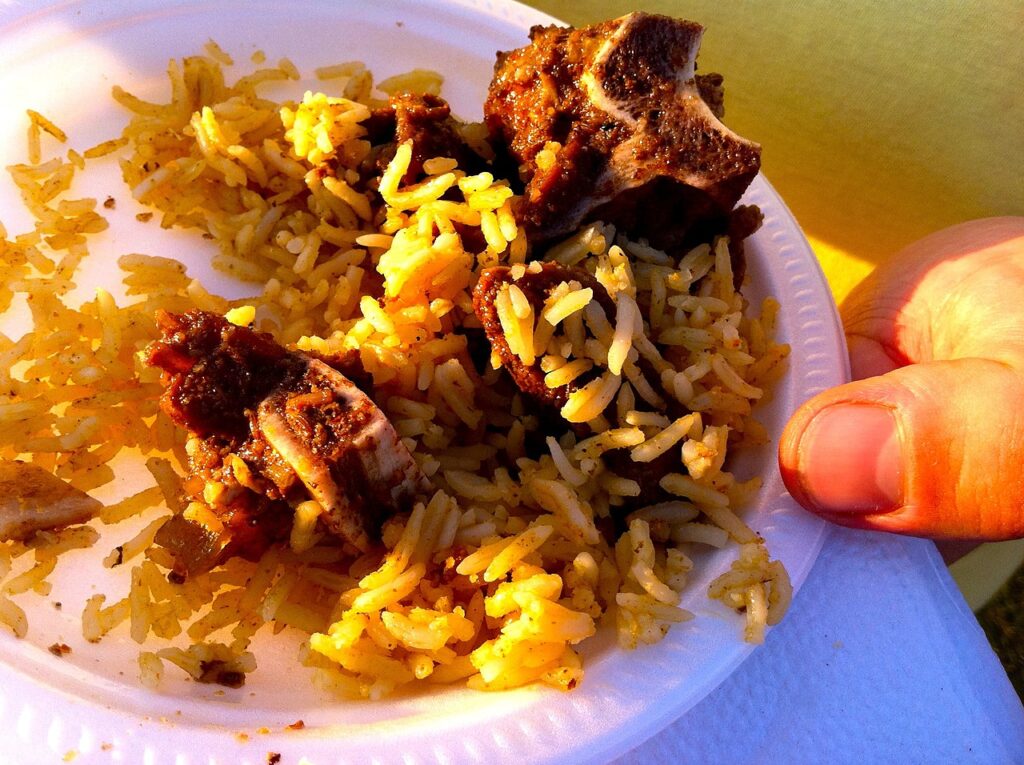
Fragrant rice cooked in rich coconut milk until fluffy and aromatic, a staple of Swahili coastal cuisine served alongside curries and grilled seafood.
Nutrition & Info
Allergen Warnings
Equipment Needed
Presentation Guide
Vessel: large serving plate
Garnishes: toasted coconut flakes, cilantro
Accompaniments: fish curry, grilled fish, bean stew
Instructions
-
1
Rinse basmati rice under cold water until the water runs clear, then drain thoroughly.
-
2
Heat oil in a heavy pot, add rice and toast for two minutes, stirring until grains are coated and slightly translucent.
-
3
Add coconut milk, water, salt, sugar, and cardamom pod. Stir once and bring to a boil.
-
4
Reduce heat to the lowest setting, cover tightly, and cook for eighteen minutes without lifting the lid.
-
5
Remove from heat and let steam for five minutes with the lid on. The rice should be fluffy with separate grains.
-
6
Fluff gently with a fork, remove cardamom pod, and serve as a bed for curries, stews, or grilled fish.
Did You Know?
Along the Kenyan coast, cooks crack fresh coconuts daily for their rice, and the quality of the coconut milk determines the prestige of the meal.
Chef's Notes
Equipment Tips
- heavy-bottomed pot with lid
- measuring cup
- fork
Garnishing
toasted coconut flakes, cilantro
Accompaniments
The Story Behind Wali wa Nazi
Wali wa Nazi embodies the Swahili coastal culinary identity, where coconut palms line every beach and coconut milk enriches nearly every dish. This fragrant rice reflects centuries of maritime trade that brought rice cultivation from Asia to the East African coast. Arab, Indian, and Southeast Asian traders all left their mark on Swahili cuisine, and coconut rice became the perfect canvas for the region's complex curries and grilled seafood.


Comments (0)
Log in to leave a comment.
No comments yet. Be the first to share your thoughts!