Ugali na Sukuma
Ugali na Sukuma Wiki (oo-GAH-lee nah soo-KOO-mah WEE-kee)
Ugali with Sukuma Wiki
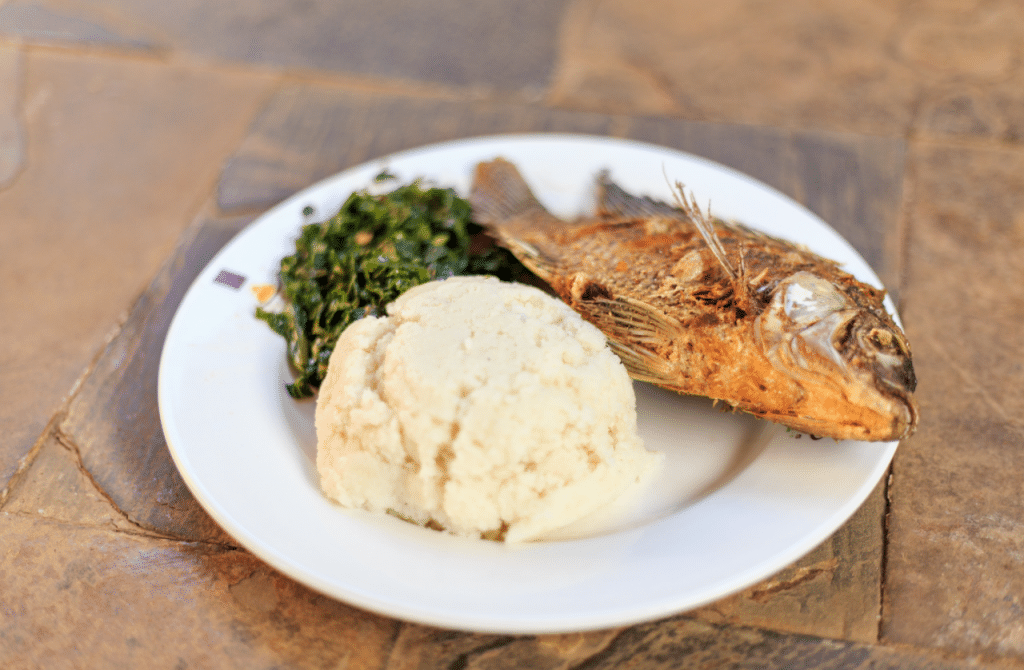
A firm, smooth cornmeal cake served with sautéed collard greens in a garlicky tomato sauce. This affordable, filling duo is the daily sustenance of millions of Kenyans.
Nutrition & Info
Allergen Warnings
Equipment Needed
Presentation Guide
Vessel: plate with ugali mound and greens alongside
Garnishes: lemon wedge
Accompaniments: nyama choma, stewed beans
Instructions
-
1
Bring three cups of water to a rolling boil in a large heavy-bottomed pot. Reduce heat to medium and gradually sprinkle in one cup of the maize flour while stirring vigorously with a strong wooden spoon to prevent any lumps from forming.
-
2
Continue adding the remaining maize flour a few tablespoons at a time, stirring and pressing the mixture against the sides of the pot. The ugali will become very thick and stiff, requiring considerable arm strength to turn.
-
3
Cook the ugali for ten to fifteen minutes on low heat, turning and folding it with the wooden spoon until it pulls away cleanly from the sides of the pot and forms a cohesive, smooth mass with no raw flour taste.
-
4
Wet the inside of a serving bowl, scoop the hot ugali into it, and press firmly to create a smooth dome shape. Invert onto a plate to unmould. Cover with a cloth to keep warm while you prepare the greens.
-
5
Heat the vegetable oil in a large skillet over medium heat. Add the diced onion and sauté for four minutes until translucent, then add the minced garlic and cook for thirty seconds until fragrant.
-
6
Add the chopped tomatoes to the skillet and cook for three to four minutes, stirring occasionally, until they break down into a thick, jammy sauce that coats the onions evenly.
-
7
Add the shredded sukuma wiki to the tomato mixture, season with salt, and toss to combine. Cover the pan and cook for five to seven minutes, stirring once halfway through, until the greens are tender but still vibrant green.
-
8
Serve the ugali dome on a plate surrounded by the sukuma wiki. To eat traditionally, pinch off a small piece of ugali with your right hand, press a well into it with your thumb, and use it to scoop up the greens.
Did You Know?
'Sukuma wiki' literally means 'push the week' in Swahili — it's the budget-friendly green that stretches meals to the end of the week.
Chef's Notes
Equipment Tips
- heavy saucepan
- wooden spoon (mwiko)
- skillet
Garnishing
lemon wedge
Accompaniments
nyama choma, stewed beans
The Story Behind Ugali na Sukuma
The Story: Ugali and sukuma wiki is the most common everyday meal in Kenya, a pairing of stiff maize porridge with sauteed collard greens cooked with onions and tomatoes. Ugali, made by stirring maize flour into boiling water until it forms a dense, smooth mass, became the national staple after maize was introduced from the Americas via Portuguese trade routes in the sixteenth century. Sukuma wiki, meaning to push the week in Swahili, earned its name because the affordable greens help families stretch their food budget through lean days.
On the Calendar: Ugali and sukuma wiki is eaten daily across Kenya, typically at lunch and dinner. It is the meal of the working class, the student, the family stretching resources, and also the nostalgic comfort food of Kenyans abroad who long for its simple, grounding presence.
Then & Now: The fundamental preparation has not changed in generations: maize flour, water, heat, and a strong stirring arm. Urban markets and supermarkets now sell pre-cut sukuma wiki, and the dish has become a symbol of Kenyan resilience and resourcefulness. It appears in every socioeconomic setting, from rural homesteads to Nairobi apartments.
Legacy: Ugali and sukuma wiki is the foundation of Kenyan sustenance, a meal that embodies the values of simplicity, thrift, and nourishment that define everyday life for millions.



Comments (0)
Log in to leave a comment.
No comments yet. Be the first to share your thoughts!