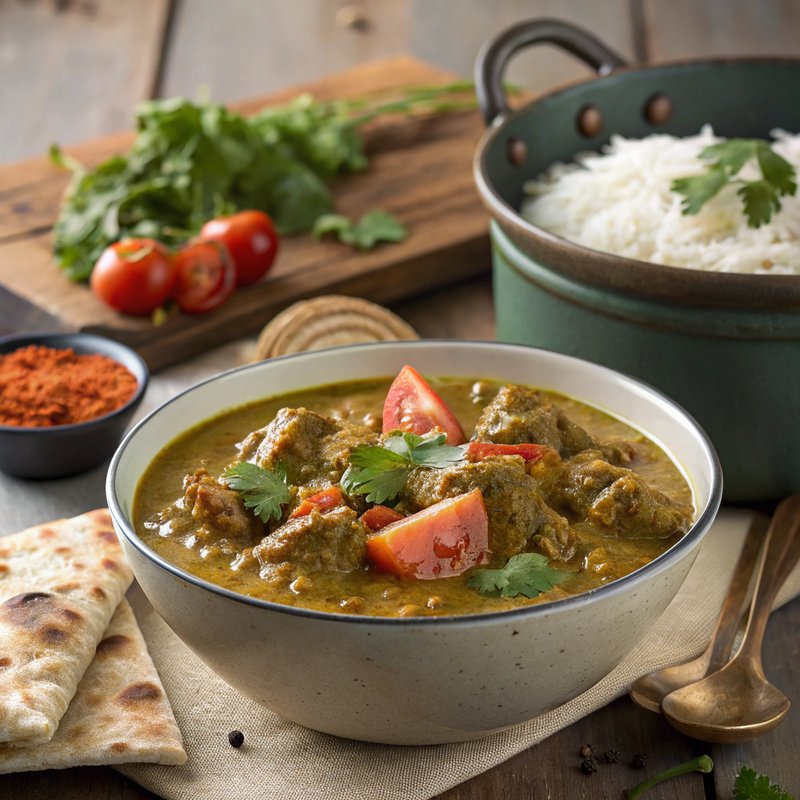
Red kidney beans simmered in a lush coconut milk sauce with tomatoes, onions, and curry spices, a creamy coastal Kenyan staple.
Nutrition & Info
Allergen Warnings
Equipment Needed
Presentation Guide
Instructions
-
1
Boil soaked kidney beans in fresh water for forty-five minutes until tender but not mushy. Drain and set aside.
-
2
Heat oil and sauté onions for five minutes. Add garlic, curry powder, and turmeric, cook one more minute.
-
3
Add chopped tomatoes and cook for five minutes until they break down into a thick sauce.
-
4
Pour in coconut milk and cooked beans, stir to combine, and bring to a gentle simmer.
-
5
Cook uncovered for fifteen minutes until the sauce thickens and coats the beans in a creamy blanket.
-
6
Season with salt and pepper, garnish with fresh cilantro, and serve with wali wa nazi or chapati.
Did You Know?
On the Kenyan coast, maharagwe ya nazi is considered the perfect weekday meal because it is nourishing, affordable, and tastes even better the next day.
Chef's Notes
Equipment Tips
- large pot
- wooden spoon
- cutting board
Garnishing
cilantro, coconut cream drizzle
Accompaniments
The Story Behind Maharagwe
Maharagwe ya nazi is a cornerstone of Swahili coastal cuisine, marrying the legume traditions of the African interior with the coconut culture of the Indian Ocean coast. Beans have been a protein staple in East Africa for centuries, and the addition of coconut milk reflects the Swahili genius for enriching simple ingredients. This dish is proof that extraordinary flavor does not require luxury ingredients.



Comments (0)
Log in to leave a comment.
No comments yet. Be the first to share your thoughts!