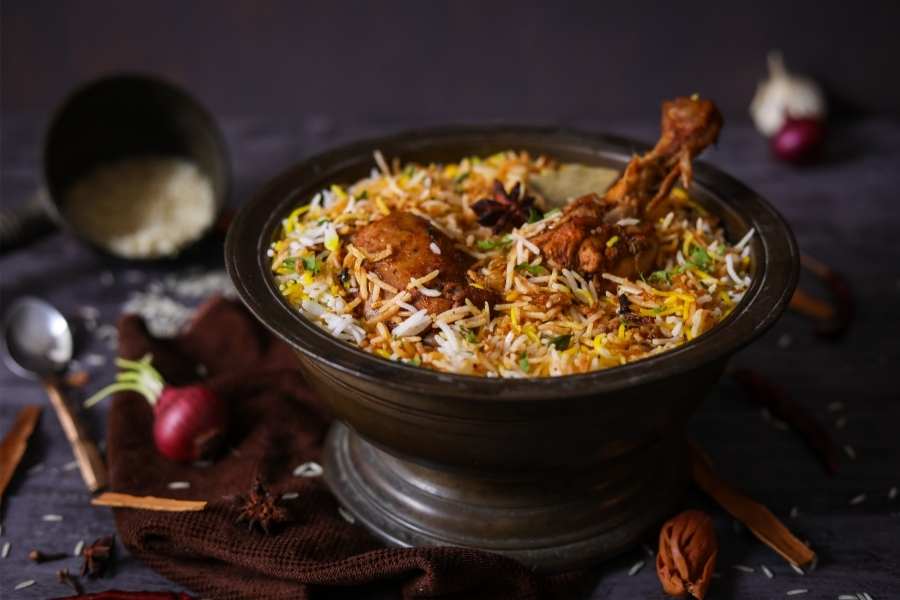
Fragrant basmati rice layered with spiced beef, fried onions, and a splash of rosewater, baked until each grain is infused with aromatic complexity.
Nutrition & Info
Allergen Warnings
Equipment Needed
Presentation Guide
Vessel: large communal platter
Garnishes: crispy fried onions, cilantro, boiled eggs
Accompaniments: kachumbari, raita, lime pickle
Instructions
-
1
Marinate beef in yogurt, biryani masala, turmeric, and salt for at least one hour for maximum tenderness.
-
2
Fry sliced onions in oil until deep golden and crispy. Remove half for garnish, keep half in the pot.
-
3
Add marinated beef to the pot with fried onions, cook covered on low heat for forty minutes until tender.
-
4
Parboil soaked rice in salted boiling water for six minutes until seventy percent cooked. Drain well.
-
5
Layer rice over the cooked meat, drizzle with saffron milk and rosewater, cover tightly with foil and lid.
-
6
Cook on very low heat for twenty-five minutes. Remove from heat, rest five minutes, then gently mix layers to serve.
Did You Know?
In Mombasa, every family claims their biryani recipe is the best, and biryani competitions during Eid are taken very seriously.
Chef's Notes
Equipment Tips
- heavy pot with tight lid
- large skillet
- mixing bowls
Garnishing
crispy fried onions, cilantro, boiled eggs
Accompaniments
kachumbari, raita, lime pickle
The Story Behind Kenyan Biryani
Kenyan biryani arrived through centuries of Indian Ocean trade, blending Mughal rice traditions with Arab spicing and East African beef culture. The Swahili coast city of Mombasa became the epicenter of Kenyan biryani culture, where the dish evolved into something distinctly different from its South Asian ancestor. Kenyan biryani tends to be more boldly spiced, uses beef rather than chicken or lamb, and features the uniquely Swahili touch of rosewater.



Comments (0)
Log in to leave a comment.
No comments yet. Be the first to share your thoughts!