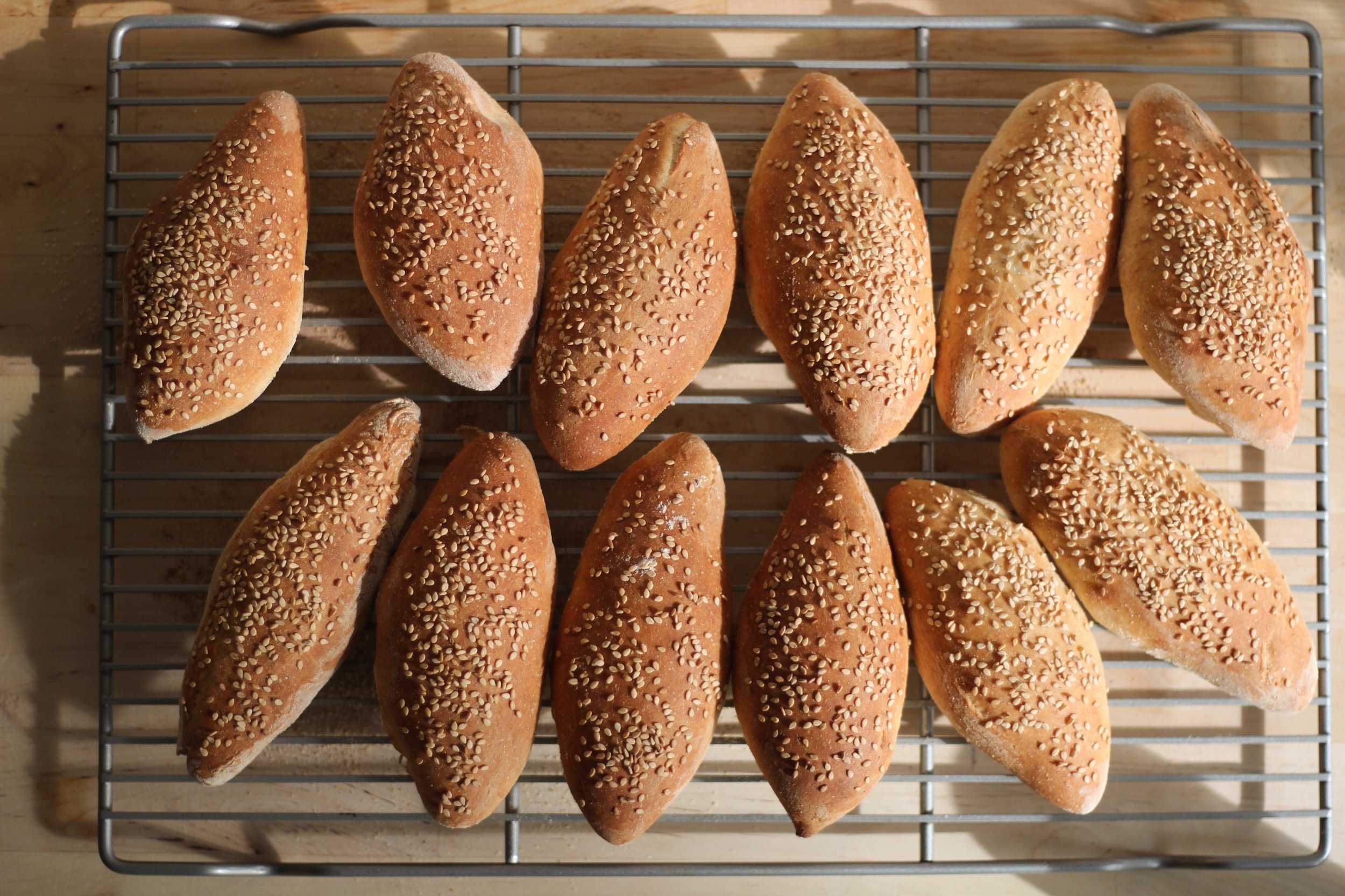
A thick, dimpled flatbread baked on hot pebbles in a traditional taboon clay oven, creating a distinctive bubbly, charred surface. This ancient bread is the foundation of Jordanian meals, torn by hand to scoop food.
Nutrition & Info
Allergen Warnings
Equipment Needed
Presentation Guide
Vessel: bread basket or flat tray
Garnishes: olive oil drizzle, za'atar sprinkle
Accompaniments: any Jordanian dish
Instructions
-
1
Combine both flours, yeast, sugar, and salt in a large bowl. Add olive oil and warm water, mixing until a shaggy dough forms.
-
2
Knead the dough on a floured surface for 10 minutes until smooth, elastic, and slightly tacky. The dough should spring back when poked.
-
3
Place in an oiled bowl, cover with a damp cloth, and let rise for 45 minutes until doubled in size.
-
4
Divide dough into 6 equal balls. Roll each into a round disc about 20cm wide and 1cm thick. Let rest 10 minutes.
-
5
Place a baking stone or inverted heavy baking sheet in the oven and preheat to the highest setting, at least 250C, for 30 minutes.
-
6
Transfer dough rounds onto the hot stone and bake for 5-7 minutes until puffed, bubbly, and lightly charred on the bottom. Wrap in cloth to keep warm.
Did You Know?
The pebble-dimpled surface of taboon bread is not just decorative — the indentations create pockets that trap olive oil and stew juices perfectly.
Chef's Notes
Equipment Tips
- mixing bowl
- baking stone or heavy baking sheet
- oven or taboon
Garnishing
olive oil drizzle, za'atar sprinkle
Accompaniments
any Jordanian dish
The Story Behind Taboon Bread
Taboon bread takes its name from the taboon, an ancient clay oven heated by burning wood and pebbles that has been used in Jordan for thousands of years. Archaeological evidence suggests this style of bread-making predates recorded history in the Levant. In Jordanian villages, communal taboon ovens were social centers where women gathered to bake bread and share news. The bread's thick, chewy texture and smoky flavor make it the ideal companion for scooping up mansaf, hummus, and every other Jordanian dish.

Comments (0)
Log in to leave a comment.
No comments yet. Be the first to share your thoughts!