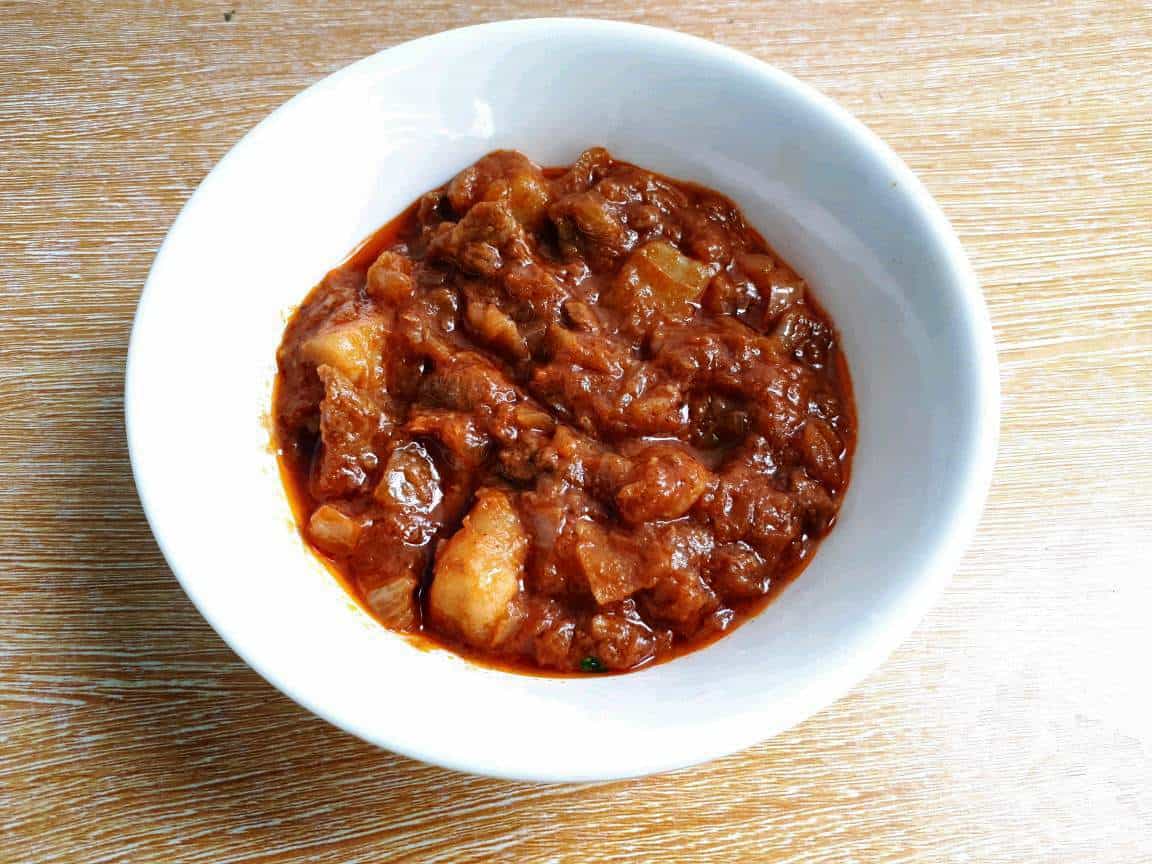
Galayat Bandora
قلاية بندورة (gah-LAH-yet ban-DOH-rah)
Tomato and Egg Skillet
A sizzling skillet of ripe tomatoes cooked down with garlic, chili, and olive oil, with eggs cracked directly into the bubbling sauce. This humble Jordanian breakfast is rustic, bold, and utterly satisfying.
Nutrition & Info
Allergen Warnings
Equipment Needed
Presentation Guide
Vessel: served in the skillet
Garnishes: fresh parsley, chili flakes
Accompaniments: warm bread, olives, labneh
Instructions
-
1
Heat olive oil in a cast-iron skillet over medium-high heat. Add minced garlic and sliced chili, stirring for 30 seconds until fragrant.
-
2
Add chopped tomatoes, cumin, salt, and pepper. Cook on high heat for 8-10 minutes, stirring and pressing tomatoes to break them down into a thick, bubbling sauce.
-
3
When the sauce has reduced and thickened with the oil separating slightly at the edges, make small wells in the surface with the back of a spoon.
-
4
Crack eggs directly into the wells in the sauce. Season the eggs lightly with salt and pepper.
-
5
Cover the skillet and cook for 3-4 minutes until egg whites are set but yolks remain runny, or longer if you prefer firm yolks.
-
6
Garnish with fresh parsley and serve immediately in the skillet with plenty of warm bread for scooping.
Did You Know?
Galayat bandora is the ultimate Jordanian comfort breakfast — when nothing else is in the kitchen, tomatoes, eggs, and bread will always save the day.
Chef's Notes
Equipment Tips
- cast-iron skillet
- sharp knife
- wooden spoon
Garnishing
fresh parsley, chili flakes
Accompaniments
warm bread, olives, labneh
The Story Behind Galayat Bandora
Galayat bandora, meaning "fried tomatoes," is the quintessential Jordanian village breakfast that has been adopted across all social classes. Born of necessity in rural communities where fresh tomatoes, eggs, and bread were always available, this simple dish demonstrates that extraordinary flavor can come from the humblest ingredients. In Jordan, it remains the most common homemade breakfast, prepared in minutes and eaten directly from the skillet with torn pieces of fresh bread.

Comments (0)
Log in to leave a comment.
No comments yet. Be the first to share your thoughts!