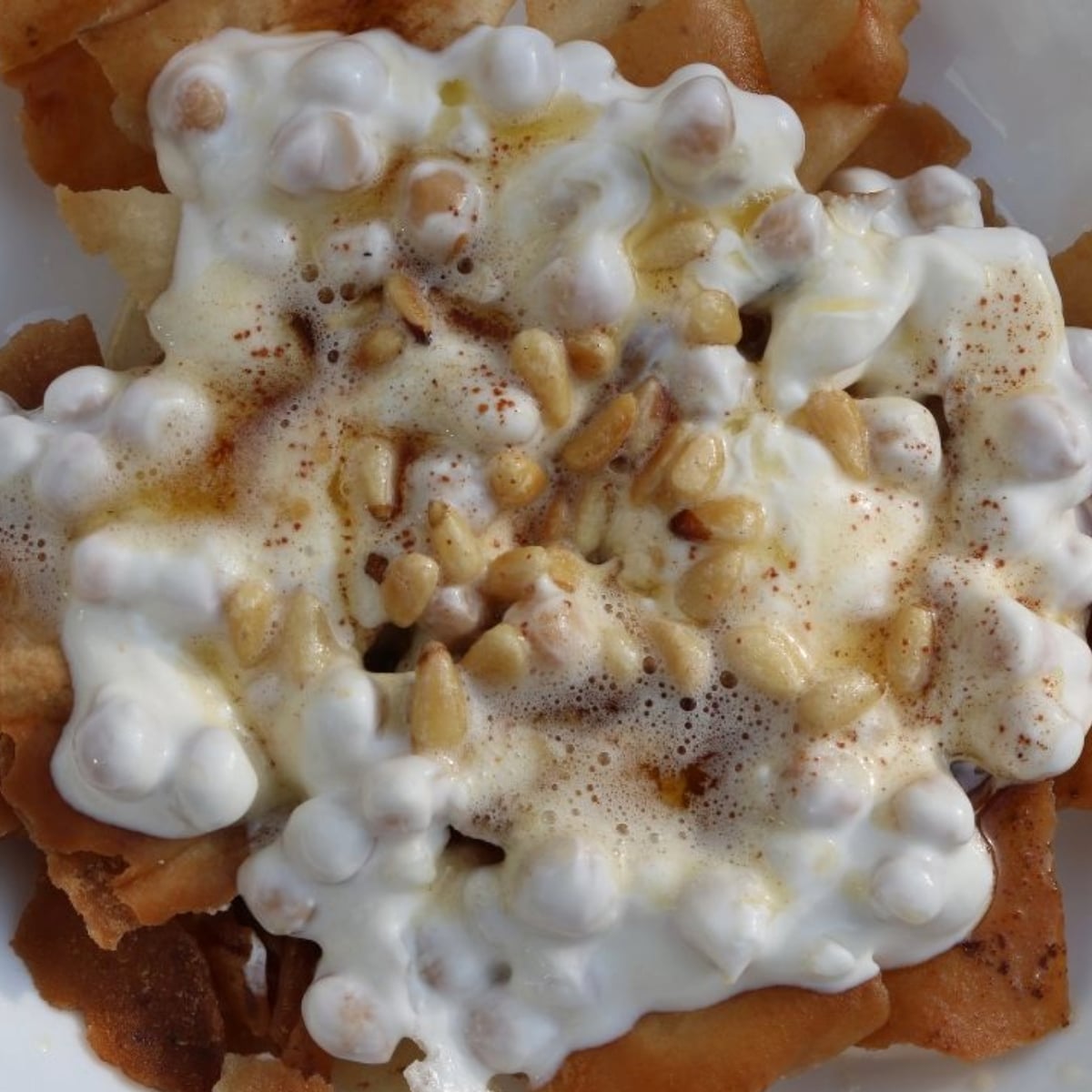
Layered breakfast of crispy pita chips, warm chickpeas, garlicky yogurt, and sizzling pine nuts in melted butter. Jordanian breakfast luxury.
Nutrition & Info
Allergen Warnings
Equipment Needed
Presentation Guide
Vessel: deep ceramic bowl
Garnishes: toasted pine nuts, paprika, olive oil drizzle, fresh parsley
Accompaniments: pita bread
Instructions
-
1
Preheat the oven to 200°C and spread the torn pita pieces on a baking sheet in a single layer. Toast for eight to ten minutes, turning once halfway, until the bread is evenly golden and crisp throughout.
-
2
Place the drained chickpeas in a saucepan with enough water to cover them by two centimetres. Add the ground cumin and a pinch of salt, then warm over medium heat for about five minutes until heated through.
-
3
In a mixing bowl, whisk together the yogurt, minced garlic, tahini, lemon juice, and a quarter teaspoon of salt until the mixture is completely smooth and pourable, adding a tablespoon of warm water if needed.
-
4
Arrange the toasted pita pieces across the bottom of a deep serving platter, creating an even base layer that will absorb the sauces and form the foundation of the dish.
-
5
Drain the warm chickpeas and spoon them evenly over the pita layer, then ladle the yogurt-tahini sauce generously over the chickpeas, ensuring every area of the dish is covered.
-
6
Melt the butter in a small skillet over medium heat, add the pine nuts, and toast them for two to three minutes, stirring constantly until they turn golden brown and the butter begins to foam.
-
7
Sprinkle the paprika into the sizzling butter and pine nuts, stir once, then immediately pour the hot spiced butter over the yogurt layer. Garnish with fresh parsley and serve at once while still warm.
Did You Know?
Fattet hummus is served on mornings after weddings and births — richness symbolizes abundance.
Chef's Notes
Equipment Tips
- saucepan
- baking sheet
- serving bowl
Garnishing
toasted pine nuts, paprika, olive oil drizzle, fresh parsley
Accompaniments
pita bread
The Story Behind فتة حمص
### The Story
Fattet hummus is a layered dish that combines toasted or fried pieces of flatbread with warm chickpeas and a tangy yogurt-tahini sauce, finished with toasted pine nuts and a drizzle of olive oil or melted butter. The word fatteh comes from the Arabic fatt, meaning "to crumble" -- a reference to the broken bread that forms the dish's foundation. This family of dishes has roots in medieval Levantine cooking, where stale bread was repurposed by soaking it in broth or yogurt, a practice documented in 13th-century Arab cookbooks. In Jordan, fattet hummus evolved as a hearty breakfast and celebration dish, particularly in Amman and the northern cities influenced by Palestinian and Syrian traditions.
### On the Calendar
Fattet hummus is a traditional breakfast and brunch dish, often prepared for Eid al-Adha and Eid al-Fitr celebrations. It is also served at large family gatherings and after Friday prayers as a communal meal.
### Then & Now
The key to excellent fatteh lies in the contrast of textures -- the bread must be crisp enough to maintain some crunch beneath the warm chickpeas and creamy yogurt. Jordanian versions tend to be generous with garlic and lemon in the yogurt sauce, and the pine nut garnish fried in butter is considered essential. Some families add a layer of shredded chicken or lamb, transforming it into a complete meal.
### Legacy
Fattet hummus exemplifies the Levantine genius for transforming humble ingredients -- stale bread, chickpeas, and yogurt -- into a dish of remarkable depth and satisfaction.

Comments (0)
Log in to leave a comment.
No comments yet. Be the first to share your thoughts!