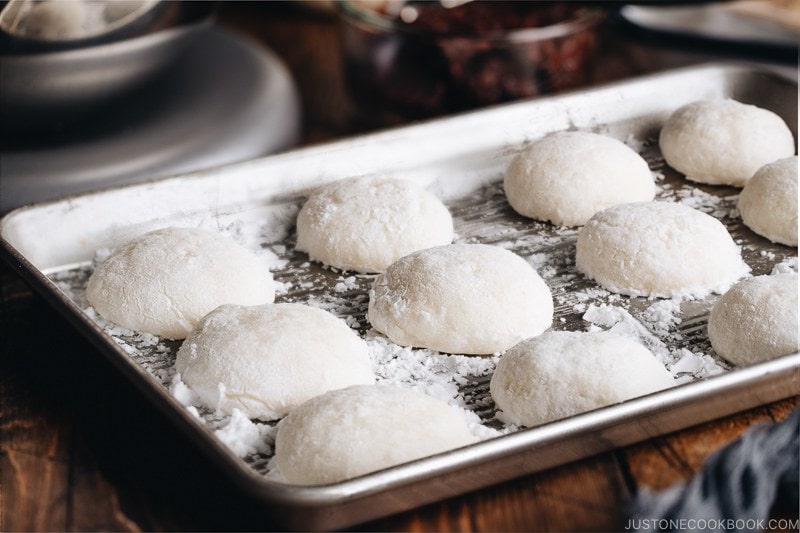
Pillowy, stretchy rice cakes of pounded glutinous rice wrapped around sweet red bean paste. The chewy, bouncy texture is utterly addictive.
Nutrition & Info
Equipment Needed
Presentation Guide
Vessel: lacquer tray or ceramic plate
Garnishes: kinako (roasted soybean powder), matcha powder
Accompaniments: green tea
Instructions
-
1
Whisk together the mochiko, sugar, and water in a microwave-safe bowl until the mixture is completely smooth with no lumps. The batter should have the consistency of thick pancake batter and flow easily when you tilt the bowl.
-
2
Cover the bowl loosely with cling film and microwave on high for one minute. Remove, stir vigorously with a wet spatula, then microwave for another minute. Repeat this process two to three times until the mochi becomes translucent and very sticky.
-
3
Generously dust a clean work surface with potato starch or cornstarch. Turn the hot mochi out onto the surface using the wet spatula, and dust the top with more starch to prevent sticking to your hands.
-
4
Divide the anko red bean paste into twelve equal portions, rolling each into a smooth ball about two centimetres in diameter. If making ichigo daifuku, wrap each strawberry with a thin layer of anko before proceeding.
-
5
Divide the mochi into twelve equal pieces using a bench scraper or starch-dusted knife. Flatten each piece into a disc about seven centimetres across, keeping the edges thinner than the centre for a more even wrap.
-
6
Place an anko ball in the centre of each mochi disc, gather the edges up and around the filling, and pinch firmly to seal at the top. Turn seam-side down and gently roll between your palms into a smooth, round shape.
-
7
Dust each finished mochi ball lightly with starch and place on a parchment-lined tray. Mochi is best eaten the same day it is made, as refrigeration causes the texture to harden and lose its signature soft, pillowy chewiness.
Did You Know?
Traditional mochitsuki requires two people rhythmically pounding rice — perfect timing avoids smashed fingers.
Chef's Notes
Equipment Tips
- microwave or steamer
- mixing bowl
- cornstarch for dusting
Garnishing
kinako (roasted soybean powder), matcha powder
Accompaniments
green tea
The Story Behind 餅
### The Story
Mochi, the pounded glutinous rice cake, has roots stretching back to Japan's Jomon period (c. 14,000-300 BCE), when rice cultivation first took hold, though it was originally made from red rice. The refined form we know today developed during the Nara period (710-794 CE). During the Heian period (794-1185), mochi became a sacred food used in Shinto rituals, offered at shrines to bring good fortune. It was placed in the mouths of 50-day-old babies as a blessing, and newlyweds ate mochi three days after their marriage. In ancient Japan, it was considered the food of the gods.
### On the Calendar
Mochi is most strongly associated with Japanese New Year (Oshogatsu), when kagami mochi (mirror rice cakes) are displayed as offerings. Mochitsuki, the communal rice-pounding ceremony, takes place in late December.
### Then & Now
Once reserved for nobility and Shinto ceremonies, mochi became accessible to common people during the Muromachi and Edo periods. Modern mochi comes in countless forms -- daifuku (filled with red bean paste), ice cream mochi, and sakura mochi wrapped in cherry leaves. The global mochi ice cream trend has introduced the confection to millions.
### Legacy
Mochi is among Japan's oldest continuously made foods -- a living link between Shinto spirituality, seasonal celebration, and everyday Japanese life.
More Japanese Dishes
 Medium
📜 Story
Medium
📜 Story
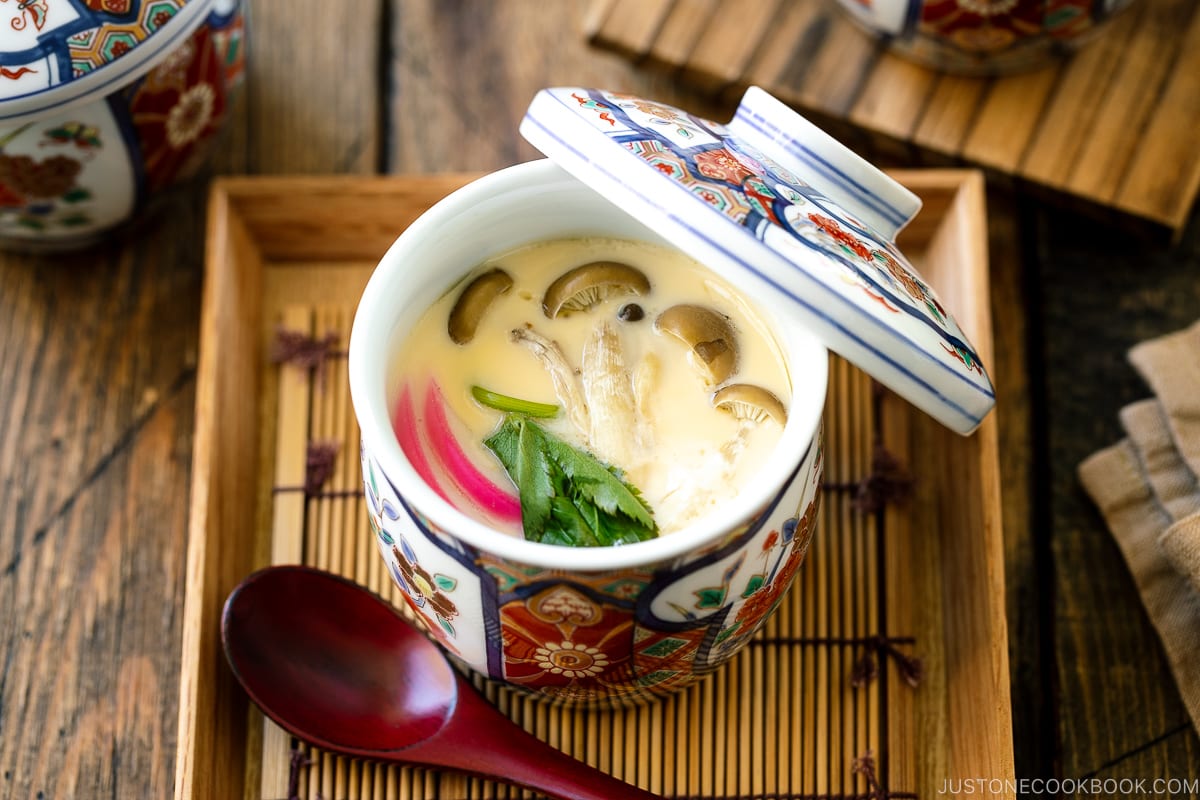
Chawanmushi
Savory Steamed Egg Custard
Appetizer course in kaiseki meal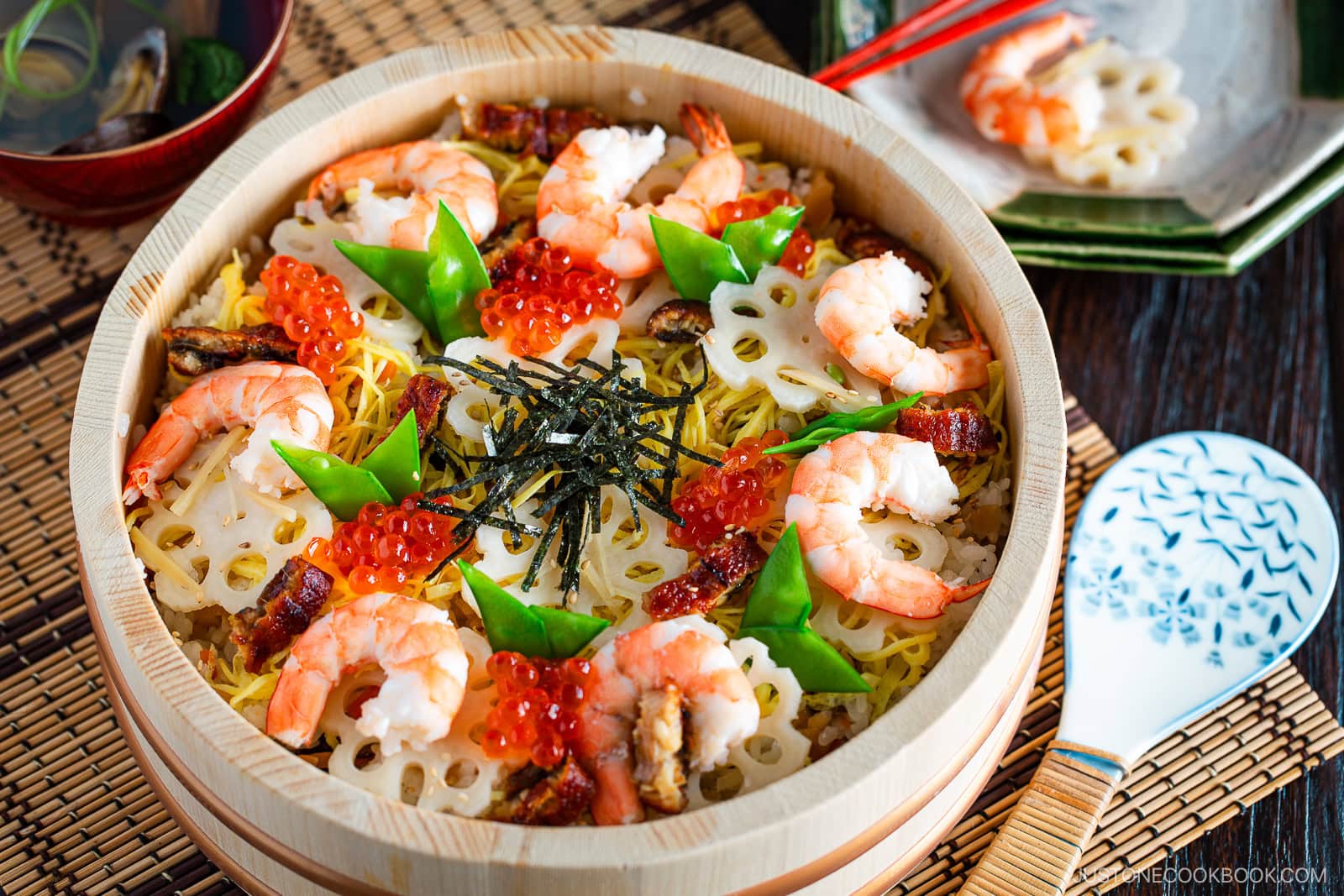 Medium
📜 Story
Medium
📜 Story
Chirashi Sushi
Scattered Sushi Bowl
Hinamatsuri (Girls' Day), celebrations, special meals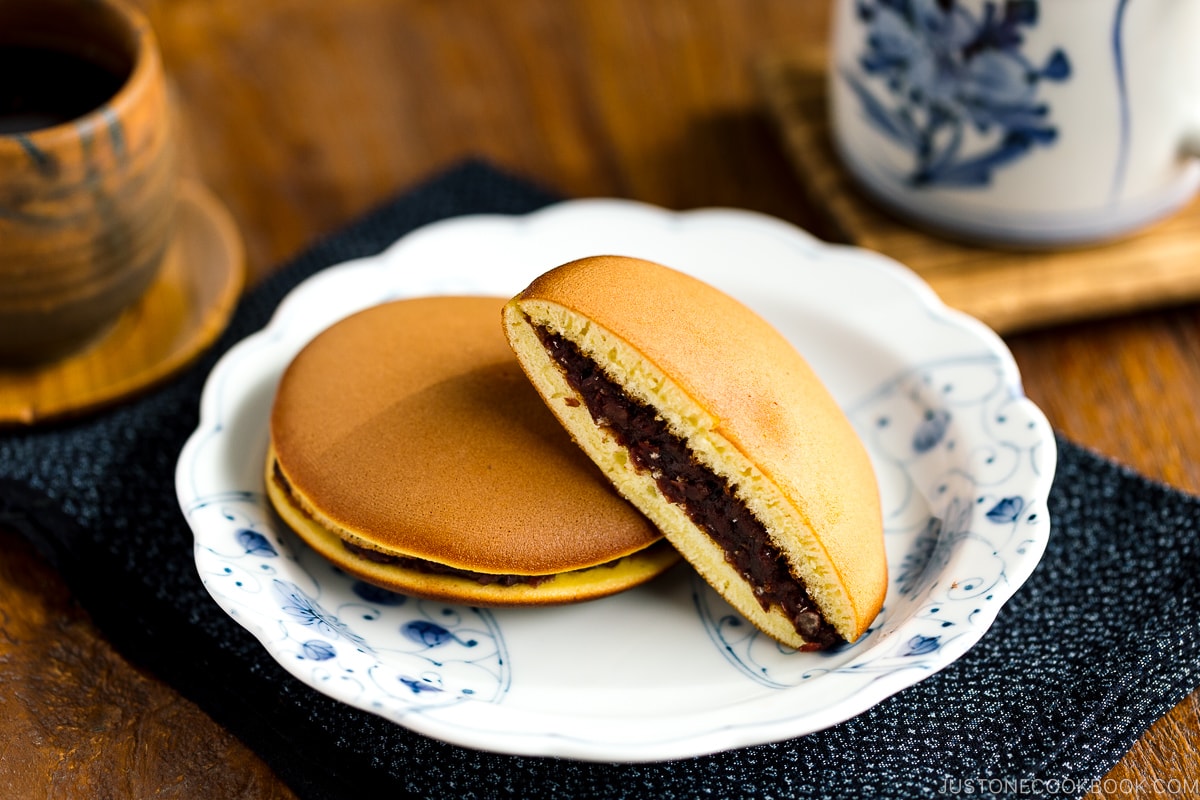 Easy
📜 Story
Easy
📜 Story
Dorayaki
Red Bean Pancake Sandwich
Afternoon tea snack Easy
📜 Story
Easy
📜 Story
Edamame
Salted Steamed Soybeans
Pre-meal snack or beer accompaniment
Comments (0)
Log in to leave a comment.
No comments yet. Be the first to share your thoughts!