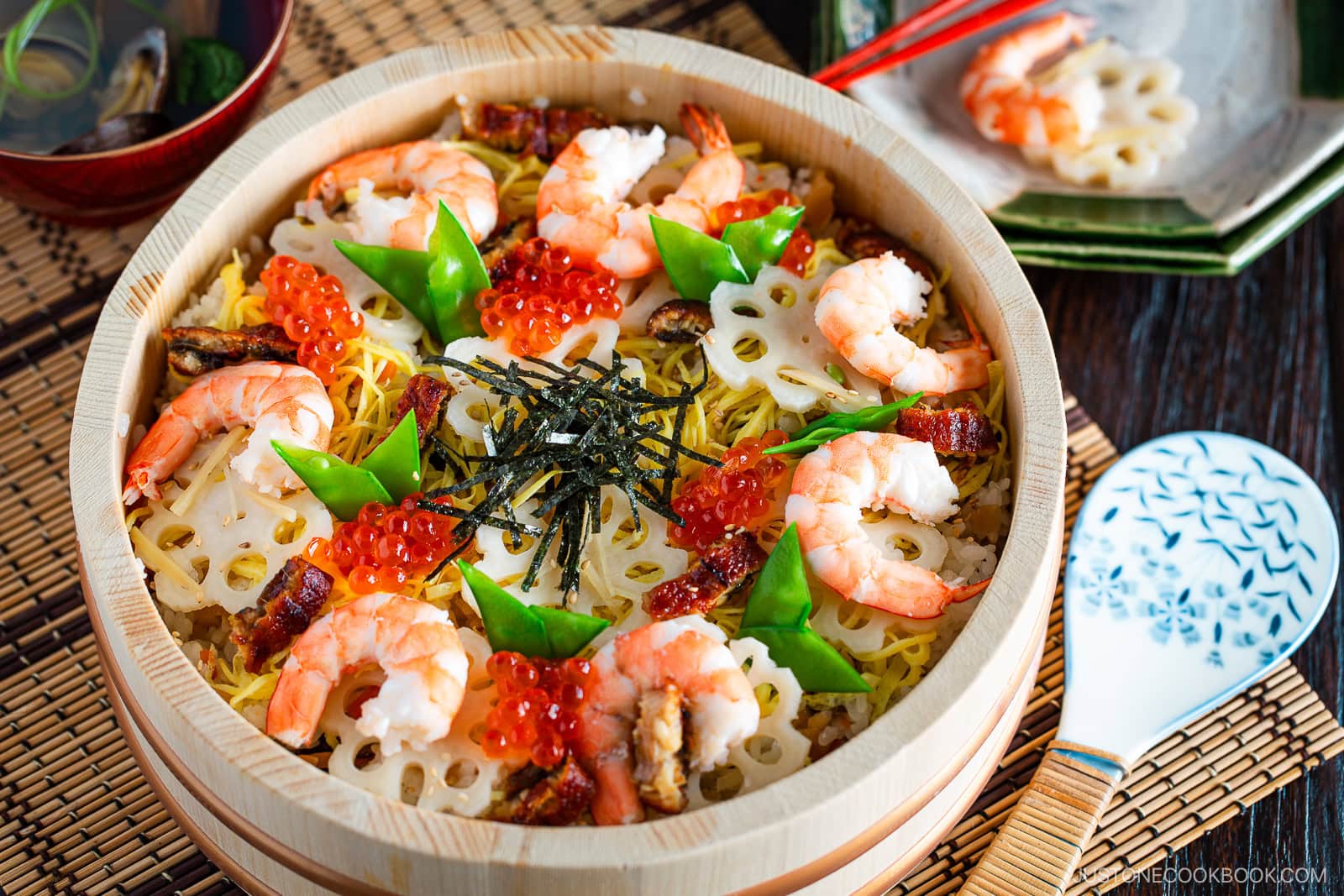
A vibrant bowl of seasoned sushi rice artfully topped with an assortment of fresh sashimi, sweet shrimp, tamago, cucumber, and shiso leaves. This celebratory dish offers all the joy of sushi without the shaping skill.
Nutrition & Info
Allergen Warnings
Equipment Needed
Instructions
-
1
Cook sushi rice in a rice cooker. While hot, transfer to a hangiri or wide bowl. Mix rice vinegar, sugar, and salt, then fold into the rice using cutting motions while fanning to cool quickly.
-
2
Prepare the sashimi by slicing the fish into thin, even pieces against the grain using a sharp wet knife. Arrange the sliced fish, shrimp, and other toppings on a tray ready for assembly.
-
3
Slice the cucumber thinly and cut the tamagoyaki into neat dice. Prepare all garnishes including shiso leaves, pickled ginger, tobiko, and nori strips so everything is ready for final plating.
-
4
Divide the seasoned sushi rice among four serving bowls, gently pressing it into an even layer. The rice should still be slightly warm, providing a pleasant contrast to the cool raw toppings.
-
5
Artfully arrange the sashimi slices, butterflied shrimp, cucumber, and tamagoyaki on top of the rice. The arrangement should look abundant and colorful, covering most of the rice surface.
-
6
Finish with spoonfuls of bright orange tobiko, shiso leaves, nori strips, and pickled ginger. Serve with small dishes of soy sauce and fresh wasabi on the side for individual seasoning.
Did You Know?
Chirashi sushi is the traditional dish served on Hinamatsuri, Japanese Girls' Day on March third. Families prepare elaborate bowls with ingredients chosen for their auspicious colors: pink shrimp for health, yellow egg for wealth, and green beans for vitality.
Chef's Notes
Equipment Tips
- rice cooker
- hangiri or large bowl
- sharp knife
- fan
- serving bowls
The Story Behind Chirashi Sushi
Chirashi sushi evolved from early forms of preserved fish over rice during the Edo period. Unlike nigiri sushi which required years of apprenticeship, chirashi sushi democratized sushi by scattering toppings over seasoned rice in a bowl. The Kanto style features raw sashimi arranged artfully on top, while the Kansai style mixes cooked ingredients into the rice. Chirashi became the traditional centerpiece of Hinamatsuri celebrations and other festive occasions. The dish represents abundance and celebration, with its colorful array of toppings symbolizing prosperity. It remains the easiest way to enjoy the flavors of sushi at home.
Comments (0)
Log in to leave a comment.
No comments yet. Be the first to share your thoughts!