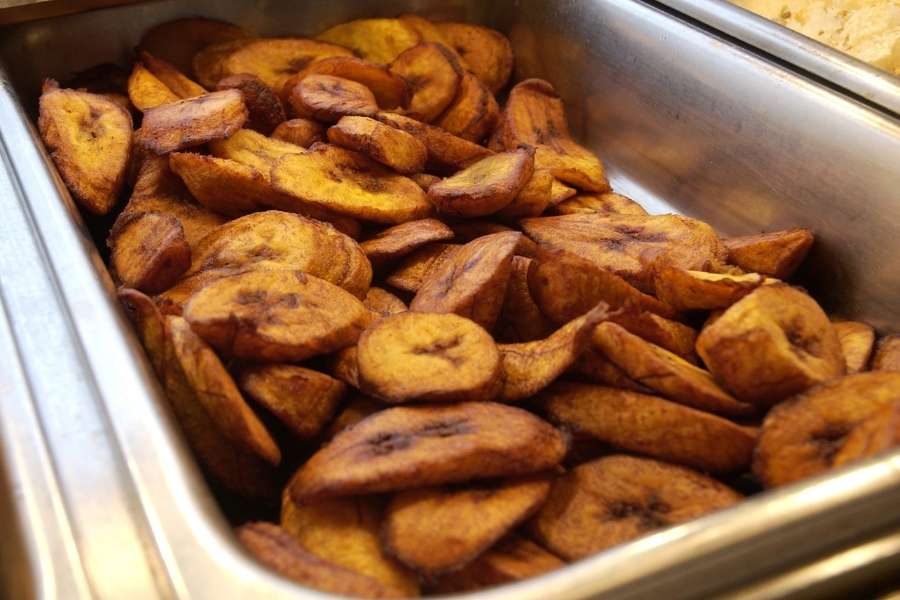
Sweet ripe plantains deep-fried to caramelized perfection and served with spicy tomato-onion sauce. Ivory Coast's irresistible street food.
Nutrition & Info
Equipment Needed
Presentation Guide
Vessel: newspaper cone or shallow bowl
Garnishes: chili pepper sauce
Accompaniments: grilled fish, hard-boiled eggs
Instructions
-
1
Select ripe plantains that are yellow with black spots on the skin, which indicates they have developed enough sugar for caramelisation. Cut off both ends, score the skin lengthwise along the ridges, and peel it away carefully.
-
2
Slice the peeled plantains on a diagonal into pieces about one centimetre thick. The diagonal cut creates more surface area for crisping and gives the finished alloco an attractive elongated shape on the plate.
-
3
Heat enough oil in a large, deep skillet or pot to come up about three centimetres deep. Bring the oil to medium-high heat — around one hundred and seventy degrees — testing with a small piece of plantain that should sizzle immediately.
-
4
Fry the plantain slices in batches without overcrowding, turning once, for three to four minutes per side until they are deep golden brown and caramelised on the outside but creamy and soft on the inside.
-
5
Remove the fried plantains with a slotted spoon and drain briefly on a wire rack. While still hot, season lightly with salt. In the same oil, fry the onion rings for two to three minutes until softened and lightly golden.
-
6
Prepare a quick chili-tomato sauce by combining the diced tomatoes, minced scotch bonnet pepper, a pinch of salt, and lime juice in a small bowl. Toss gently and let the flavours meld for a few minutes.
-
7
Arrange the hot fried plantains on a serving plate, scatter the fried onion rings over the top, and serve immediately with the fresh chili-tomato sauce on the side for dipping or drizzling over the alloco.
Did You Know?
Alloco vendors called 'allocodromes' are an essential part of Abidjan's street food scene.
Chef's Notes
Equipment Tips
- deep fryer or heavy pot
- slotted spoon
- paper towels
Garnishing
chili pepper sauce
Accompaniments
grilled fish, hard-boiled eggs
The Story Behind Alloco
The Story: Alloco is one of Cote d'Ivoire's most beloved street foods: ripe plantains cut into thick slices and deep-fried in palm oil until golden, caramelized, and slightly crispy on the outside, then served with a spicy tomato-onion sauce and sometimes accompanied by grilled fish or hard-boiled eggs. The dish is as fundamental to Ivorian street food culture as frites are to Belgian culture, sold from stands on virtually every street corner in Abidjan and across the country. The use of ripe (sweet) rather than green plantains distinguishes alloco from other West African fried plantain preparations.
On the Calendar: Alloco is eaten any time of day in Cote d'Ivoire: as a breakfast, a snack, a side dish, or a full meal when paired with grilled fish and vegetables. Evening alloco vendors, lit by kerosene lamps or bare bulbs, are a defining feature of Ivorian urban life.
Then & Now: The preparation has remained simple and unchanged, with the key variables being the ripeness of the plantain and the quality of the accompanying sauce. Alloco has become a symbol of Ivorian food culture recognized across West Africa.
Legacy: Alloco proves that the simplest street foods can become the most powerful cultural symbols, a few slices of fried plantain representing an entire nation's flavor, warmth, and communal spirit.



Comments (0)
Log in to leave a comment.
No comments yet. Be the first to share your thoughts!