
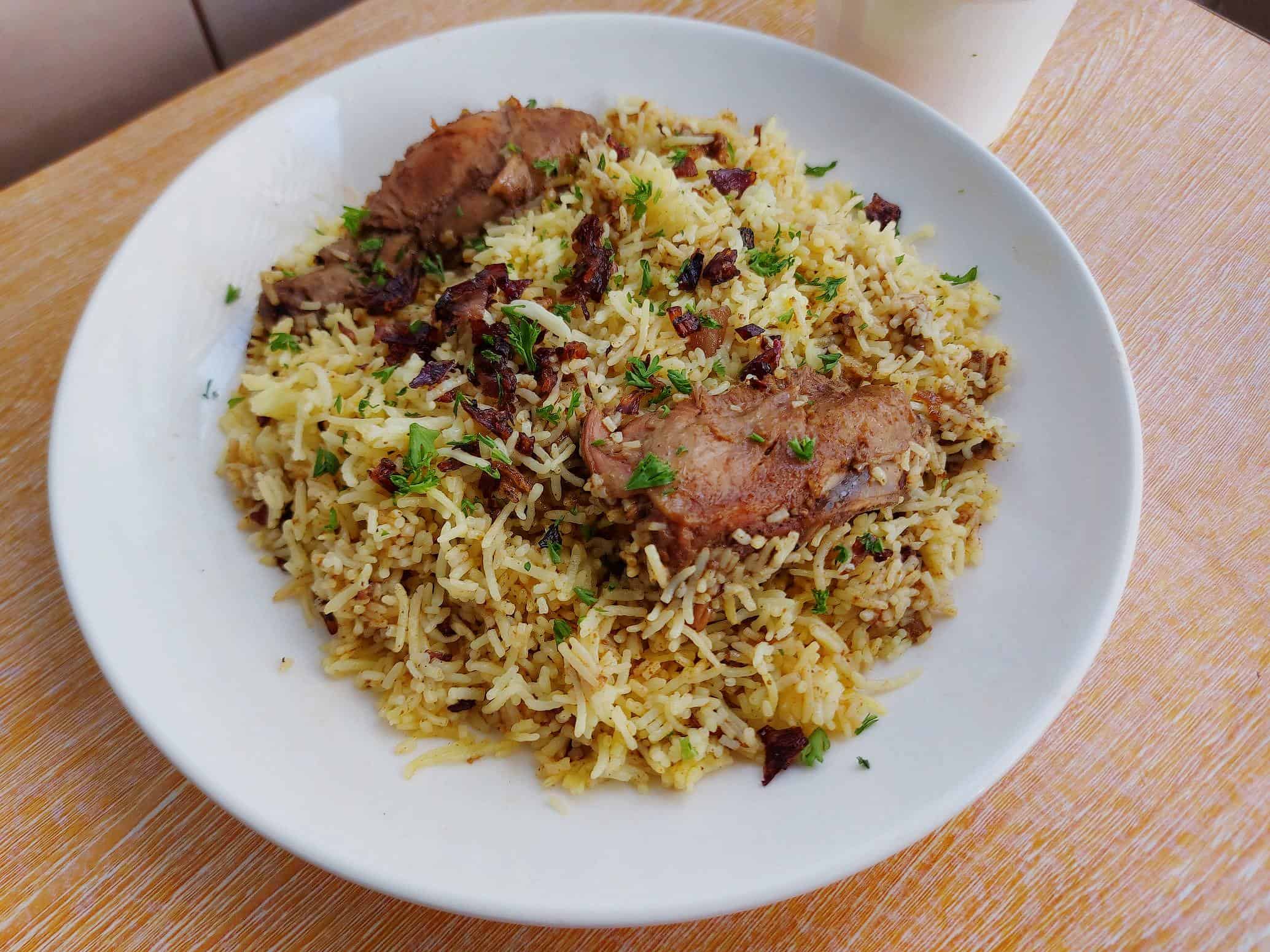
Glistening golden rice infused with precious saffron, studded with toasted almonds and plump raisins. This aromatic Iraqi rice dish is the luxurious accompaniment to festive meals and honored guests.
Nutrition & Info
Allergen Warnings
Equipment Needed
Instructions
-
1
Rinse soaked rice until water runs clear. Drain thoroughly.
-
2
Heat oil in a heavy pot. Add cardamom, cloves, and cinnamon stick, toasting for 1 minute until fragrant.
-
3
Add drained rice and stir gently for 2 minutes, coating every grain with the spiced oil.
-
4
Pour in water and saffron with its soaking liquid. Add salt and bring to a boil.
-
5
Cover tightly, reduce to lowest heat, and cook for 18 minutes without lifting the lid.
-
6
Toast almonds in a dry skillet until golden. Fluff rice with a fork, fold in raisins and almonds, and serve on a platter.
Did You Know?
Iraqi saffron rice gets its deep golden color from local saffron traded since Babylonian times — some of the earliest saffron commerce in recorded history.
Chef's Notes
Equipment Tips
- heavy pot with lid
- small skillet
- measuring cups
The Story Behind Timman Zaffaran
Timman zaffaran reflects the opulence of Abbasid Baghdad, where saffron was a prized spice used lavishly in palace kitchens. The Abbasid caliphs were known for their extravagant feasts, and saffron rice was a centerpiece of royal banquets. Over centuries, this luxurious dish became accessible to ordinary Iraqi families, though it retains its association with celebration and hospitality. The golden color of the rice symbolizes prosperity and warmth in Iraqi culture.



Comments (0)
Log in to leave a comment.
No comments yet. Be the first to share your thoughts!