
Timman Bagilla
تمن باقلاء (TIM-man bah-GIL-lah)
Rice with Dill and Fava Beans
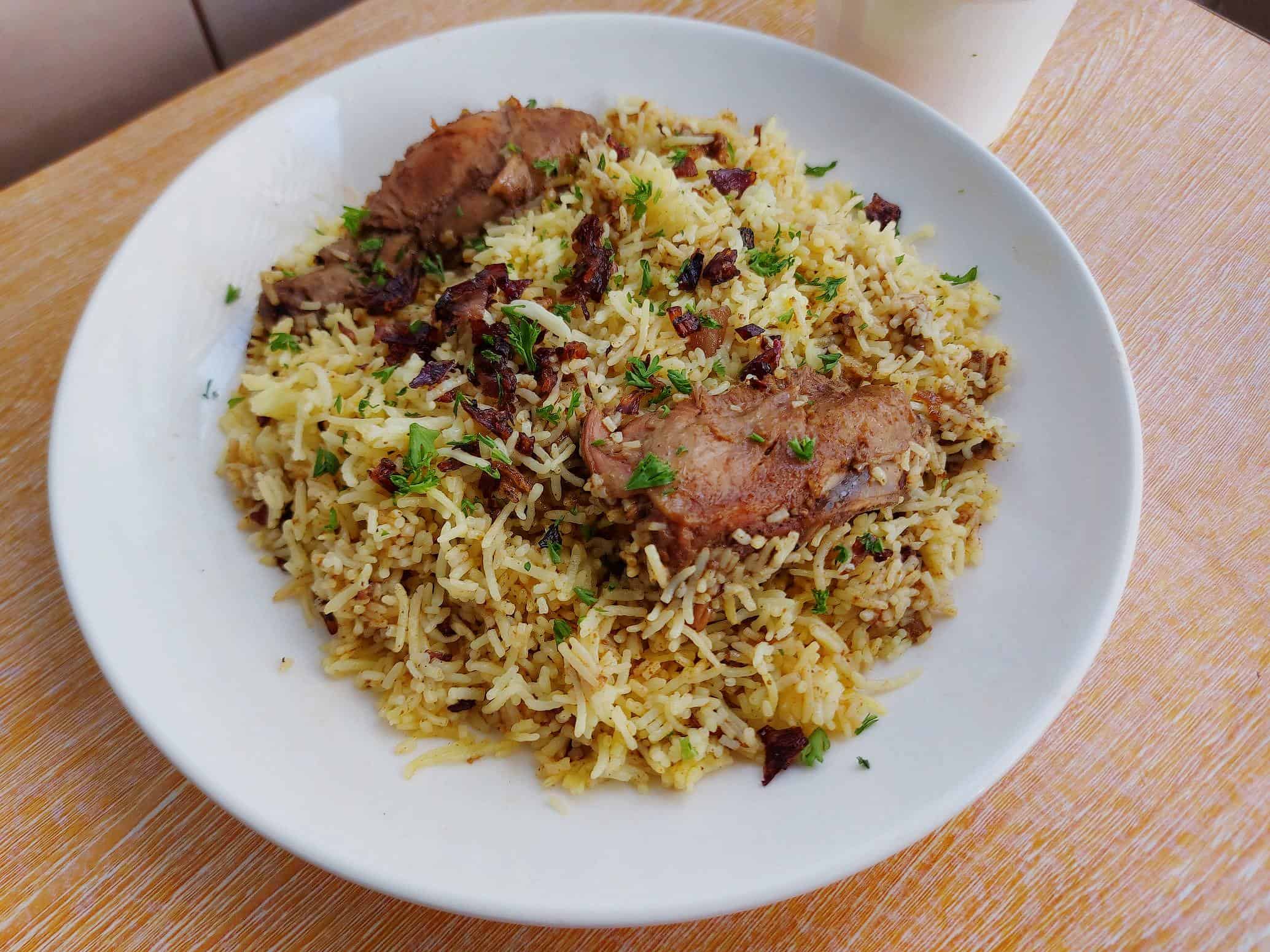
Fluffy basmati rice studded with tender fava beans and laced with fragrant fresh dill. This vibrant green and white Iraqi rice dish celebrates spring with its fresh, herbaceous character.
Nutrition & Info
Equipment Needed
Instructions
-
1
Rinse soaked rice until water runs clear. Drain thoroughly in a colander.
-
2
Heat oil in a pot over medium heat. Add turmeric and stir for 30 seconds until fragrant and oil turns golden.
-
3
Add the fava beans and sauté for 2 minutes. Add the drained rice and stir gently to coat every grain with the turmeric oil.
-
4
Pour in water, add salt and the pierced dried lime. Bring to a boil without stirring.
-
5
Reduce heat to the lowest setting, fold in the fresh dill, cover tightly with a lid wrapped in a towel to absorb steam, and cook for 20 minutes.
-
6
Remove from heat and let rest covered for 10 minutes. Fluff gently with a fork, remove the dried lime, and serve warm with yogurt or stew.
Did You Know?
Iraqis eagerly await spring for fresh fava beans, and timman bagilla is the first dish made when the new season beans arrive at the market.
Chef's Notes
Equipment Tips
- pot with tight lid
- saucepan
- colander
The Story Behind Timman Bagilla
Timman bagilla is a celebration of Iraq's agricultural heritage in the fertile crescent. Fava beans have been cultivated in Mesopotamia for over 8,000 years, making this one of the oldest grain-and-legume combinations in human history. The addition of fresh dill, a herb that thrives in Iraqi spring gardens, creates a dish that embodies the season of renewal. Iraqi families traditionally eat this dish during Nowruz and throughout the spring months when fava beans are at their peak.



Comments (0)
Log in to leave a comment.
No comments yet. Be the first to share your thoughts!